For much of its thirty-year history in Malaysia, the Toyota Camry was not a car that invited second glances in a car park. That was, in many respects, part of the appeal — and buyers who chose it on that basis were not wrong. Reliability and resale value do not require visual drama.
The ninth generation, launched in Malaysia at KLIMS in December 2024, changes that dynamic in a way that may surprise those who have not looked at a Camry closely in some years.
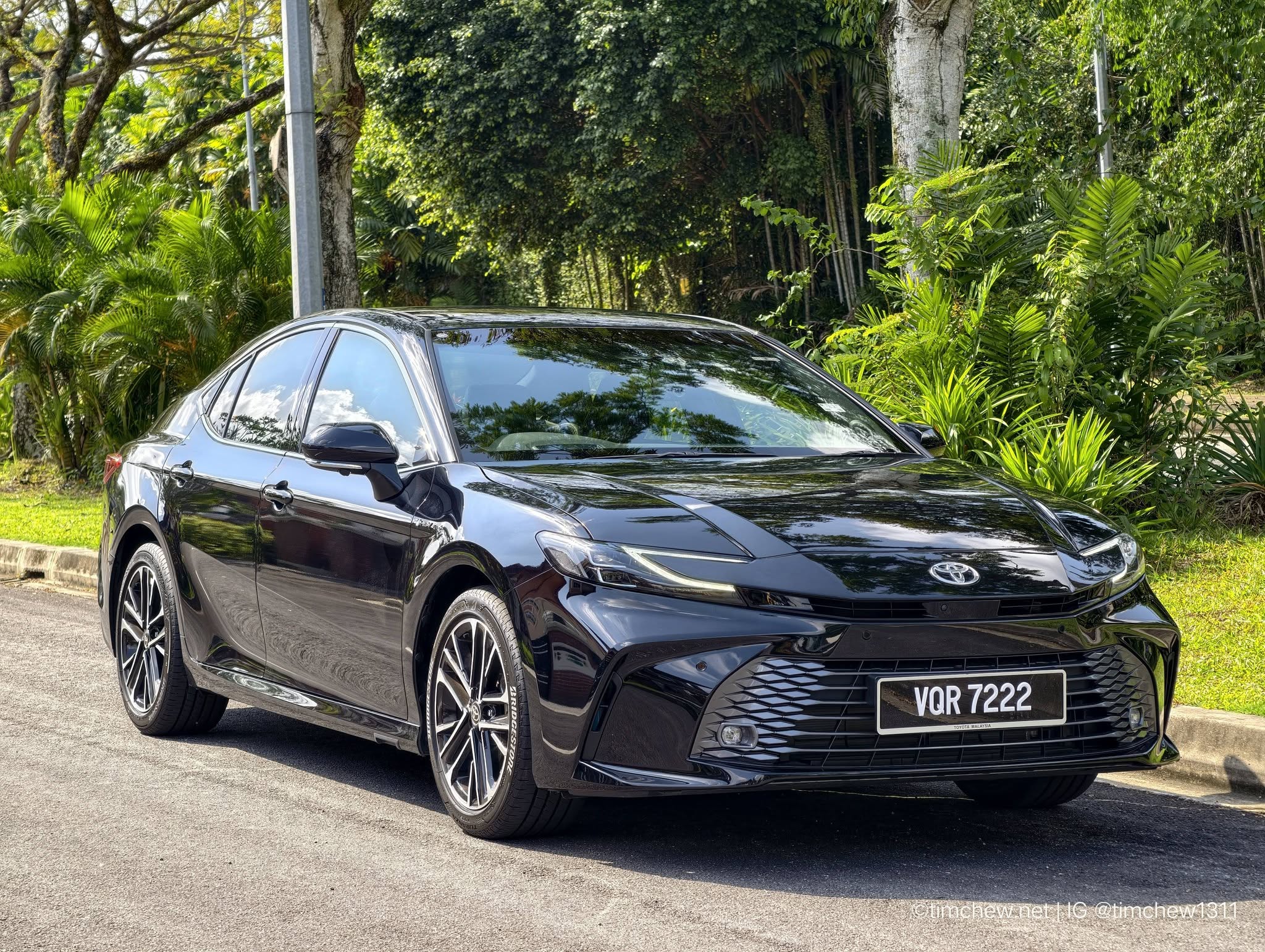
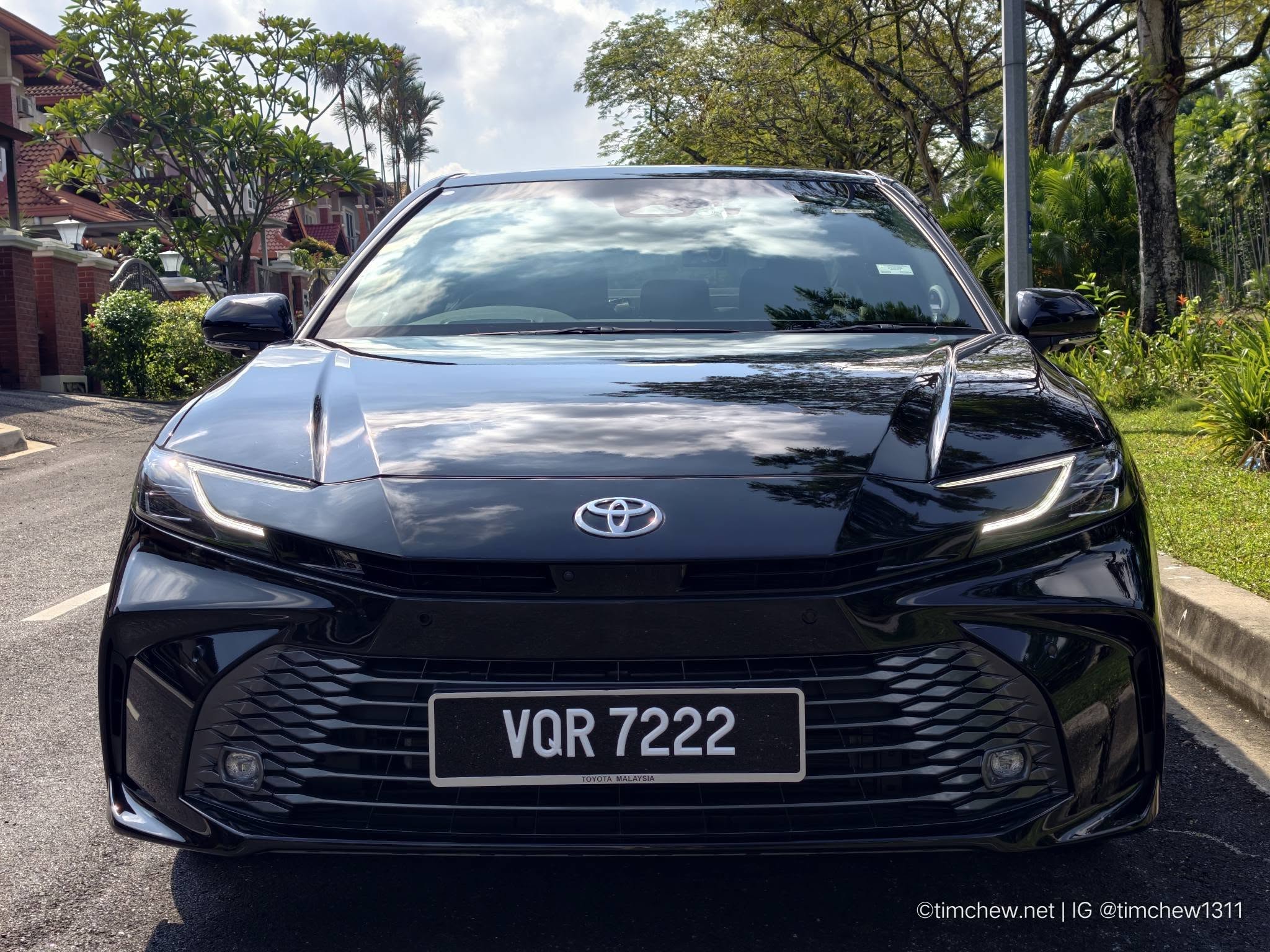
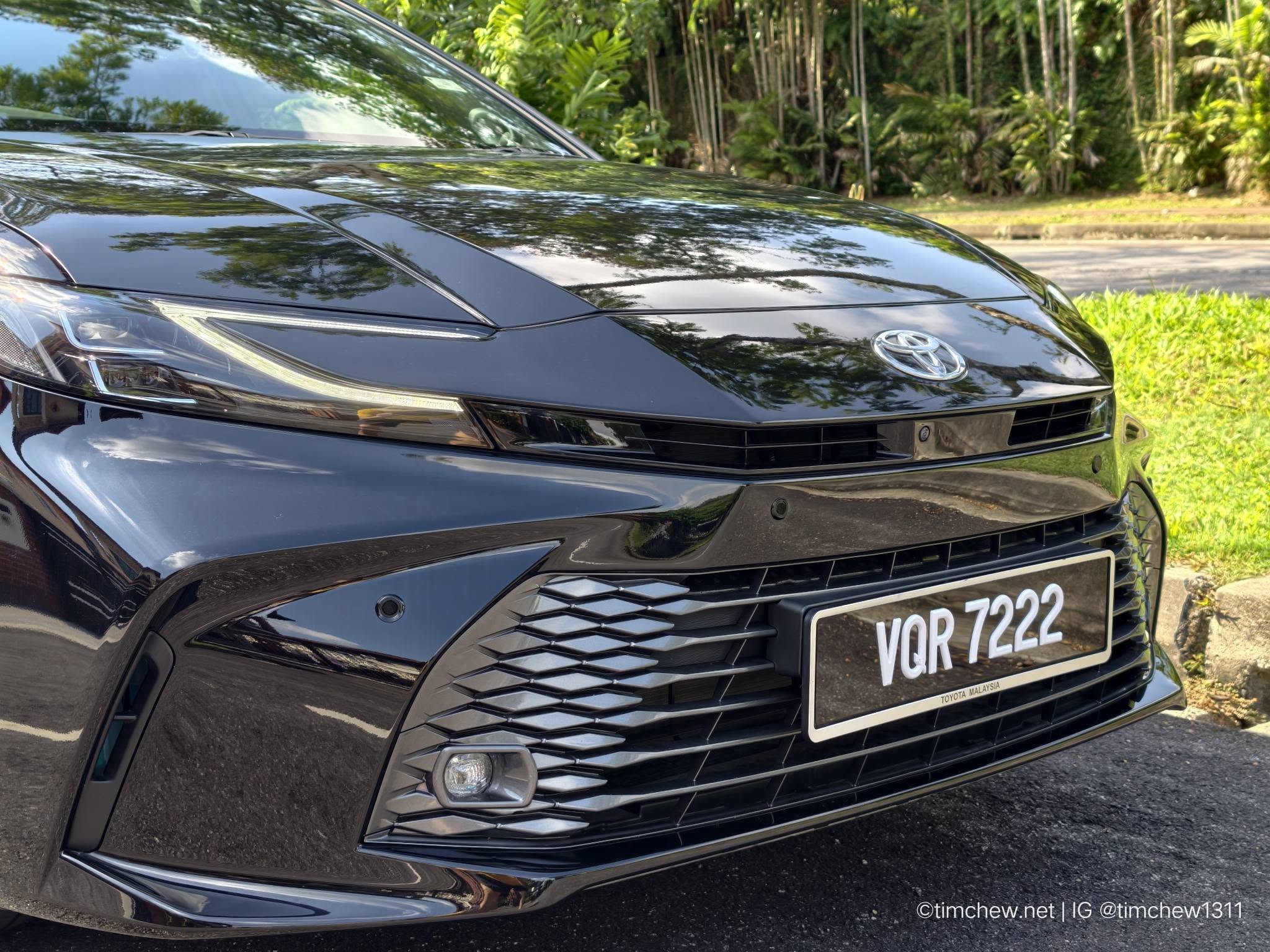
The most immediate departure is the front fascia. Where previous generations presented a conventional, conservative face, the new car adopts the same “HammerHead” design language used on the current Prius and Crown — slim, angular LED headlights set wide and high, with a broad lower grille that gives the car a stance considerably more assertive than its predecessor.
This matters because the Camry’s visual conservatism was, for some buyers, a genuine compromise. Choosing the sensible option over a European nameplate sometimes meant accepting that the car would not draw attention. The ninth generation removes that trade-off. It is still clearly a Toyota, and its proportions remain appropriate for basement car parks and hotel drop-off lanes, but it is no longer content to go unnoticed.
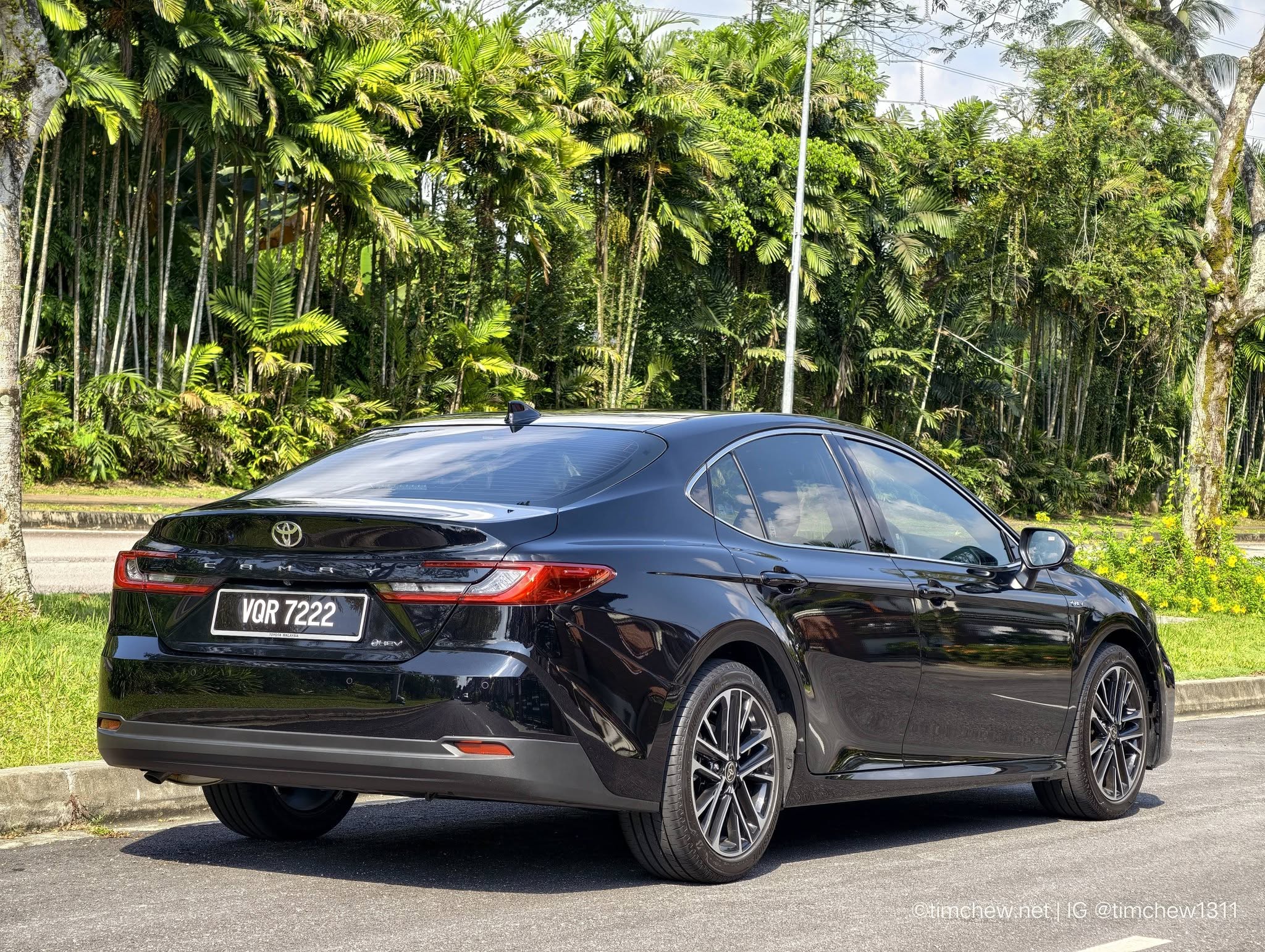
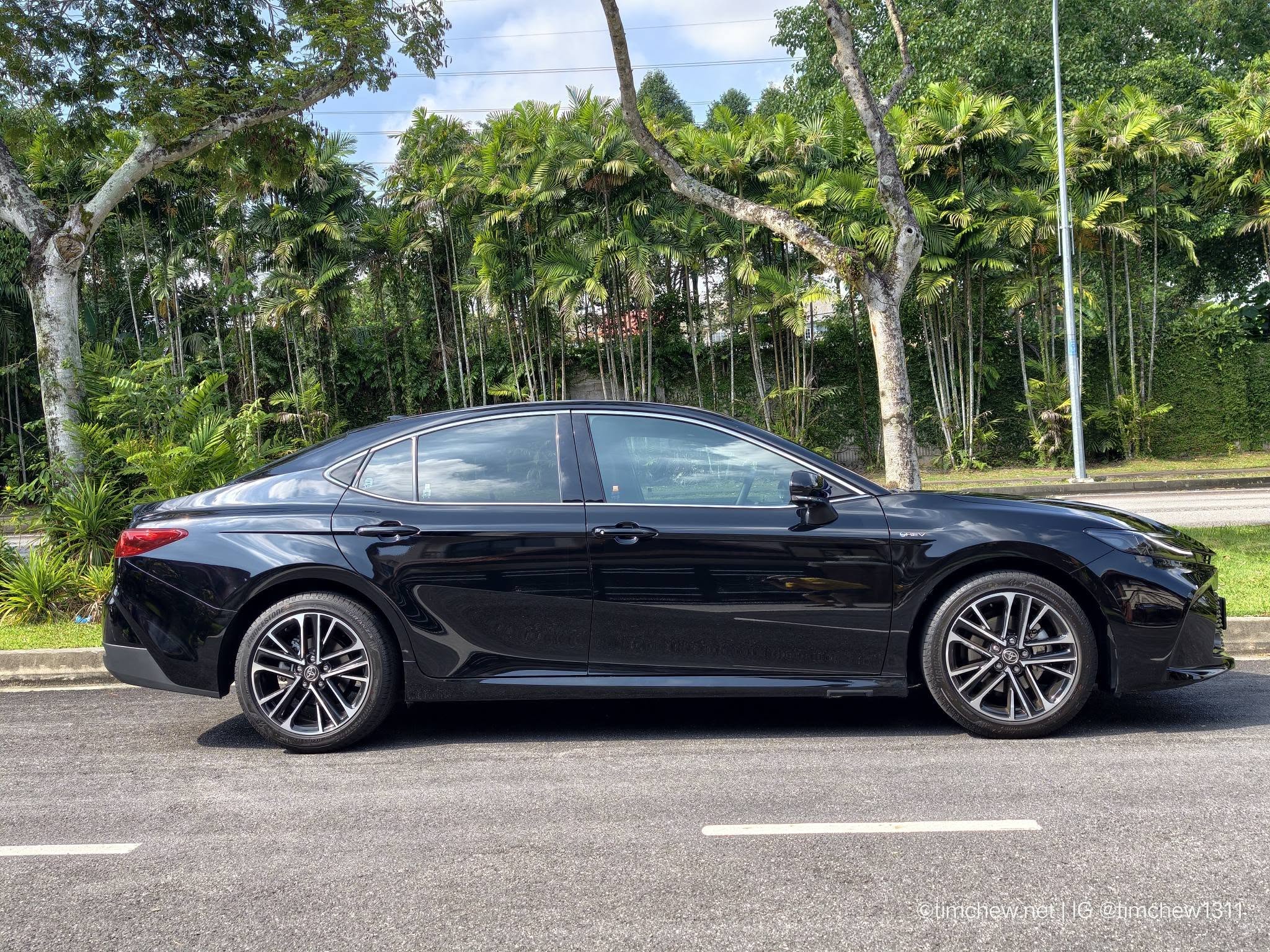
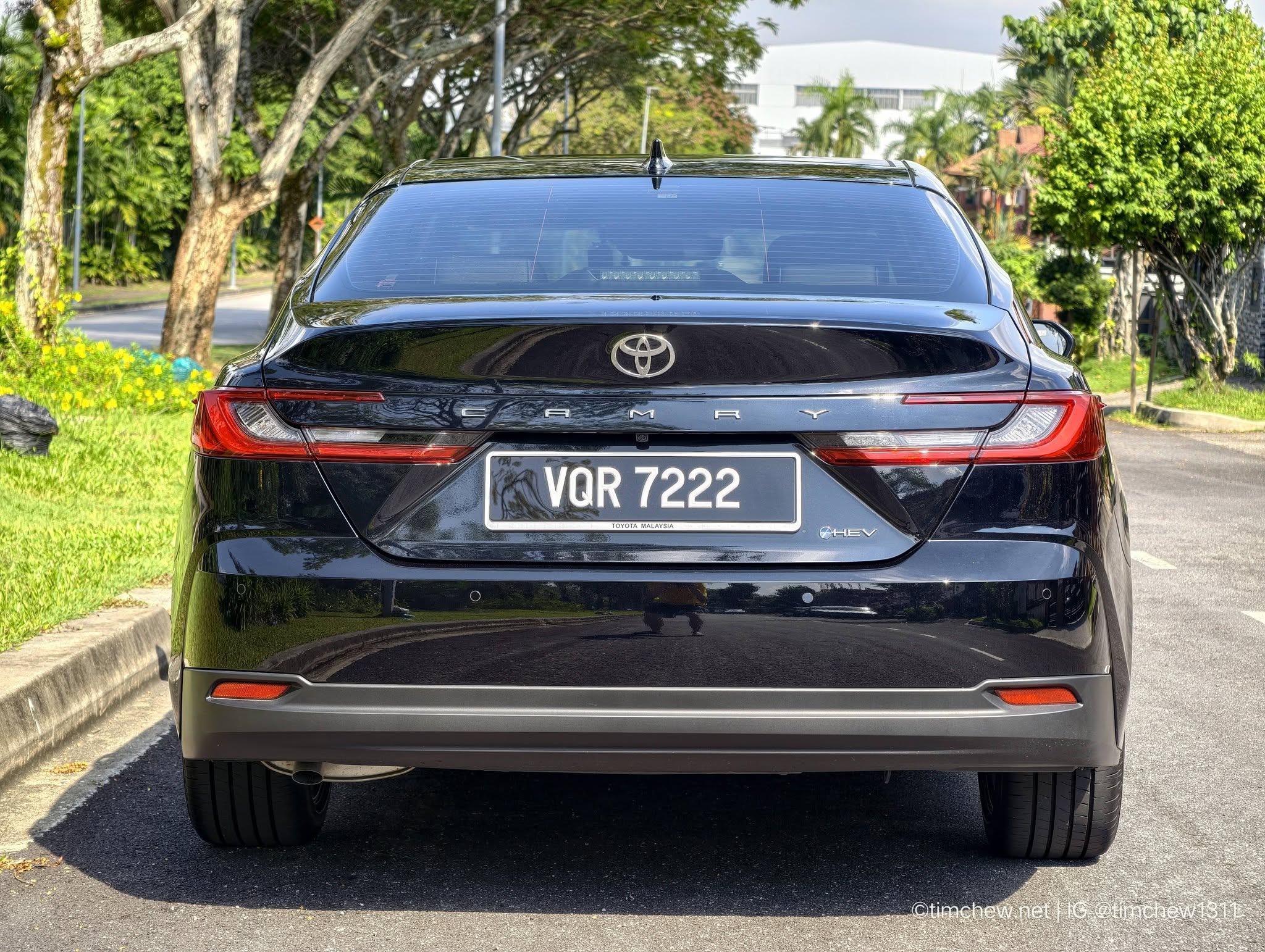
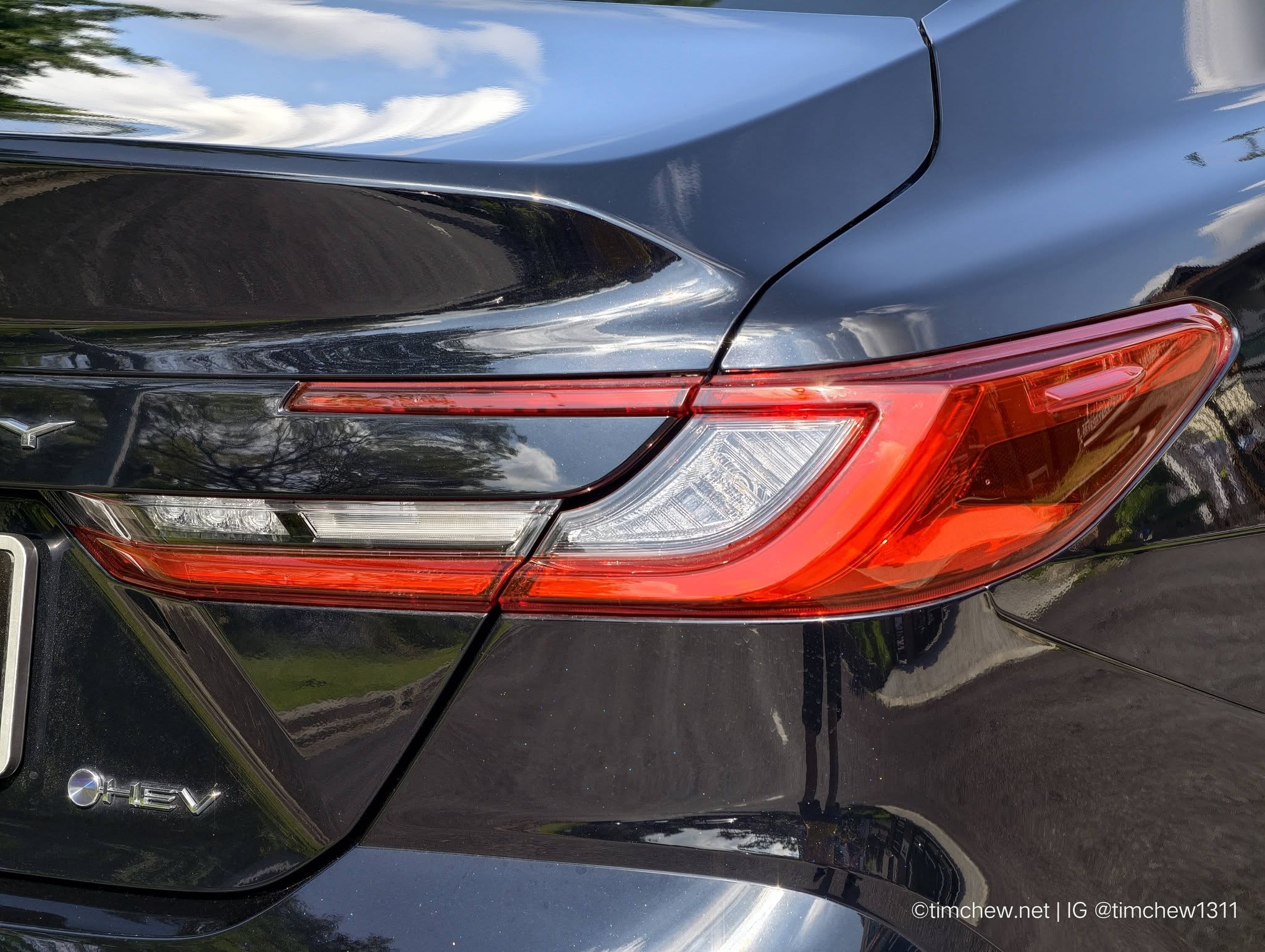
From the side, the silhouette sits lower than its predecessor — the roofline has come down without sacrificing rear headroom — lending the car a profile closer to a sports saloon than the upright executive sedan it once was. The overall length has grown by just 35mm, keeping it manageable in urban conditions while reading as a larger, more planted car at speed.
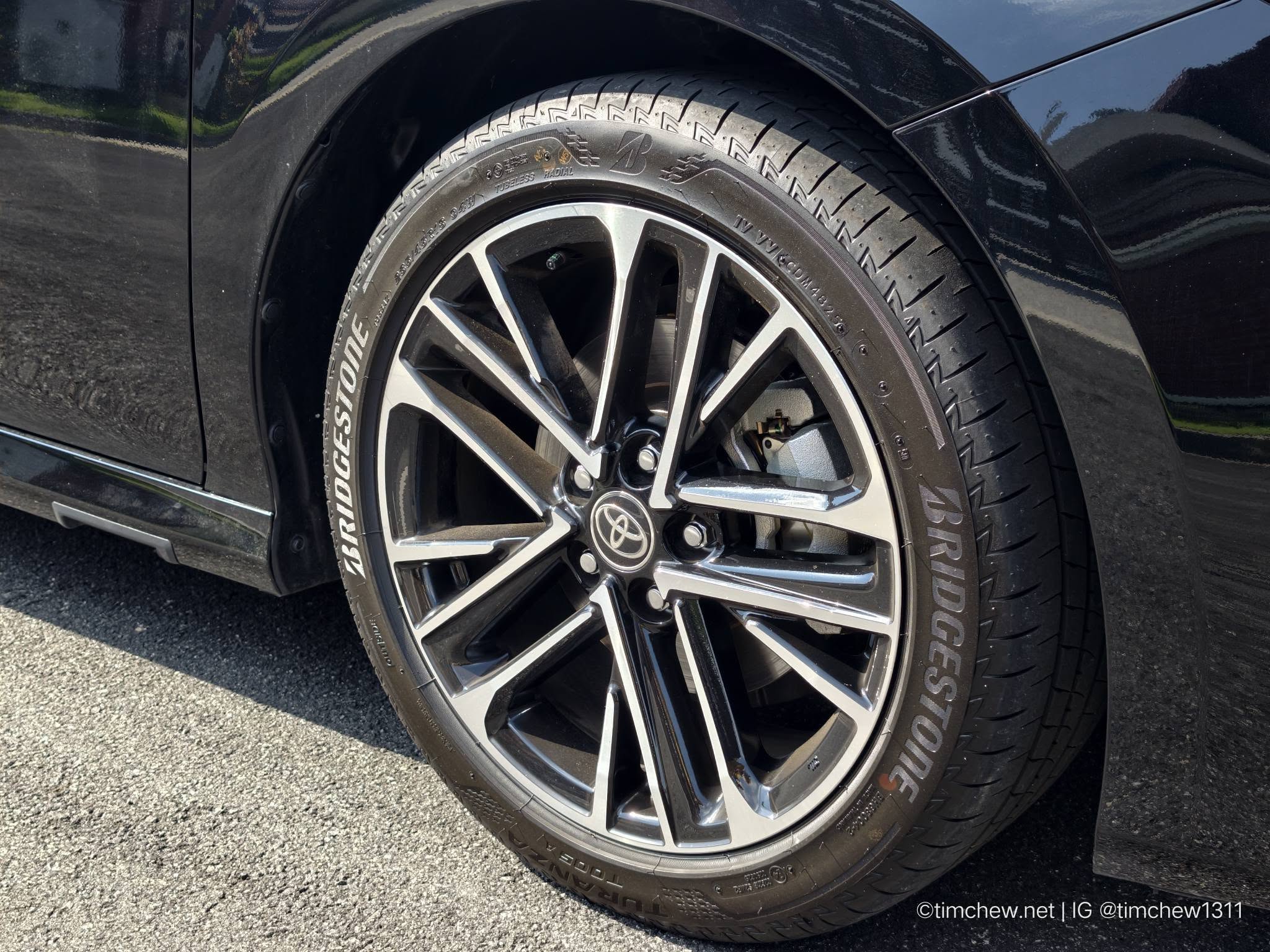
The panoramic sunroof contributes most to the cabin experience in daily use as a source of natural light rather than ventilation — a detail that makes a genuine difference to how the interior feels during a long commute. Eighteen-inch alloy wheels on Bridgestone Turanza tyres complete an appearance that reads as current without overreaching.
Six exterior colours are available. For a company car, the practical choice will almost certainly be Platinum White Pearl Mica, Precious Metal, or Attitude Black Mica — colours that photograph well, age gracefully, and attract the broadest pool of buyers at resale. The Cement Gray Metallic is worth consideration for those who want something slightly less ubiquitous while remaining conservative. The resale argument, covered in Part 1 (which you can read here: https://timchew.net/2026/06/15/weekend-with-the-toyota-camry-hev-part-1-jhol-at-the-met-corporate-towers-kuala-lumpur/), applies here too: the right colour choice preserves value as meaningfully as the nameplate itself.
There is a tendency in Malaysian automotive culture to equate visual restraint with a lack of ambition. The Camry’s previous generations leaned into that association — understandably, given their audience. The ninth generation declines to do so, and in doing that, it removes one of the last remaining objections to choosing it over a European alternative.
For the director or senior manager who wants a car that presents well at a client meeting without carrying the depreciation burden of a German badge, that is a more meaningful development than any individual styling detail.
Part 3 will cover the interior, comfort, technology, and safety features of the Toyota Camry 2.5 HEV. The Toyota Camry 2.5 HEV is priced at RM248,800. For more information, visit toyota.com.my.
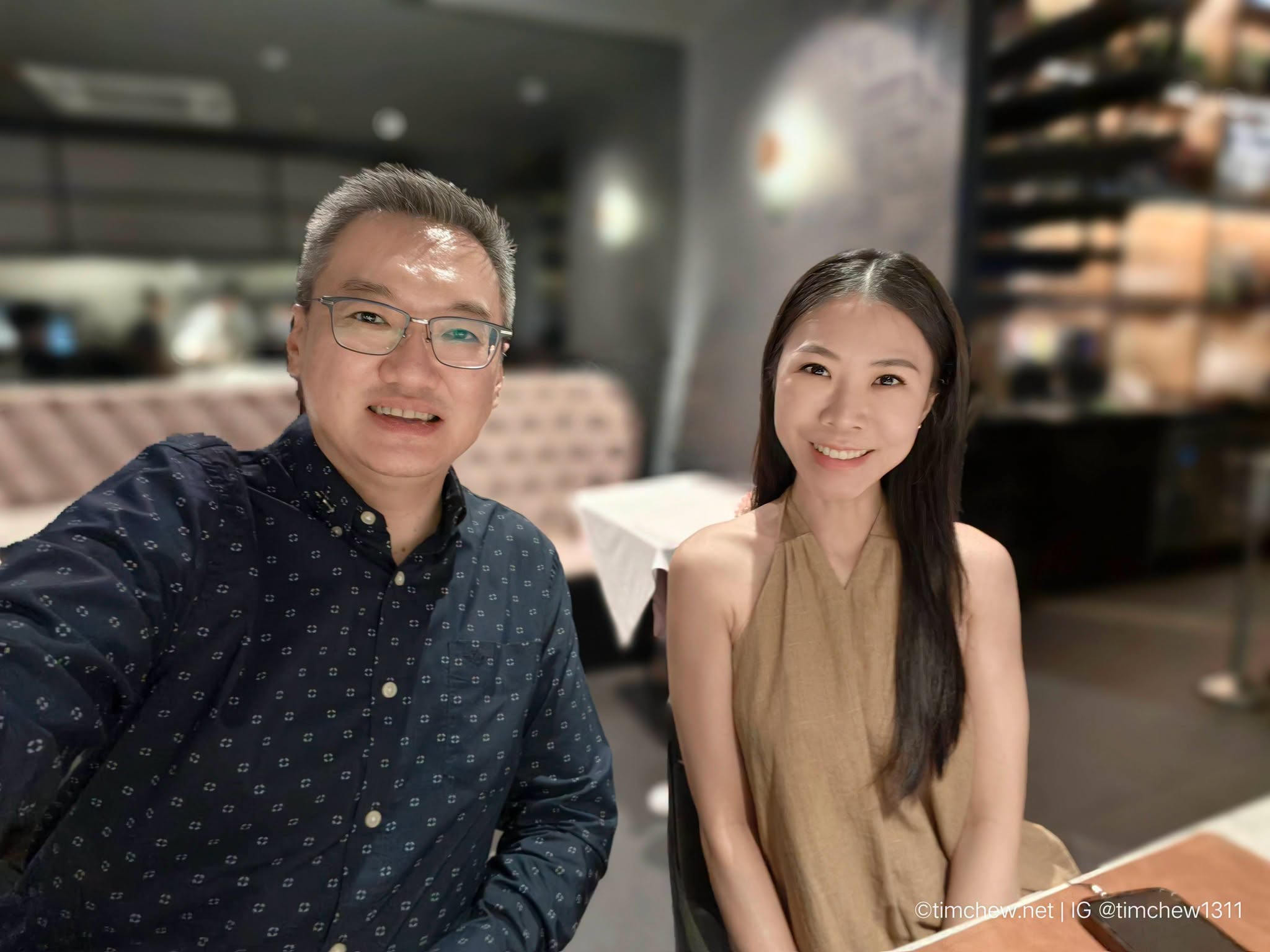
There is something disarmingly relaxed about sitting at the kitchen counter at Château Dionne. Close enough to the pass to watch every garnish placed and every plate inspected before it leaves the kitchen, it is, in the best possible sense, dining rather than fine dining.
That spirit has carried through what founder David Lim describes as a rebirth. When his chef-partner departed in July 2025, Lim found himself rebuilding the kitchen team from scratch — sleepless nights included — while insisting the restaurant’s soul remained intact. The result is Château Dionne 2.0, anchored by a new culinary lead with a resume that spans some of Asia and Europe’s most decorated kitchens.
Executive Chef Maxc Cheng’s career takes in The Ritz-Carlton Millenia Singapore, the Les Amis Group, Inua Tokyo, La Cime Osaka, and Les Trois Soleils de Montal in France. He now leads the kitchen in Bukit Damansara, bringing a classical French foundation informed by stints in Japan and France. Holding the front of house together is Nigel Foo, Director of Operations, who holds WSET Level 3 certification and sommelier training from the Taiwan Wine Academy, and has competed in culinary competitions including HOFEX FHM and Thailand Ultimate Chef. Between them, the new team covers both the pass and the cellar.
The restaurant’s origin story remains part of its identity. Château Dionne traces its roots to Shanghai’s Xuhui District in 2014, in a neighbourhood of galleries, boutiques and tree-lined streets once known as the French concession. The Kuala Lumpur outpost followed in September 2020, founded by Lim — previously known for building one of the region’s largest wine specialty chains — who named the restaurant after his second daughter. The new Spring 2026 menu reflects both continuity and Cheng’s own culinary instincts.
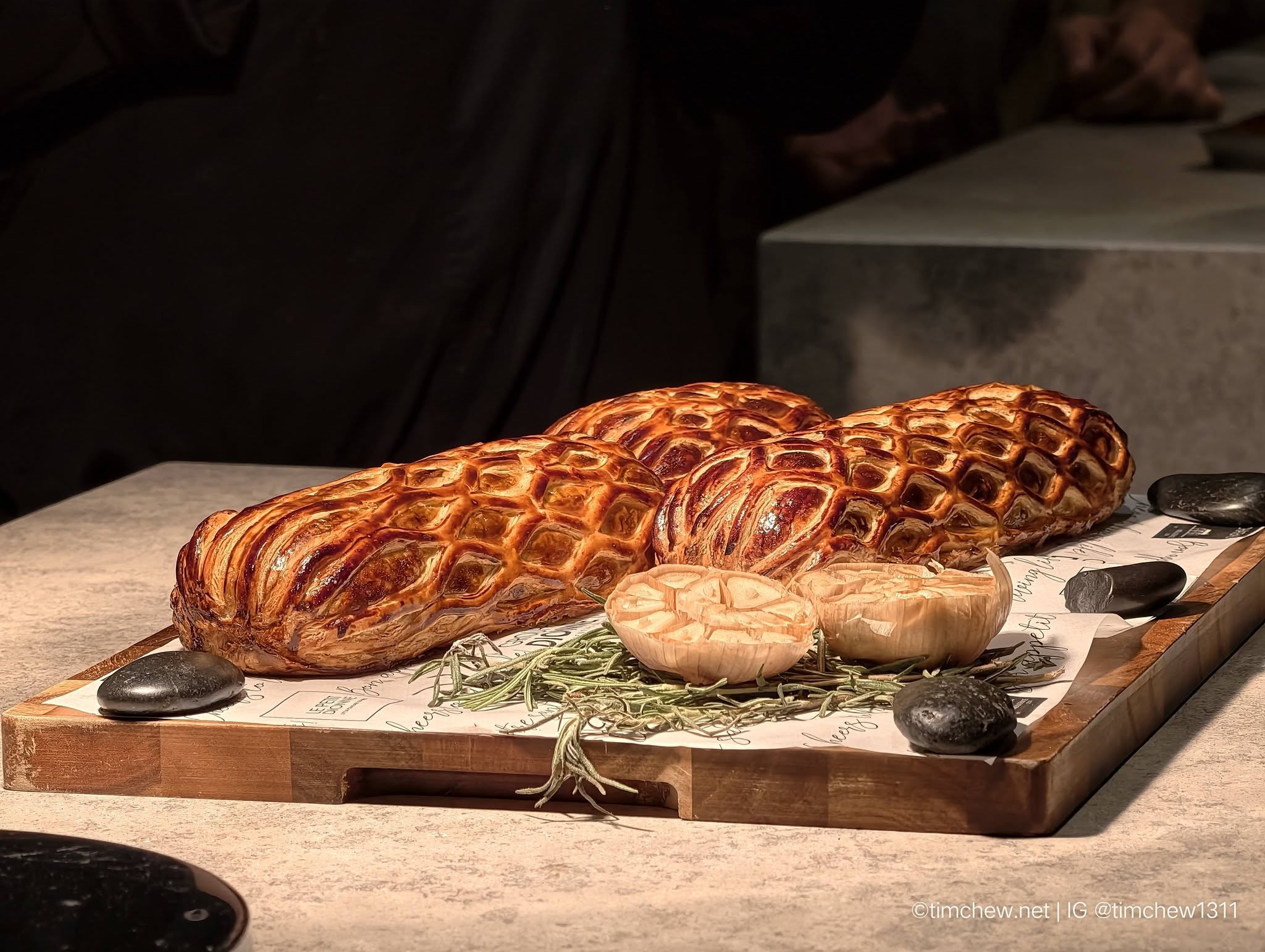
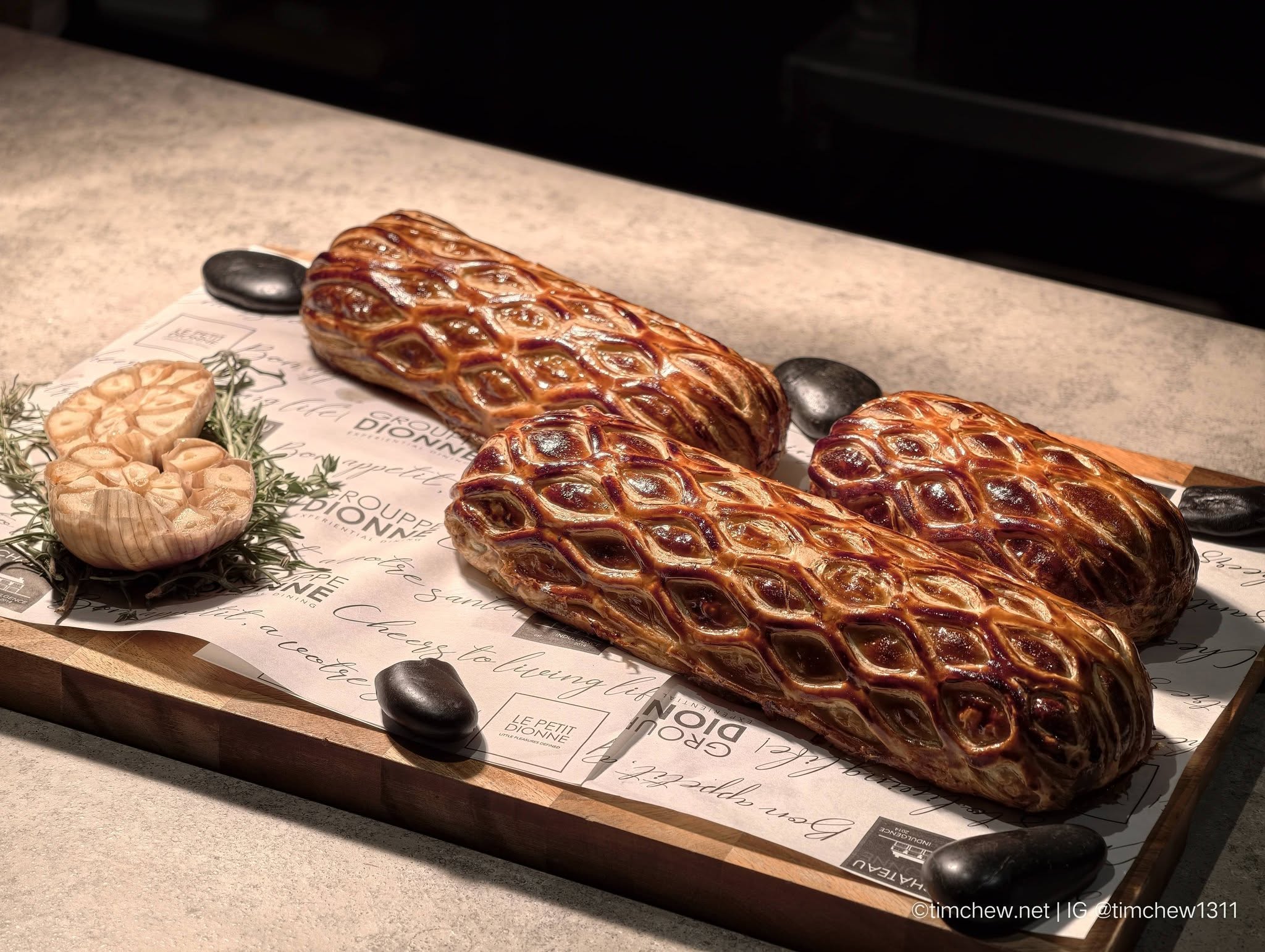
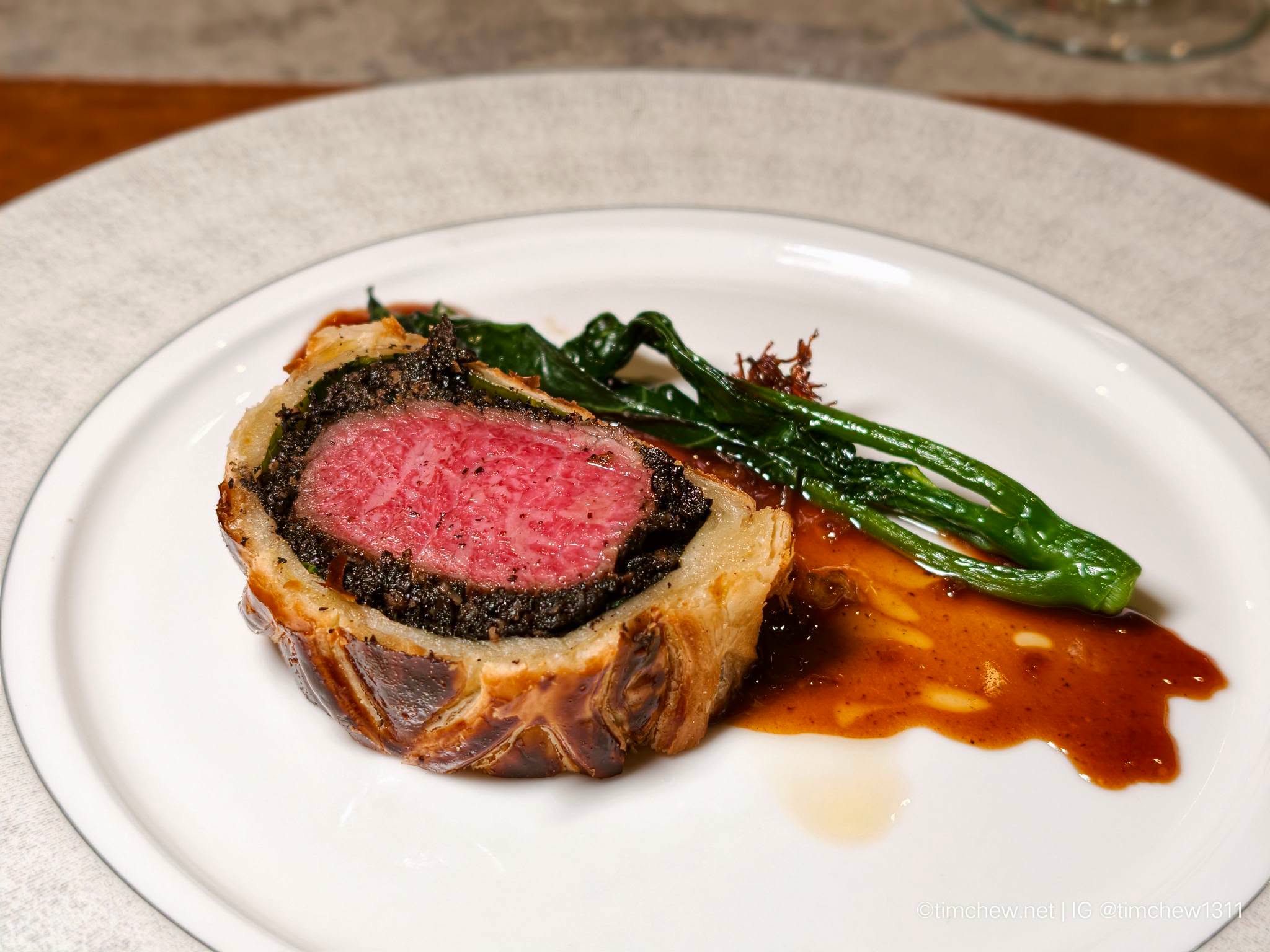
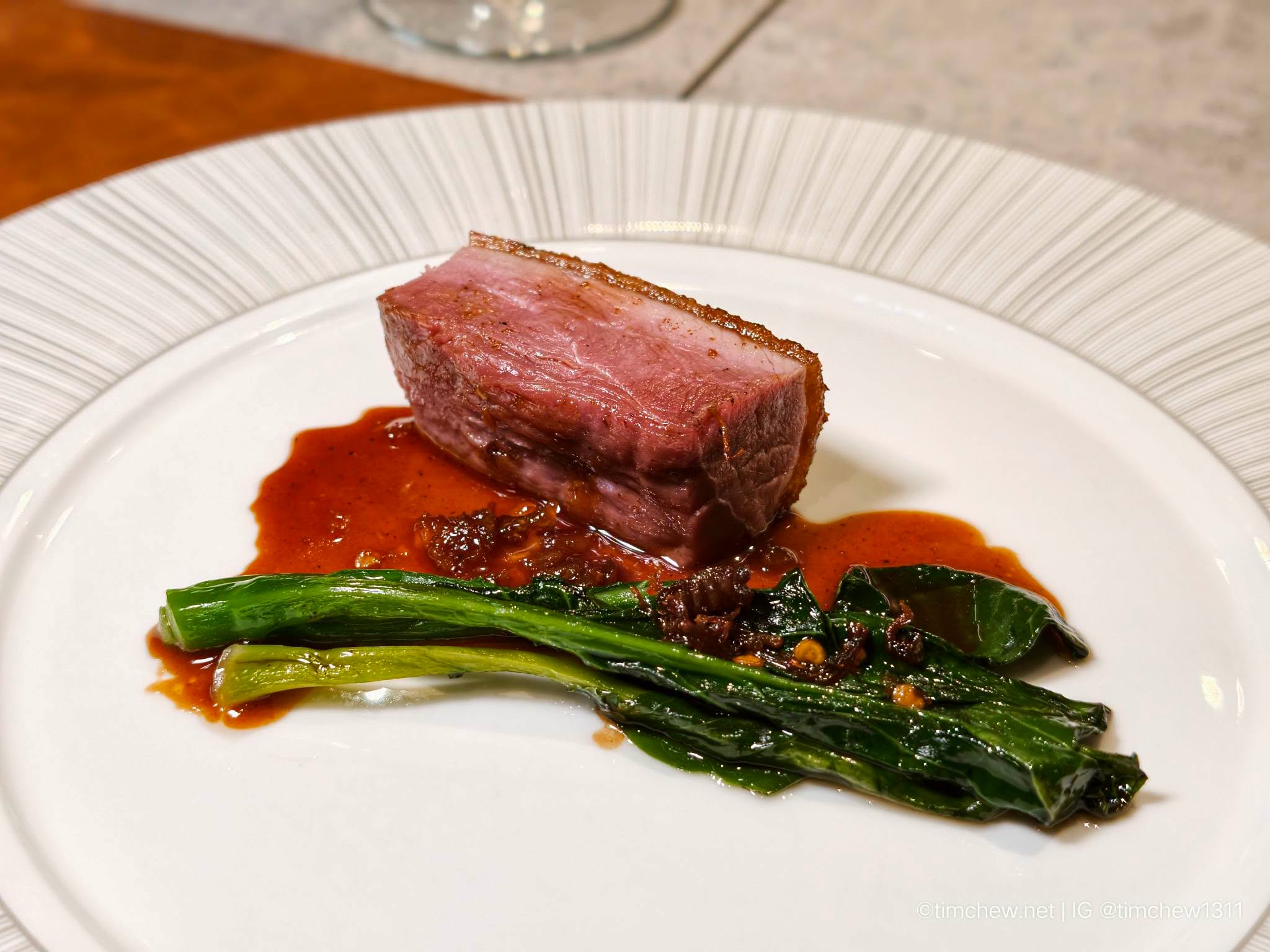
The current à la carte runs broadly French, with selective nods to Asian produce and technique. Cold capellini arrives with truffle ponzu, cured egg yolk and amaebi — supplemented, for those inclined, with Hokkaido bafun uni and osciètre caviar. Pan-seared foie gras is plated with spiced braised daikon, Japanese sweet potato and hazelnut. A nine-day aged duck breast carries a sour plum glaze alongside confit duck polenta. The signature Beef Wellington — a sharing portion for two at RM298 — pairs Australian Angus tenderloin with a black truffle duxelle and Périgueux sauce, and remains the kind of dish that justifies the counter seat: watching the pastry come out of the oven is part of the experience.
The soufflé, long a Château Dionne constant, remains on the regular menu. At RM38, with an optional pour of Grand Marnier or Sherry PX Solera, it is the sort of detail that signals a kitchen still invested in the classics.
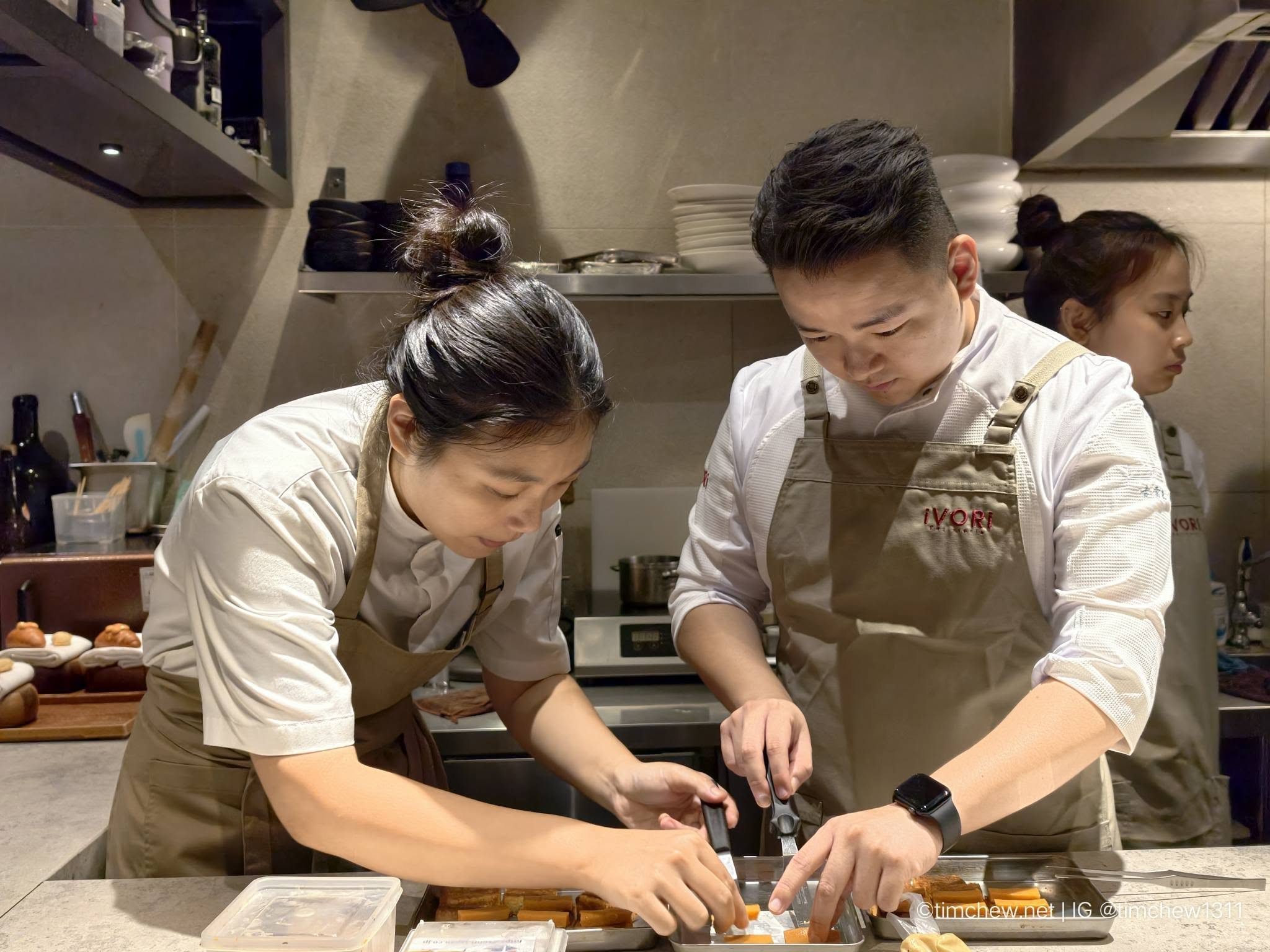
Our visit coincided with a special collaboration menu with iVORi Pâtisserie, a Malacca-based pastry outfit founded by chef Moses Ng, who trained at Hilton Singapore and Goodwood Park Hotel before returning to his hometown to open what has become one of the state’s more technically accomplished dessert operations. The collaboration put iVORi’s laminated pastry work and dessert sequence alongside Château Dionne’s savoury cooking — a pairing that worked precisely because neither kitchen overclaimed its contribution.
The resulting 10-course tasting menu, priced at RM298, ran from amuse-bouche to petit four and reads like a love letter to Malaysian nostalgia written in a French accent. We had counter seats, which meant watching the chefs work through each course up close. It’s a different rhythm of dining — less ceremony, more craft on full display, garnishes finished right in front of you.
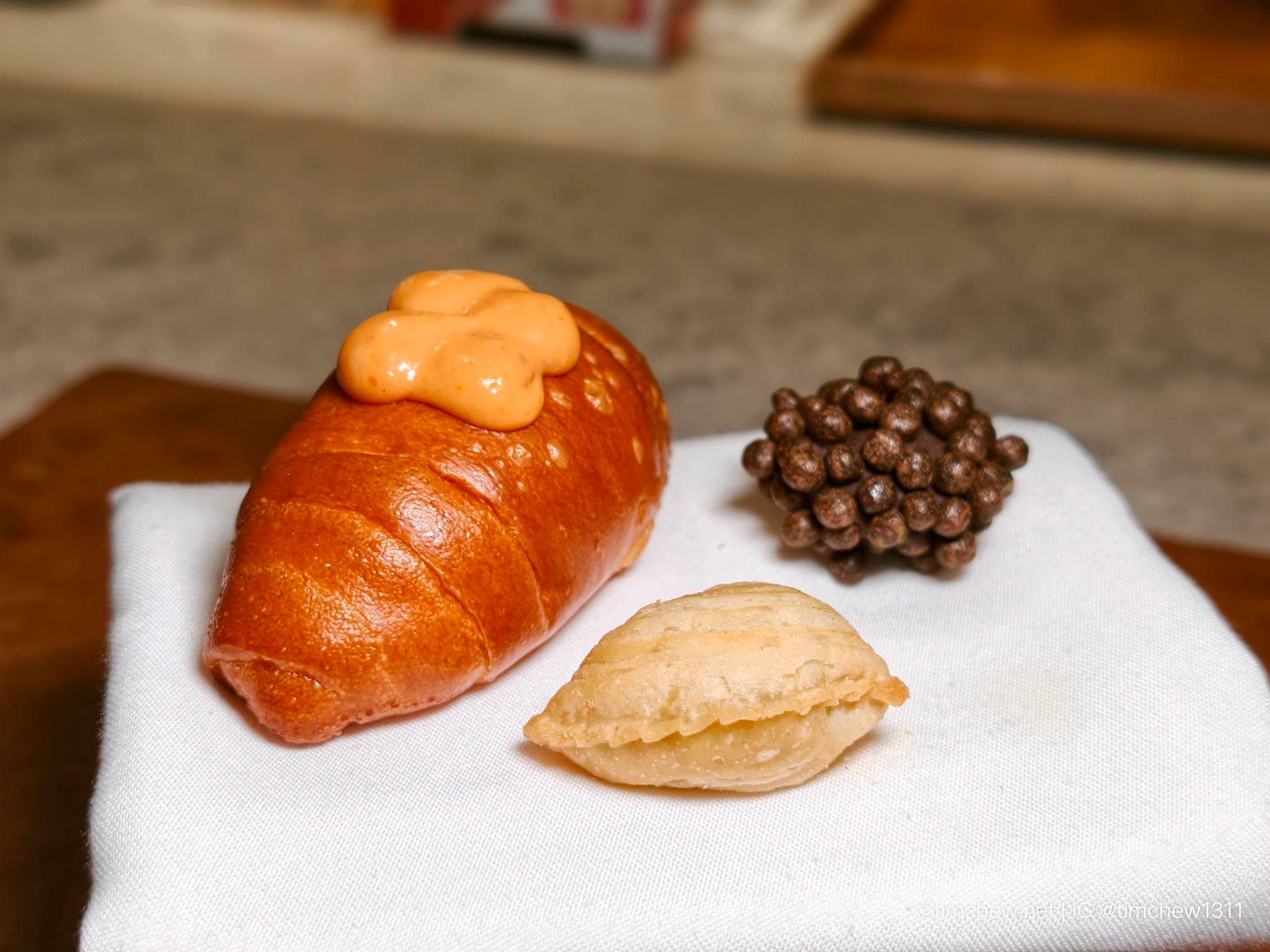
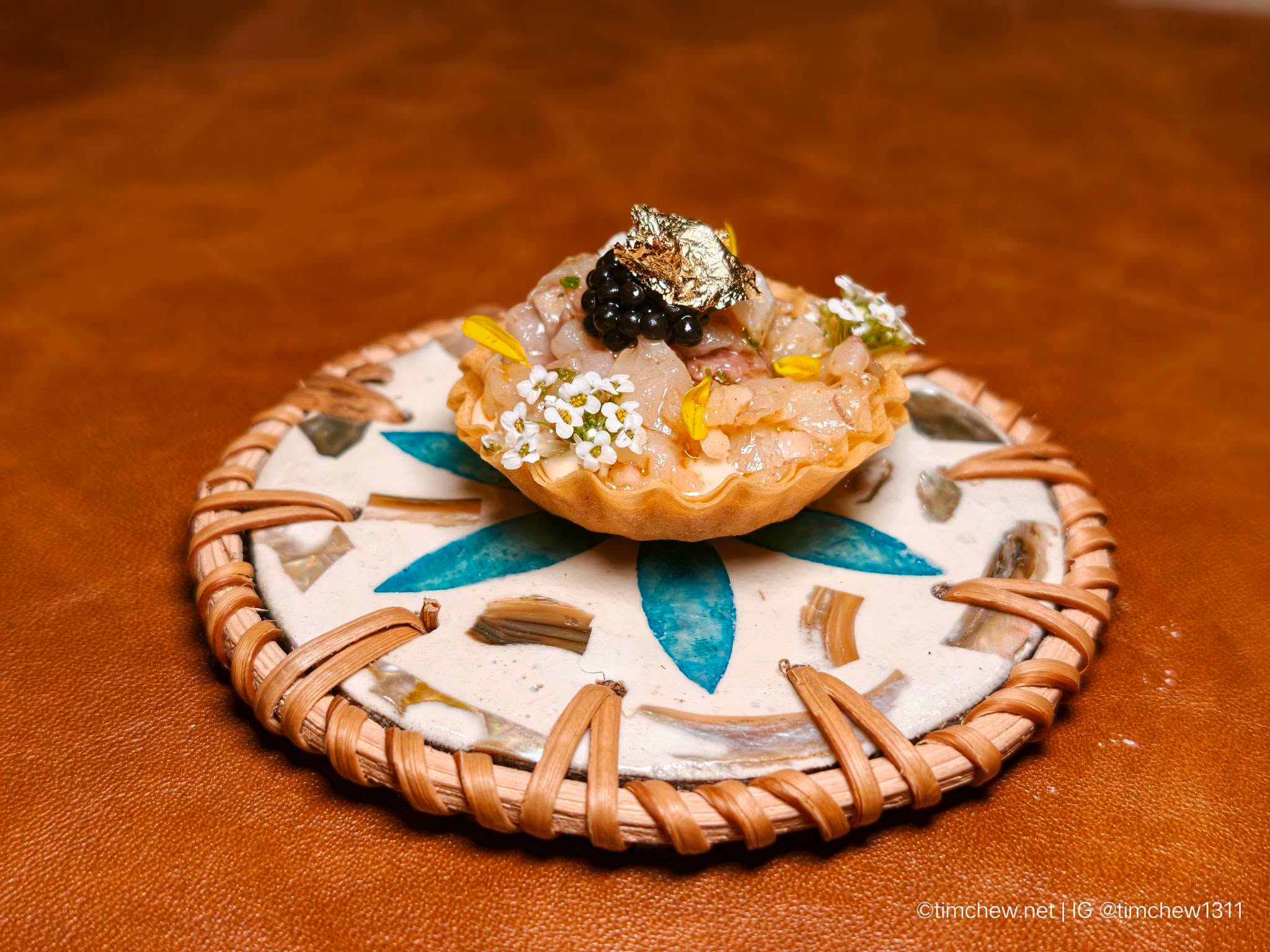
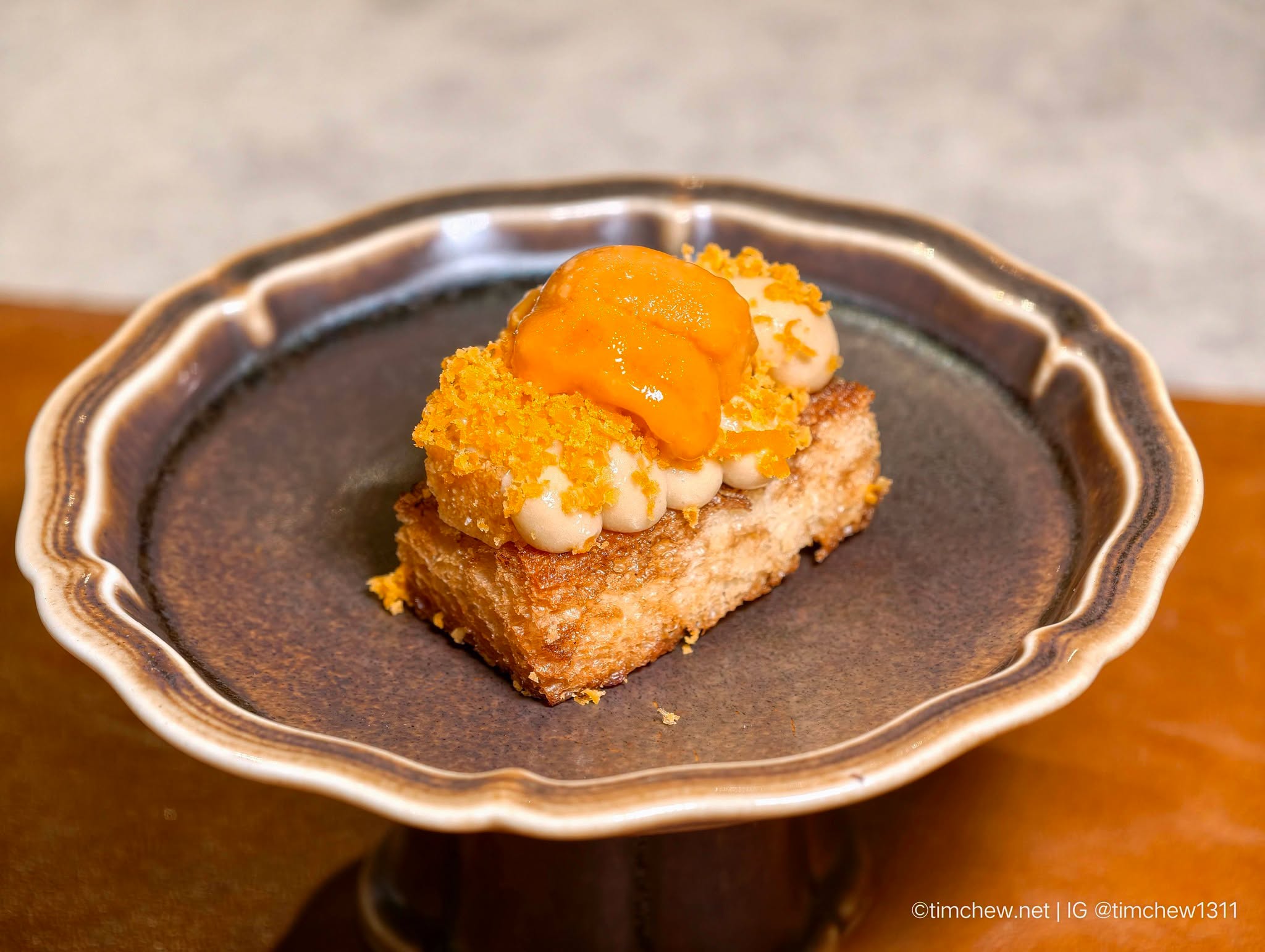
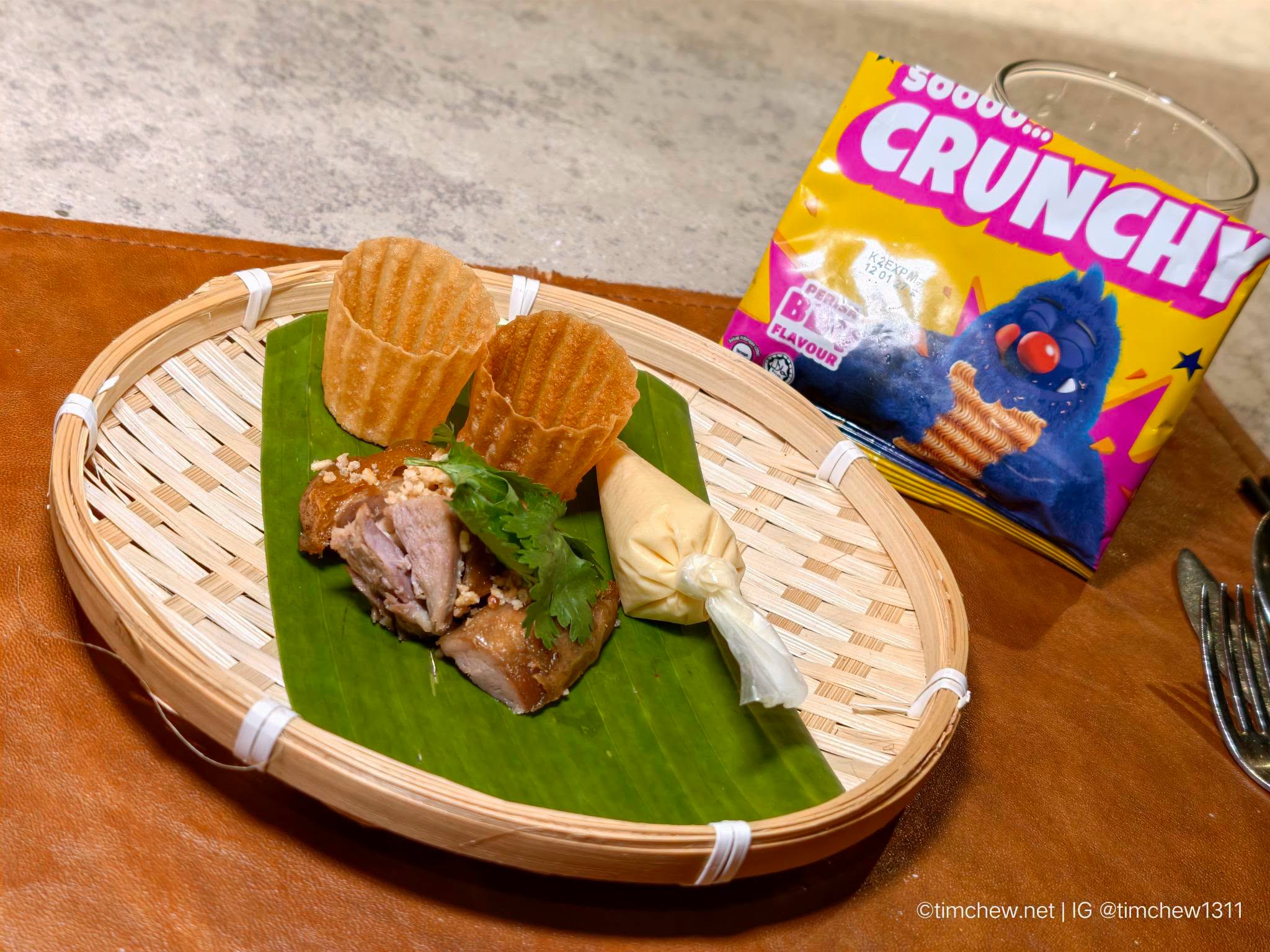
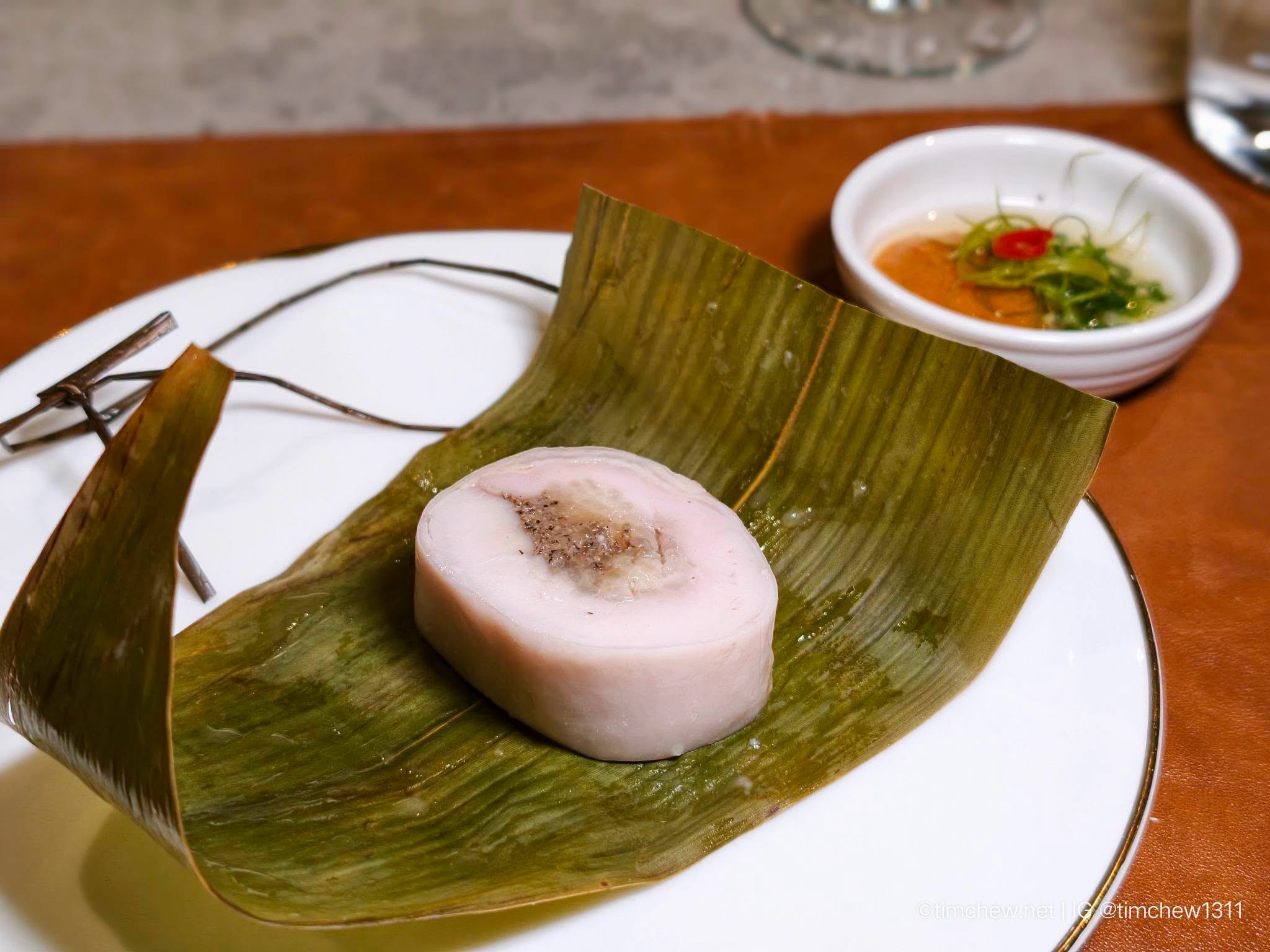
The menu opened with a run of small bites that set the tone immediately. A Hamachi Tartare Tartlet arrives with cincalok aioli and Nyonya acar — the fermented shrimp funk cutting neatly through the richness of raw fish. A “Mamee” Snack reimagines the ubiquitous Malaysian school canteen staple as a kueh pie tee shell filled with confit duck and peanut mamee, landing somewhere between childhood memory and culinary wit. The Hainanese Chicken Terrine — chicken rice, chicken pâté and Hainanese chilli compressed into elegant form — is perhaps the most direct statement of intent: this is local cooking translated, not disguised.
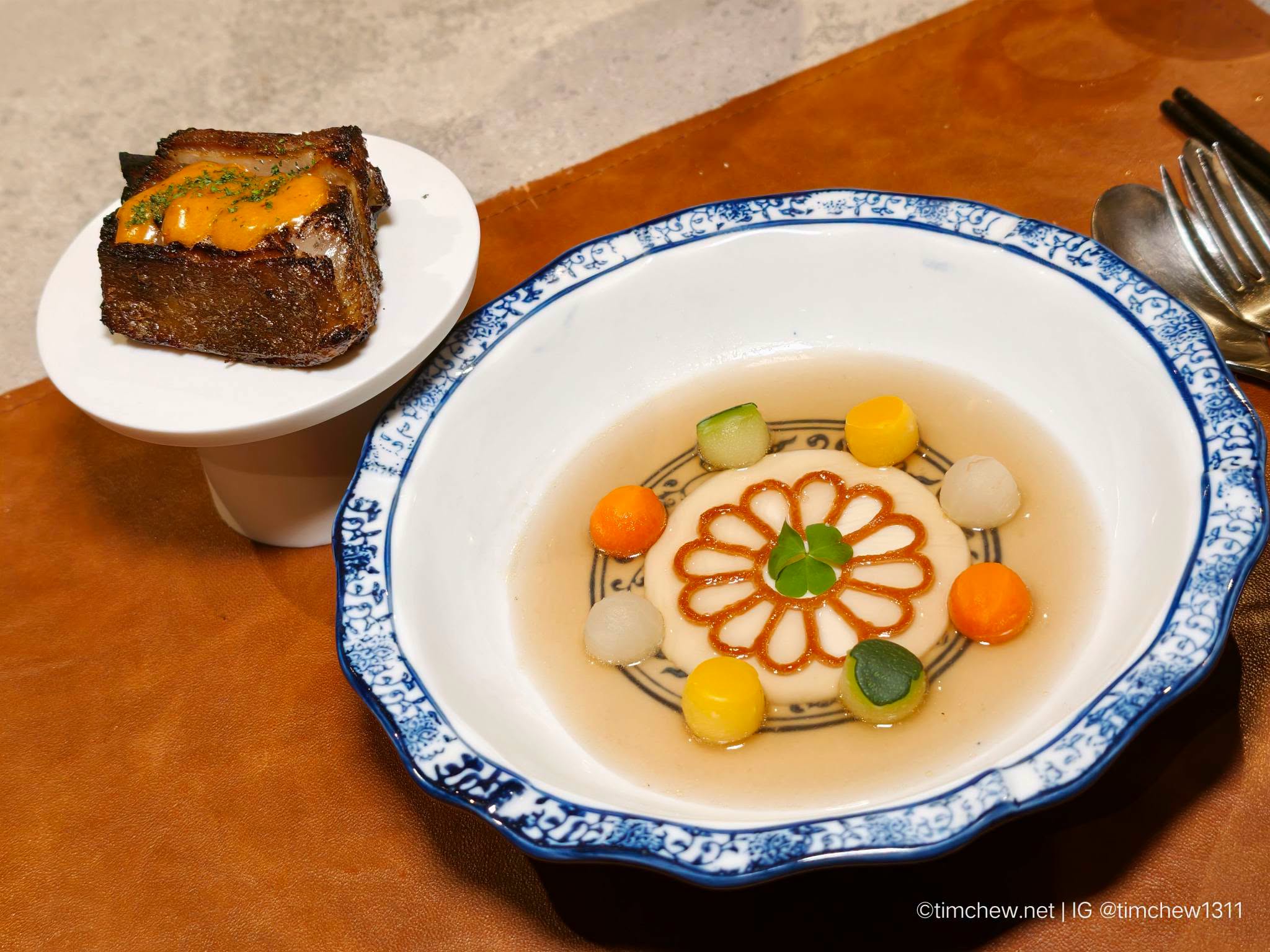
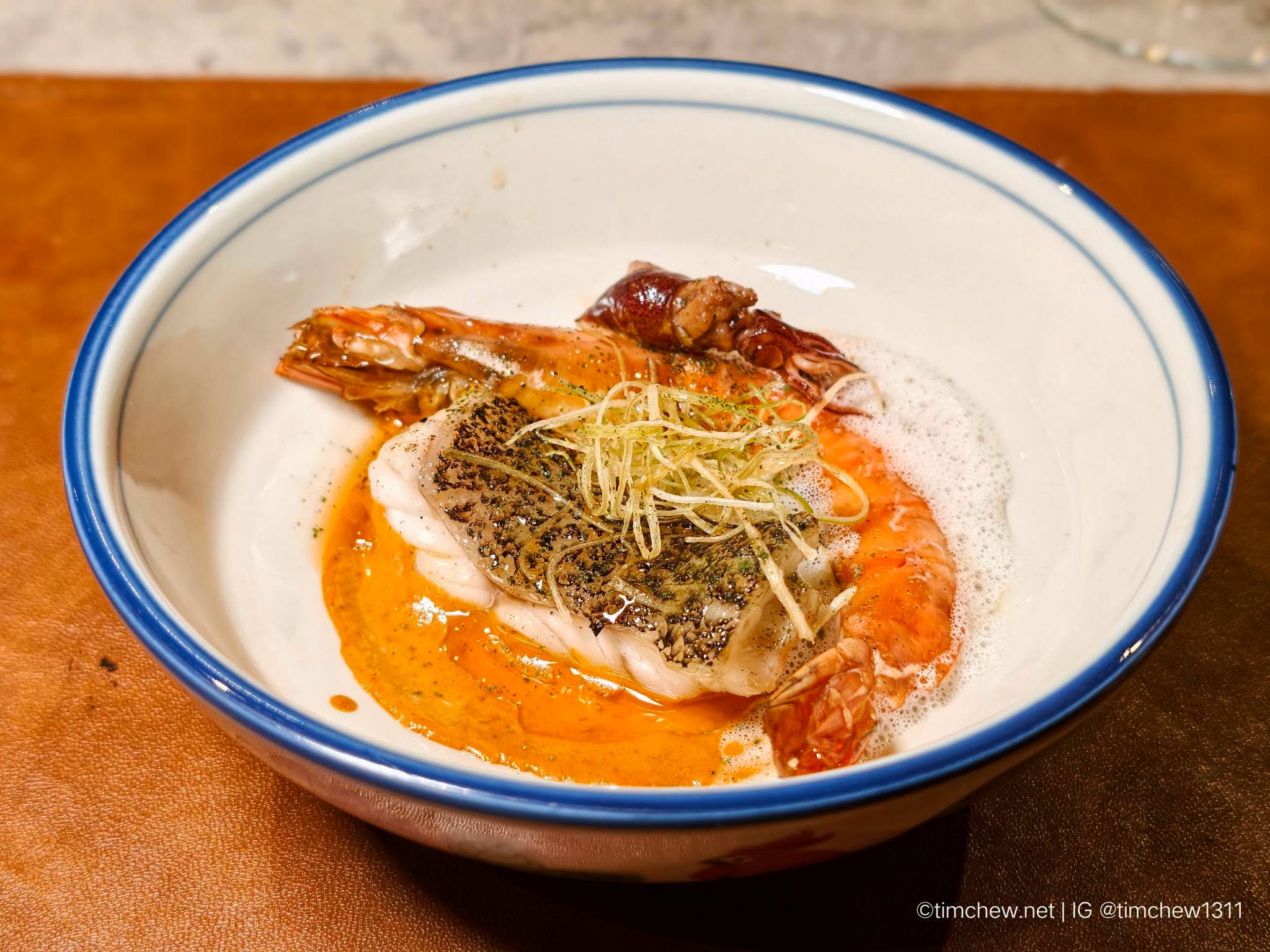
The entrée course leans into the collaboration. The Nyonya Curry, plated with black cod, tiger prawn and firefly squid, arrives with iVORi’s flatbread alongside — a reminder that the Malacca pastry house brings more than desserts to the table. The Hainanese Lamb Stew Consommé, served with lamb satay and peanut sauce, manages to be simultaneously a classic French consommé and a bowl that smells unmistakably of a Malaysian street corner.
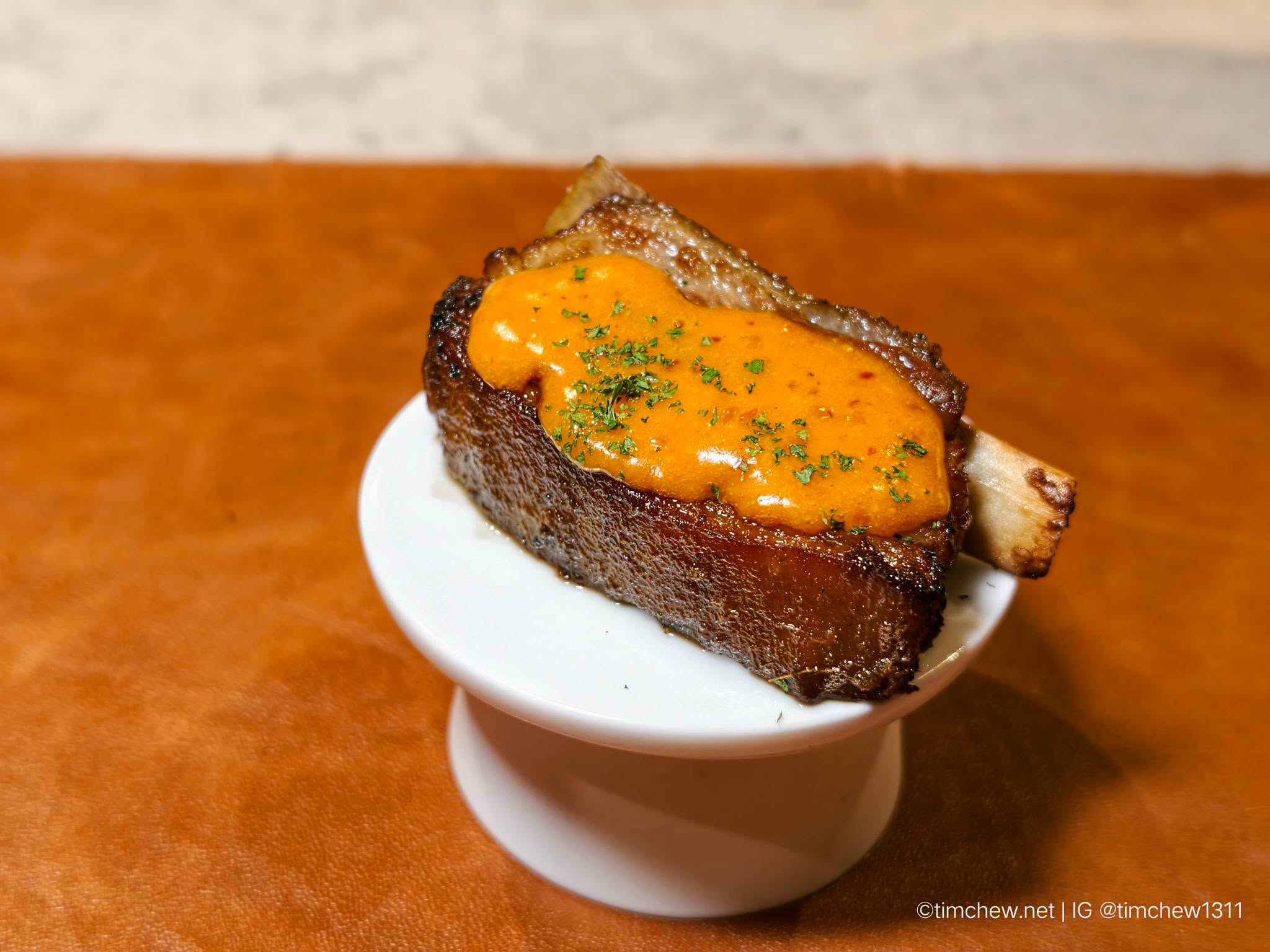
The main course is the Beef Wellington “Lokal” — Australian tenderloin wrapped in iVORi puff pastry, with a duxelle made with “X.O.” and a “choi pok” (preserved radish) beef jus. It is a dish that works because it does not overclaim. The pastry is the point: iVORi’s laminated crust holds its structure and flake without competing with the beef, and the funky, savoury jus ties the local references together without tipping into gimmick.
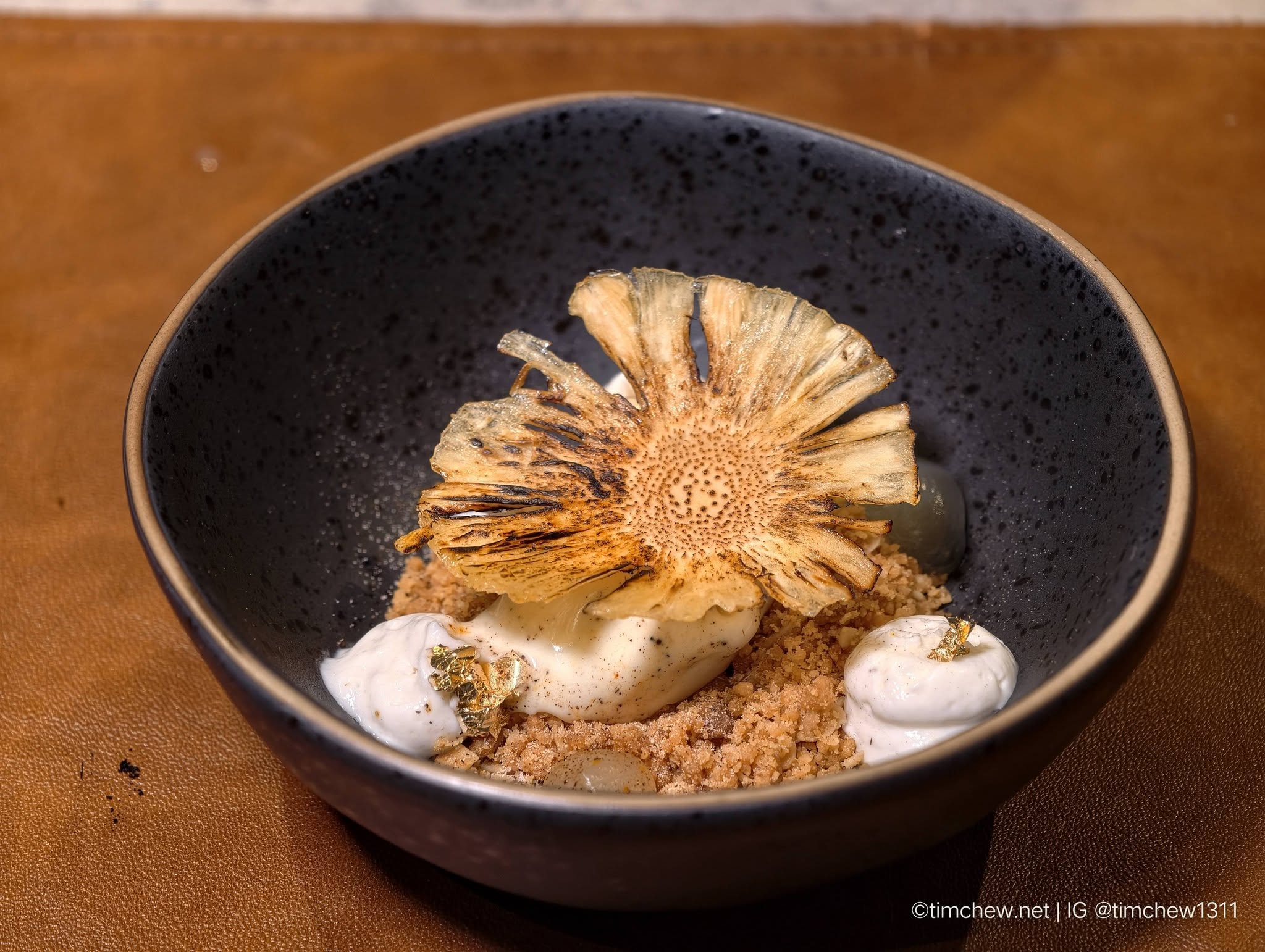
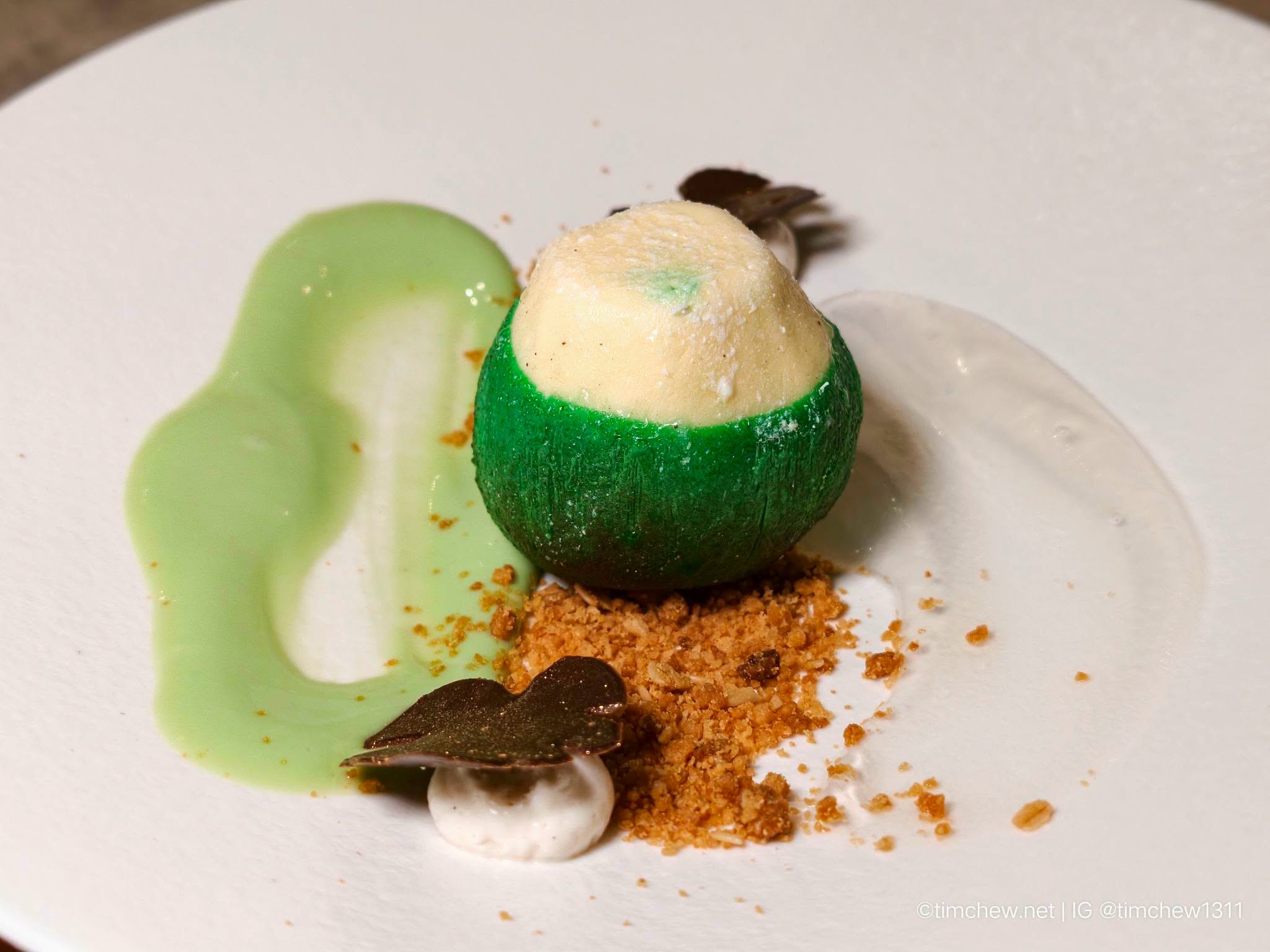
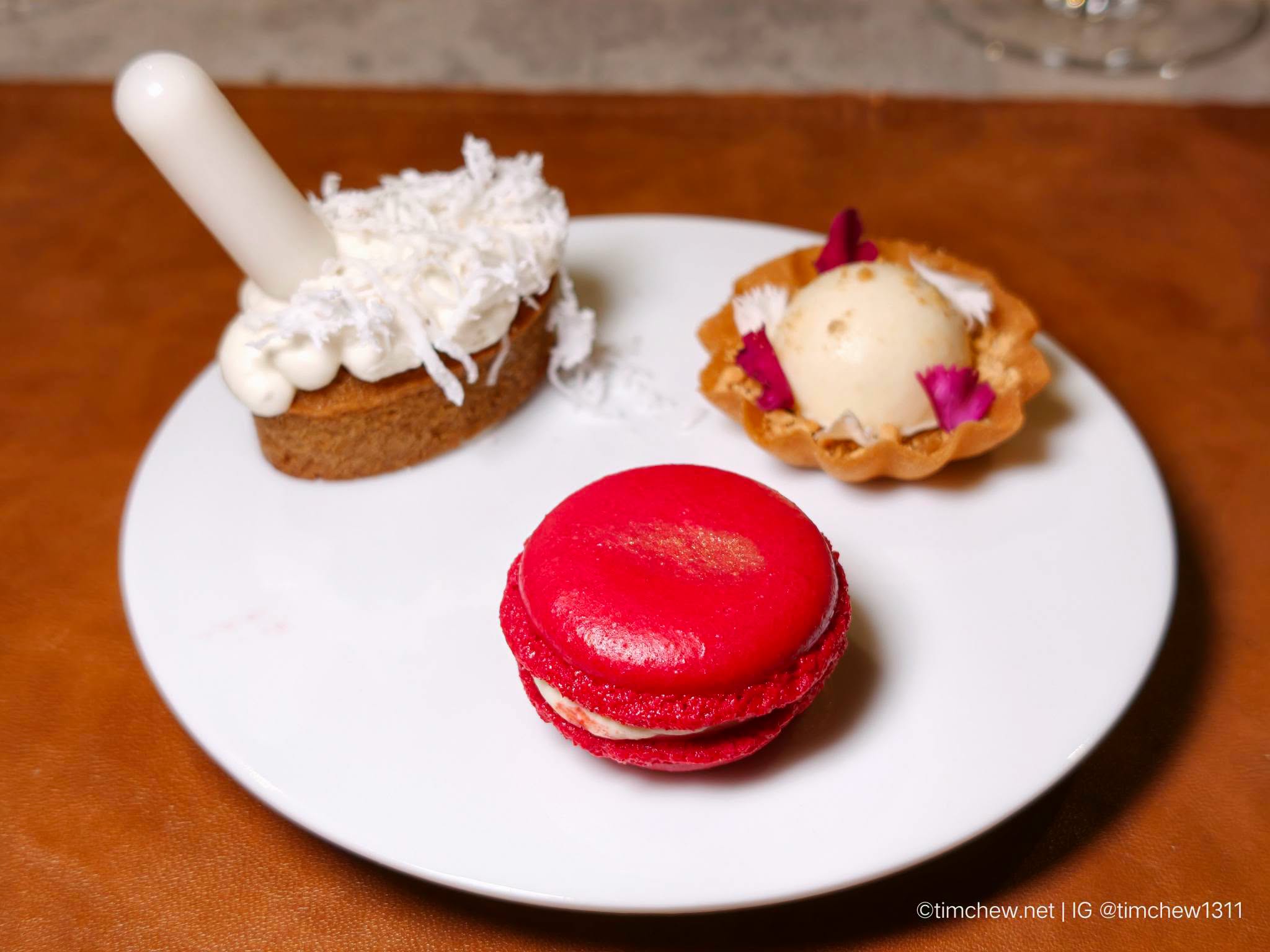
The dessert sequence hands the kitchen over almost entirely to iVORi. A pre-dessert of honeydew, tarragon and butterfly pea is a light, fragrant palate reset before the main dessert — palm sugar, coconut and pandan — arrived in what is essentially a refined summary of the meal’s entire flavour philosophy. The petit four closes proceedings with an apam balik tart, a macaron Angkor kuih and a putu piring financier: three Malaysian hawker icons in French pastry form.
For those using a meal as a business occasion, Château Dionne is worth considering beyond the ground floor. The restaurant’s upper level accommodates private dining in an intimate setting suitable for smaller groups — the restaurant should be contacted directly to confirm capacity and availability for private lunch or dinner bookings. It is the kind of space that suits a working meal with clients, a quiet celebratory dinner, or an occasion where the conversation needs to stay at the table rather than carry across a full dining room.
Nigel and the service team handle the floor with the kind of attentiveness that does not intrude. Lim himself, having built a career at the intersection of wine, hospitality and entrepreneurship — recognised by Hospitality Asia’s Top 100 Personalities list and Prestige Malaysia’s Top 40 Under 40 — has always understood that the best hospitality is the kind that makes guests feel known. As he puts it: at Château Dionne, everybody knows you by name, and you never drink alone.
We were hosted by Château Dionne. Château Dionne is located at 24G, Jalan Medan Setia 2, Bukit Damansara, Kuala Lumpur. Open Monday to Tuesday from 6 p.m., Wednesday to Sunday for lunch (noon to 3 p.m.) and dinner (6 to 10:30 p.m.). WhatsApp: 018-318 8199
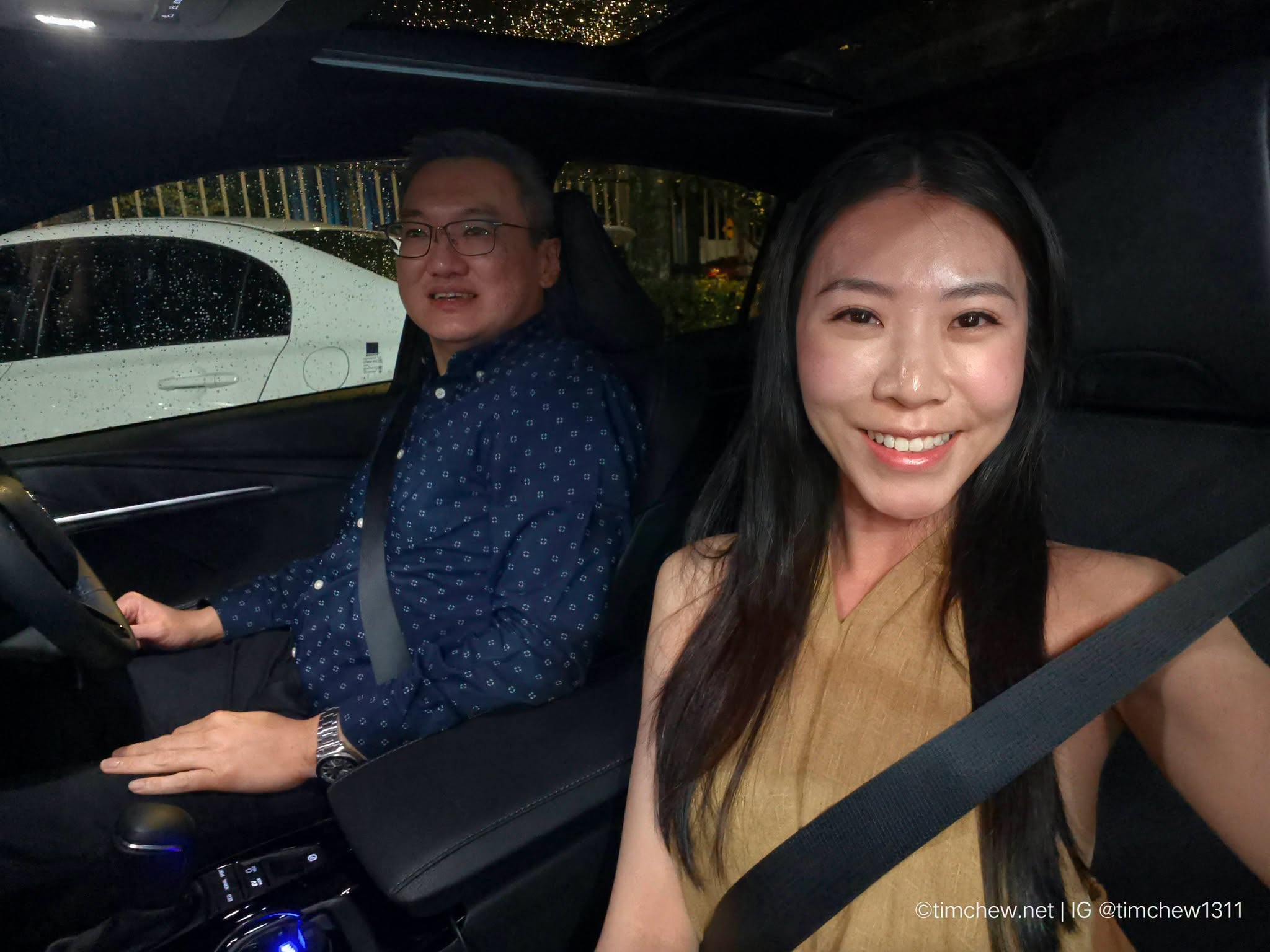
Photos captured with the vivo X300 Pro


