Gulfstream Aerospace Corp. said on 7 July 2026 that it had completed a high-altitude flight test campaign examining whether 100% neat sustainable aviation fuel, or SAF, can reduce the particle emissions that contribute to the formation of contrails, at altitudes of up to 50,000 feet.
The company described the campaign as the first of its kind in business aviation. It marked the first flight using 100% SAF for both the Gulfstream G800 and its Rolls-Royce Pearl 700 engines, according to Gulfstream.
For the tests, a G800 flew on the fuel while a specially modified Gulfstream G700, also powered by Pearl 700 engines and converted into what the company called a flying emissions measurement laboratory, flew alongside it in close formation. Gulfstream said that arrangement allowed researchers to take real-world measurements of particulate matter and contrail-forming atmospheric conditions at altitudes higher than those flown by most commercial airliners, but typical for business jets.
The campaign was carried out with a group of partners that included the US Federal Aviation Administration’s Center of Excellence for Alternative Jet Fuels and the Environment, known as ASCENT; NASA; the German Aerospace Center, or DLR; Missouri University of Science and Technology; Aerodyne Research; Rolls-Royce; SAF producer Montana Renewables; and World Fuel Services. Gulfstream said the collaboration was designed to isolate how fuel composition affects non-CO2 emissions, an area it described as receiving increasing attention across science and industry.
Researchers compared emissions from conventional Jet A fuel, low-sulphur Jet A and neat hydroprocessed esters and fatty acids, or HEFA, SAF, which Gulfstream said contains no sulphur or aromatic compounds. The company said preliminary results suggested a significant, measurable reduction in the particulate emissions that contribute to contrail formation when the aircraft operated on neat SAF.
“As aviation continues its work in optimising environmental efficiencies, Gulfstream is focused on advancing solutions that deliver measurable impact today while shaping a more sustainable future for flight,” Burns said. “This campaign reflects our strategy to lead with advanced technology, real-world testing and meaningful collaboration to better understand and reduce aviation’s environmental impact.”
Mark Burns, president of Gulfstream
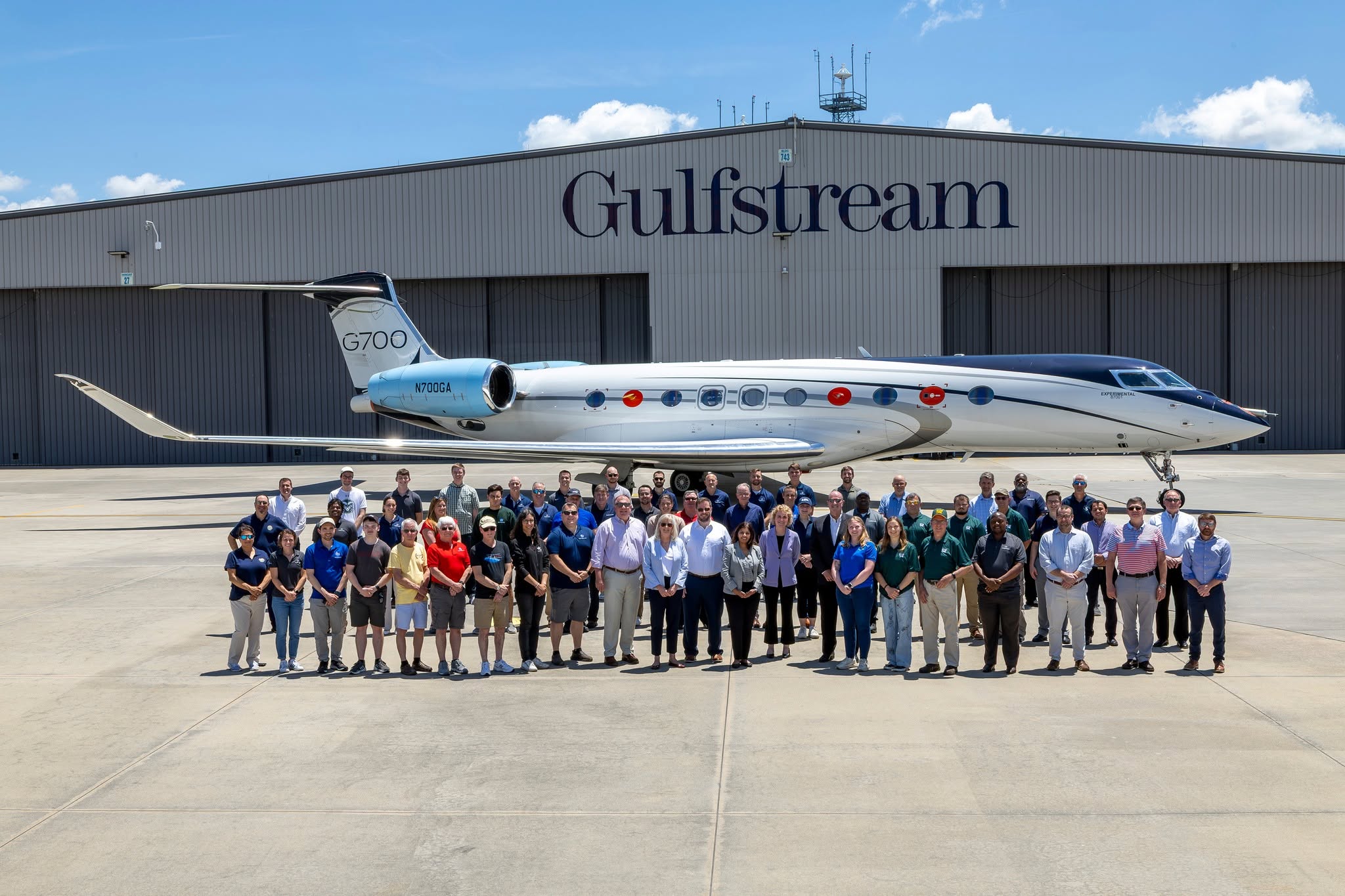
Gulfstream said the results required months of preparation by its engineering and flight test teams, including modifications to the G700’s cabin to integrate emissions-measuring instruments. The company said its pilots trained extensively in simulators to fly the formation profiles needed to capture both near-field emissions and how contrails evolved several miles behind the aircraft.
Rich Moore, a research scientist at NASA, said the campaign had produced data that would help refine the agency’s understanding of aviation’s environmental effects. “This collaboration enabled these first-ever high-altitude 100% SAF emissions observations, allowing the team to operate safely and efficiently while maintaining the precision needed for accurate data collection,” Moore said. “This real-world data is essential to improving our models and understanding aviation’s broader environmental impact.”
Gulfstream said the data gathered during the campaign would be shared with the wider aviation and atmospheric science communities, and would be used to help refine analytical models, inform future fuel standards and support the development of operational strategies aimed at reducing aviation’s environmental impact.
“Partnering with Gulfstream was an excellent opportunity that will help inform and quantify our efforts to mitigate the impacts of persistent contrails. We appreciate the collaboration with industry as the FAA continues to evaluate how SAF may help reduce persistent contrails.”
Julie Marks, executive director of the FAA’s Office of Environment and Energy
Rolls-Royce, whose Pearl 700 engines powered both aircraft during the campaign, separately said its director of research and technology, Alan Newby, welcomed the findings. “Sustainable Aviation Fuels in combination with compatible, ultra-efficient aero engines will not only play a vital role in decarbonising aviation but have also been shown to reduce certain non-CO2 emissions,” Newby said. “The valuable insights we have gained from these latest tests at high altitudes, as well as the data from projects like QRITOS or ECLIF3, are driving real progress in understanding aviation’s non-CO2 climate impacts and potential mitigation options.”
Gulfstream said the campaign builds on a history of SAF-related milestones for the company, including what it said was the industry’s first transatlantic flight using SAF in one engine, in 2011, and the industry’s first transatlantic flight powered entirely by SAF, in 2023. The company said its aircraft have flown more than 3.5 million nautical miles on SAF blends to date.
Contrails are ice-crystal clouds that form when water vapour from engine exhaust condenses around small particles, including soot and sulphur aerosols, in the cold air found at cruising altitude. Persistent contrails can spread into broader cirrus-like cloud cover, and a growing body of atmospheric research has identified them as a significant contributor to aviation’s overall warming effect, alongside carbon dioxide emissions. Because neat SAF made from HEFA feedstocks contains no sulphur and very low levels of aromatic compounds compared with conventional jet fuel, researchers have theorised that it could produce fewer of the particles around which contrail ice crystals form — a hypothesis the Gulfstream-led campaign was designed to test using real flight data rather than laboratory or modelling estimates.
The G800 is Gulfstream’s longest-range purpose-built business jet currently in production, with a manufacturer-stated range of up to 8,000 nautical miles. Both the G800 and the G700 used in the campaign are powered by twin Rolls-Royce Pearl 700 engines.
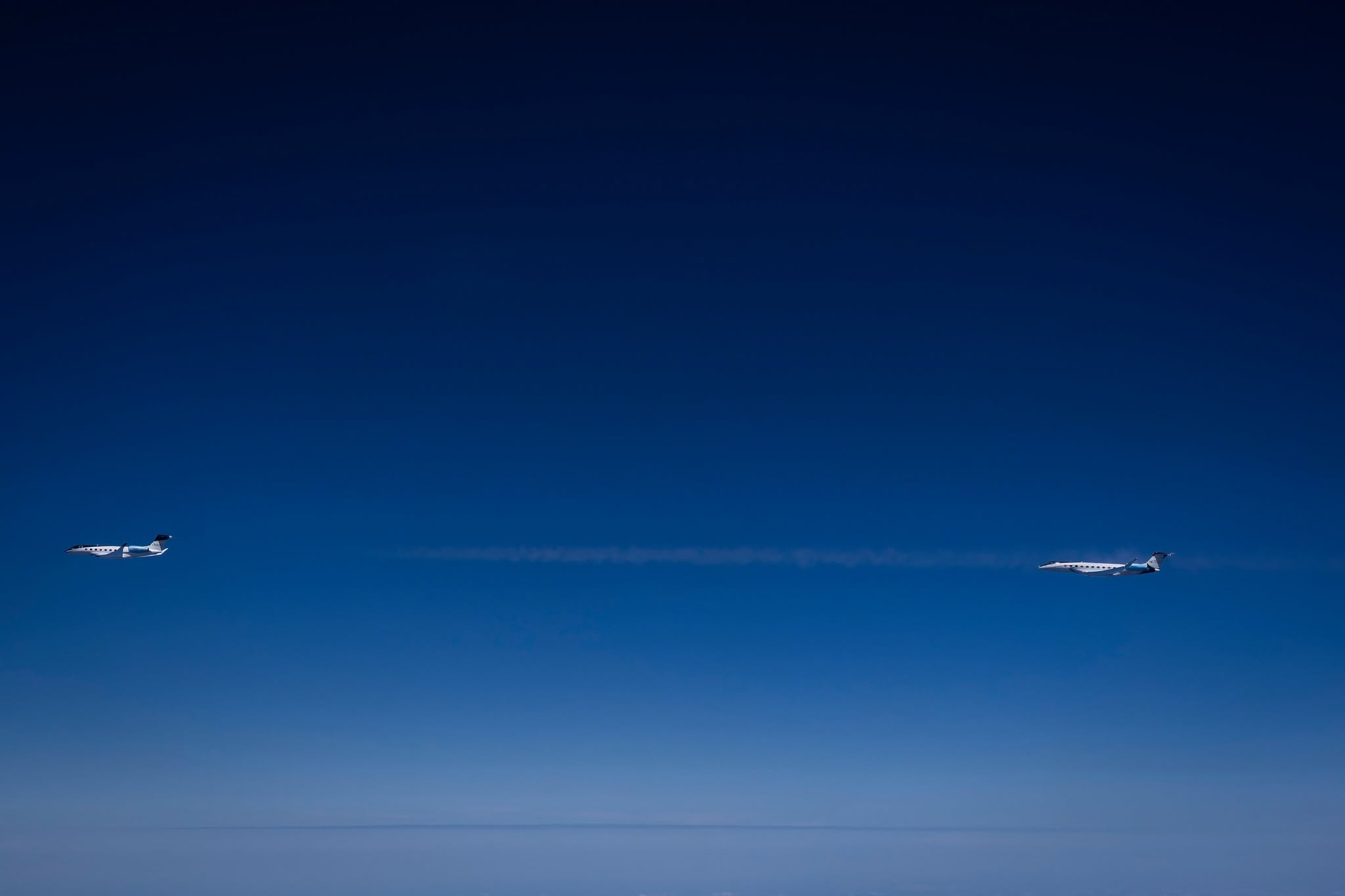
The findings, though described by Gulfstream as preliminary, add real-world flight data to a scientific debate that has, until recently, relied heavily on laboratory tests and computer modelling. Contrails have drawn growing attention from climate researchers because, unlike carbon dioxide, which accumulates in the atmosphere over decades, their warming effect is thought to occur quickly and to vary considerably depending on where, when and how high an aircraft flies. Some studies have suggested that a relatively small share of flights may be responsible for a large proportion of aviation’s contrail-related warming, which has fuelled interest in operational fixes, such as rerouting aircraft around contrail-prone air masses, as well as fuel-based approaches like the one Gulfstream tested.
For business jet owners and operators, the practical relevance is still some way off. Neat SAF remains in short supply and typically costs more than conventional jet fuel, and no regulatory requirement currently obliges operators to use it. However, data of this kind could eventually feed into future fuel specifications or incentive schemes, particularly if regulators such as the FAA and counterparts in Europe move to treat contrail mitigation as a distinct target alongside carbon dioxide reductions, as some have already signalled they intend to do.
For the flying public more broadly, the research is part of a wider effort across the aviation industry — spanning airlines, manufacturers, fuel producers and regulators — to better understand and eventually reduce aviation’s total climate impact, not just the portion attributable to carbon dioxide. Because contrail formation is highly sensitive to altitude, temperature and humidity, findings drawn from business jets flying at 50,000 feet will not translate directly to commercial airliners, which typically cruise several thousand feet lower.
Even so, the underlying question the campaign addressed — whether cleaner-burning fuel can meaningfully cut the particles that seed contrails — is directly relevant to airline operations, and the data Gulfstream and its partners gather is intended to feed into the same models and standards that will eventually apply to the wider commercial fleet. Whether that translates into noticeably fewer contrails in the sky, or into new fuel and routing rules for commercial flights, will depend on further research and on decisions by regulators and fuel producers well beyond this single test campaign.
Images by Gulfstream.


