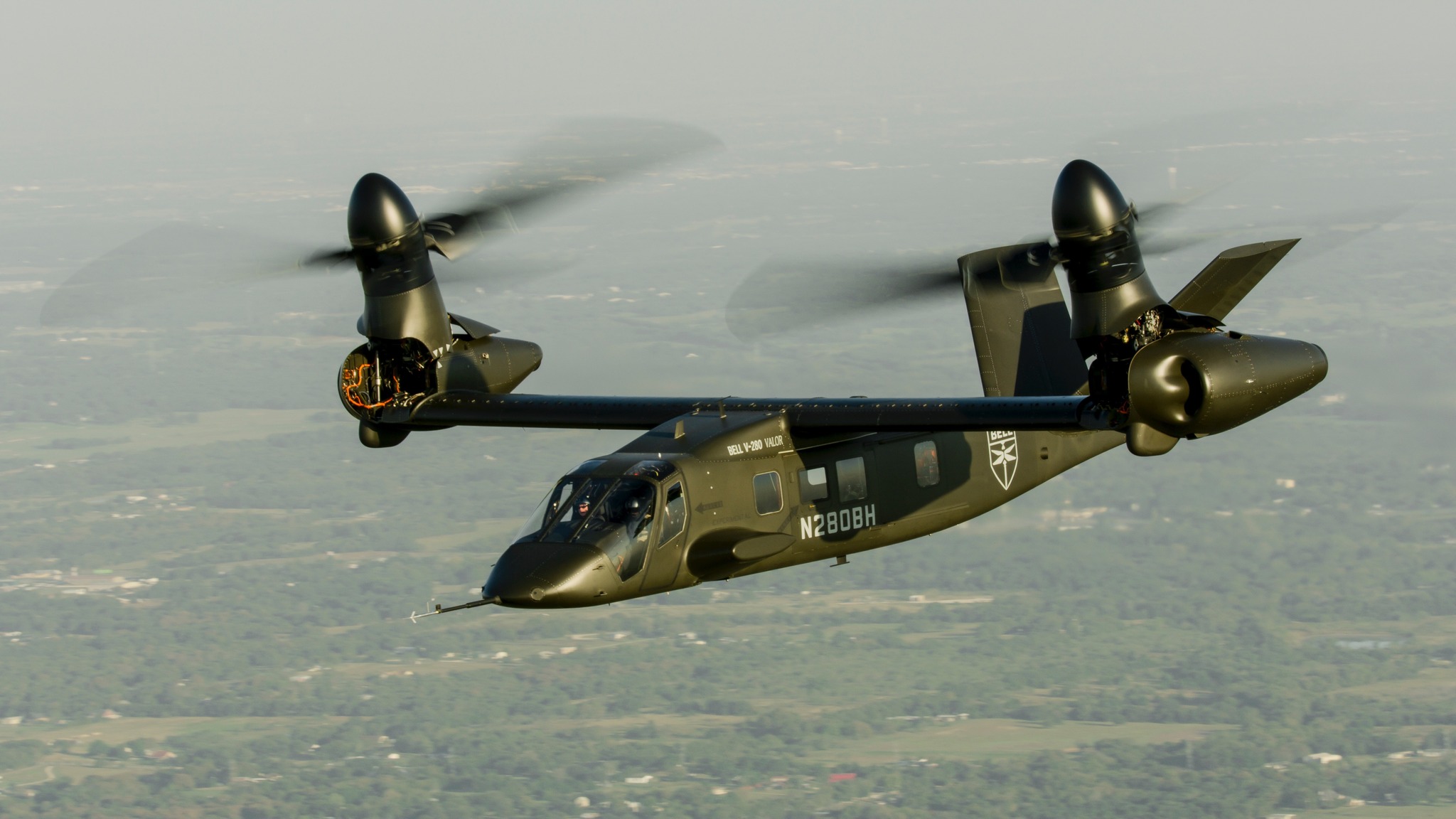
The U.S. Army has officially designated its Future Long-Range Assault Aircraft (FLRAA) the MV-75 Cheyenne II, Bell Textron Inc. announced Tuesday at the Army Aviation Association of America’s Army Aviation Warfighting Summit. The name honours the Cheyenne Tribes — two federally recognised nations: the Northern Cheyenne Tribe in Montana and the Cheyenne & Arapaho Tribes in Oklahoma — consistent with the Army’s longstanding tradition of naming aircraft after Native American tribes.
The announcement was made before a crowd that included members of both Cheyenne nations. The Hon. Mike Obadal, 36th Under Secretary of the Army, addressed those in attendance, noting that the MV-75 honours “a legacy, forged by conflict, proven in battle, originally known to the U.S. Army as some of the most formidable and disciplined adversaries on the battlefield.”
The Mission Design Series designation MV-75 was first revealed by the Army in 2025. The “MV” prefix denotes a multi-mission vertical takeoff aircraft, while “75” commemorates the Army’s founding year of 1775. The common name Cheyenne II additionally references the AH-56 Cheyenne, a Bell attack helicopter programme from the 1960s that was ultimately cancelled before entering service.
Col. Jeffrey Poquette, Project Manager for FLRAA, said the naming carried significance on multiple levels. “In naming the MV-75 Cheyenne II, we honor the enduring contributions of the Cheyenne people to our Nation — both their distinguished service in uniform and their legacy as steadfast protectors of their way of life. The name also reflects a connection to the bold vision of the AH-56 Cheyenne, while ‘II’ signifies a new era of innovation and capability. It is a name that pays tribute to an indomitable warrior spirit and signals a decisive step forward for Army aviation.”
Bell’s V-280 Valor tiltrotor was selected as the winner of the FLRAA competition in December 2022, beating the Boeing-Sikorsky SB>1 Defiant compound helicopter. The Army awarded the company a deal worth up to $1.3 billion that could total $7 billion if all options are exercised. The MV-75 Cheyenne II is the Army’s first conventional tilt-rotor aircraft.
The programme is intended to replace more than 2,000 UH-60 Black Hawk helicopters over the coming decades. The MV-75 tiltrotor is designed to carry up to 14 troops and four crew members and reach speeds of around 300 knots, with a range of roughly 2,100 nautical miles — figures that represent, according to Bell, more than twice the speed and range of the current fleet. The overall programme value could potentially reach around $70 billion across the life of the MV-75 fleet.
In January of this year, the Army confirmed plans to accelerate its timeline for the MV-75 by multiple years, fielding the first examples in 2027 versus the original target of 2031. The Army has detailed a push for an accelerated FLRAA timeline, aiming to make an early production decision in fiscal year 2028, a year earlier than previously scheduled, and outlining plans to deliver the first aircraft to the 101st Airborne Division by late 2028 or early 2029.
However, programme officials have been measured in their public commitments on specific dates. Maj. Gen. Clair Gill, Programme Acquisition Executive for Maneuver Air, told reporters that first flight would happen “when it’s going to happen,” citing supply chain pressures and budgetary constraints as variables outside the programme’s direct control. Gill was candid about the structural challenge: “Every one of [Bell’s] sub-tier suppliers cannot weather that storm every year. And so what happens is, if we have no money, and we either have to stretch the program, slow down the program, stop the program, then it puts tremendous strain on the rest of it.”
Ryan Ehinger, senior vice president and programme director for FLRAA at Bell, said the naming announcement coincided with an acceleration in the aircraft’s production timeline. “Bell is proud that the MV-75 carries the name of the Cheyenne Tribes as we revolutionize Army Aviation. The Cheyenne heritage represents everything that the MV-75 will bring to the future fight. This is a significant milestone that comes right as we are accelerating assembly and production to deliver the MV-75 capability to warfighters faster.”
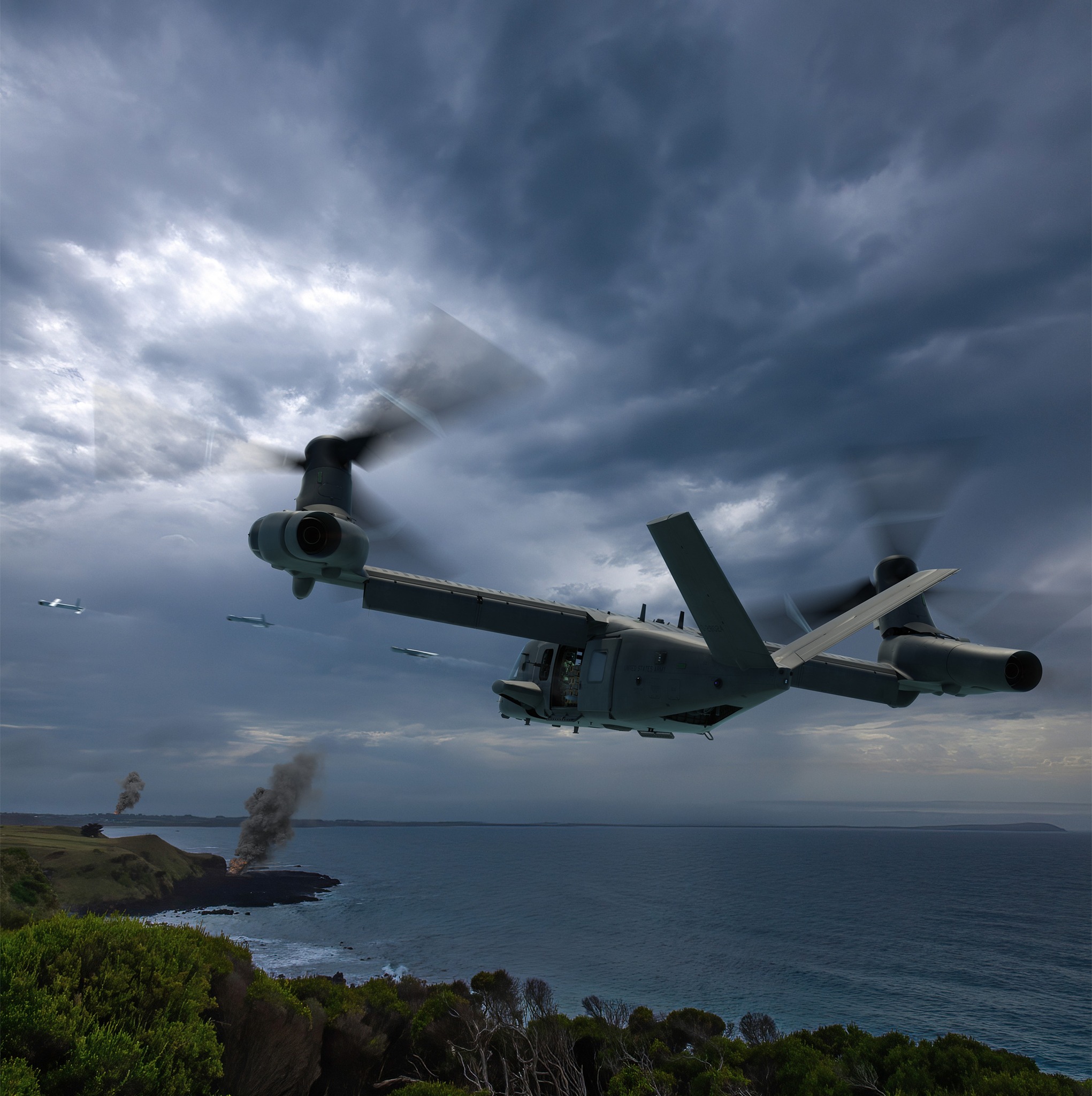
The naming announcement came days after a flurry of supplier contract awards that point to the programme’s broadening industrial footprint. RTX’s Collins Aerospace was awarded multiple contracts on 13 April 2026 to deliver five critical systems for the MV-75, covering main power generation, an interconnect drive system, the SmartProbe air data system, cockpit seating, and an ice protection system. Collins Aerospace president Troy Brunk said the company has “ready-now manufacturing and service capabilities around the globe to ensure the Army can urgently deliver, modernize and sustain the MV-75 FLRAA for the next 50 years.”
Bell’s additional partners on the MV-75 include Rolls-Royce, providing its AE 1107F engines; GE Aerospace, delivering the avionics and digital backbone; and Honeywell, contributing the auxiliary power unit and cooling solution. Bell also announced an April construction start for a new $632 million factory in North Fort Worth, which will build parts for the FLRAA.
The Cheyenne II programme represents one of the most consequential restructurings of the Western rotary-wing market in a generation. The Army is simultaneously conducting a major restructuring under its Army Transformation Initiative, which will see it divest all D-model Boeing AH-64 attack helicopters and cut 11 air cavalry scout squadrons and two reserve aviation brigades — consolidating long-range assault capability into the MV-75 platform. The tiltrotor’s performance envelope, with a one-way unrefuelled flight range of 2,440 nautical miles and continuous cruise speeds of at least 280 knots, would extend the Army’s air assault reach well beyond what legacy rotorcraft can provide.
The platform’s Modular Open Systems Approach (MOSA) is designed to allow vendor-agnostic upgrades over the aircraft’s service life, which Bell and the Army have framed as a safeguard against the technological obsolescence that has historically affected long-duration military aviation programmes.
The FY2026 National Defense Authorization Act backed the Army’s FLRAA acceleration push, while directing the service to provide an implementation plan and timeline, including details on the status of the industrial base to support early production and the estimated long-term cost savings.
.
Visuals courtesy of Bell Textron Inc.


