Dassault Falcon Service Mérignac Marks Ten Years of Falcon Maintenance
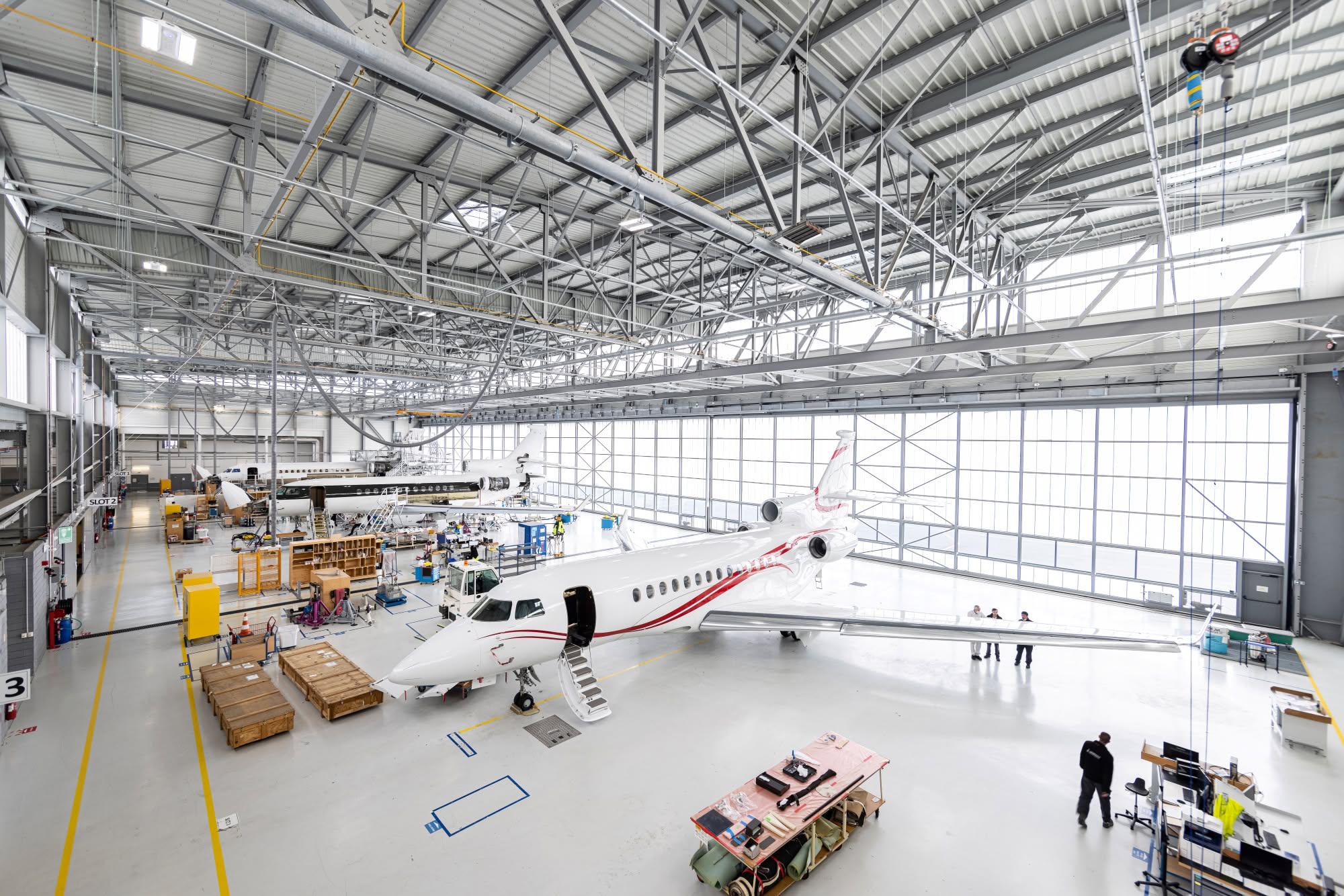
Dassault Falcon Service’s maintenance facility at Bordeaux-Mérignac, adjacent to Dassault Aviation’s main assembly plant, is marking its tenth year in operation, having completed 600 maintenance projects on Falcon business jets since opening its doors in 2016.
The six-bay facility, which now employs 70 people, has carried out 66 C-checks on Falcon 7X and 8X aircraft during the decade, according to Dassault. A C-check is a major scheduled inspection that readies an aircraft for a further eight years of operation.
“Over the past decade, Mérignac has become an important part of our global support network, combining close access to Dassault engineering resources with the maintenance capabilities operators need. Its continued expansion reflects both the growth of the long-range Falcon fleet and our long-term commitment to supporting customers wherever they operate.”
Jean Kayanakis, senior vice president, Worldwide Falcon Customer Service & Service Center Network
The facility is equipped to carry out structural repairs, which typically require direct engineering involvement, along with EASy IV avionics upgrades and other supplemental type certificate modifications, including installation of the Starlink in-flight connectivity system. Working with local partners, it also offers cabin interior retrofits and other upgrades.
DFS-Mérignac opened with an initial focus on the Falcon 7X and 8X before expanding to cover the Falcon 2000 EASy and 900 EASy families. It has since added capacity for 12- and 24-month inspections on the newer Falcon 6X, and Dassault says the facility will eventually extend its scope to the Falcon 10X, the manufacturer’s flagship model still in development.
Beyond its onsite work, DFS-Mérignac provides technical backup to Dassault’s worldwide network of 60 factory-owned and authorised service centres whenever specialised engineering expertise is needed, including dispatching Mérignac personnel to assist with aircraft-on-ground situations at other locations.
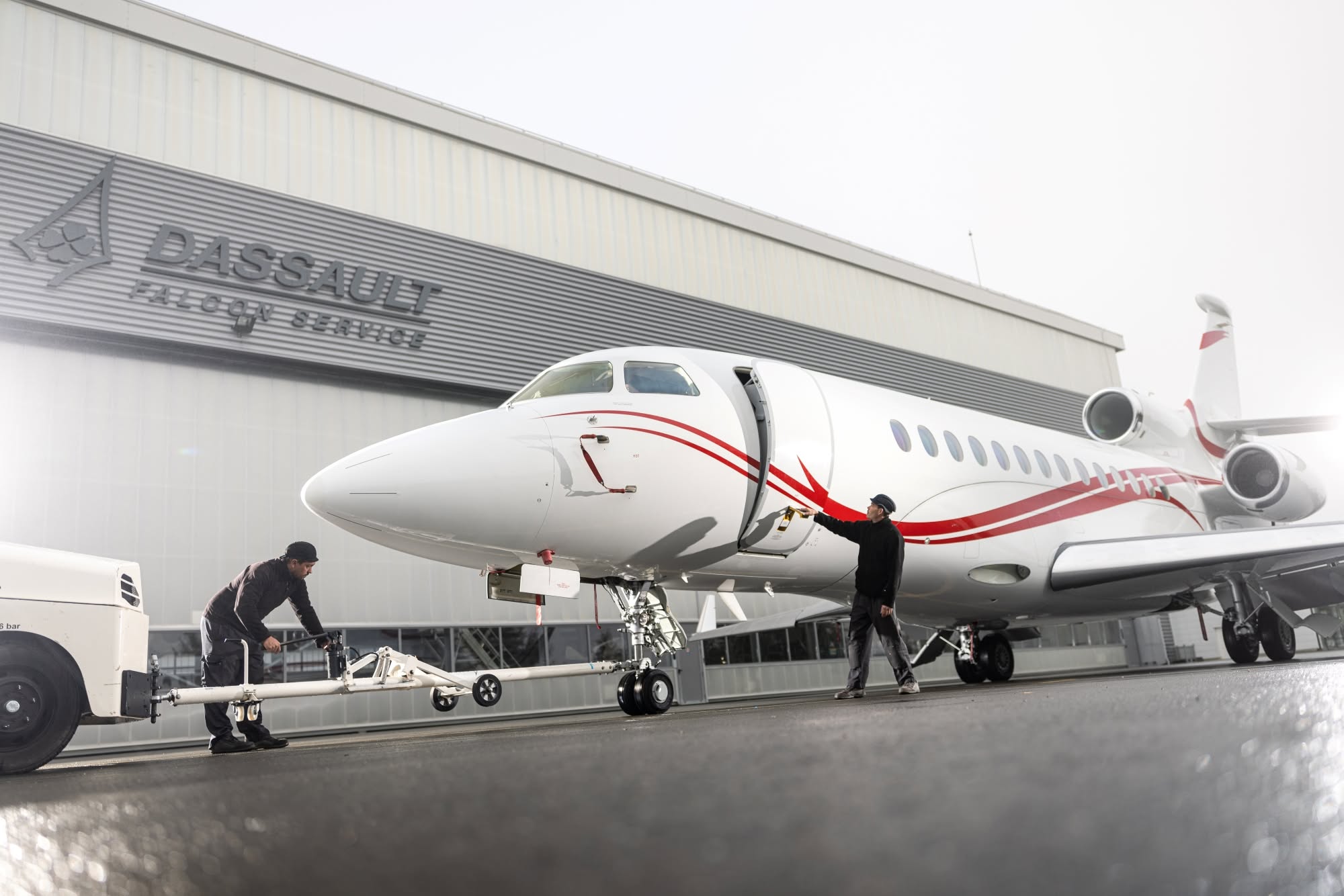
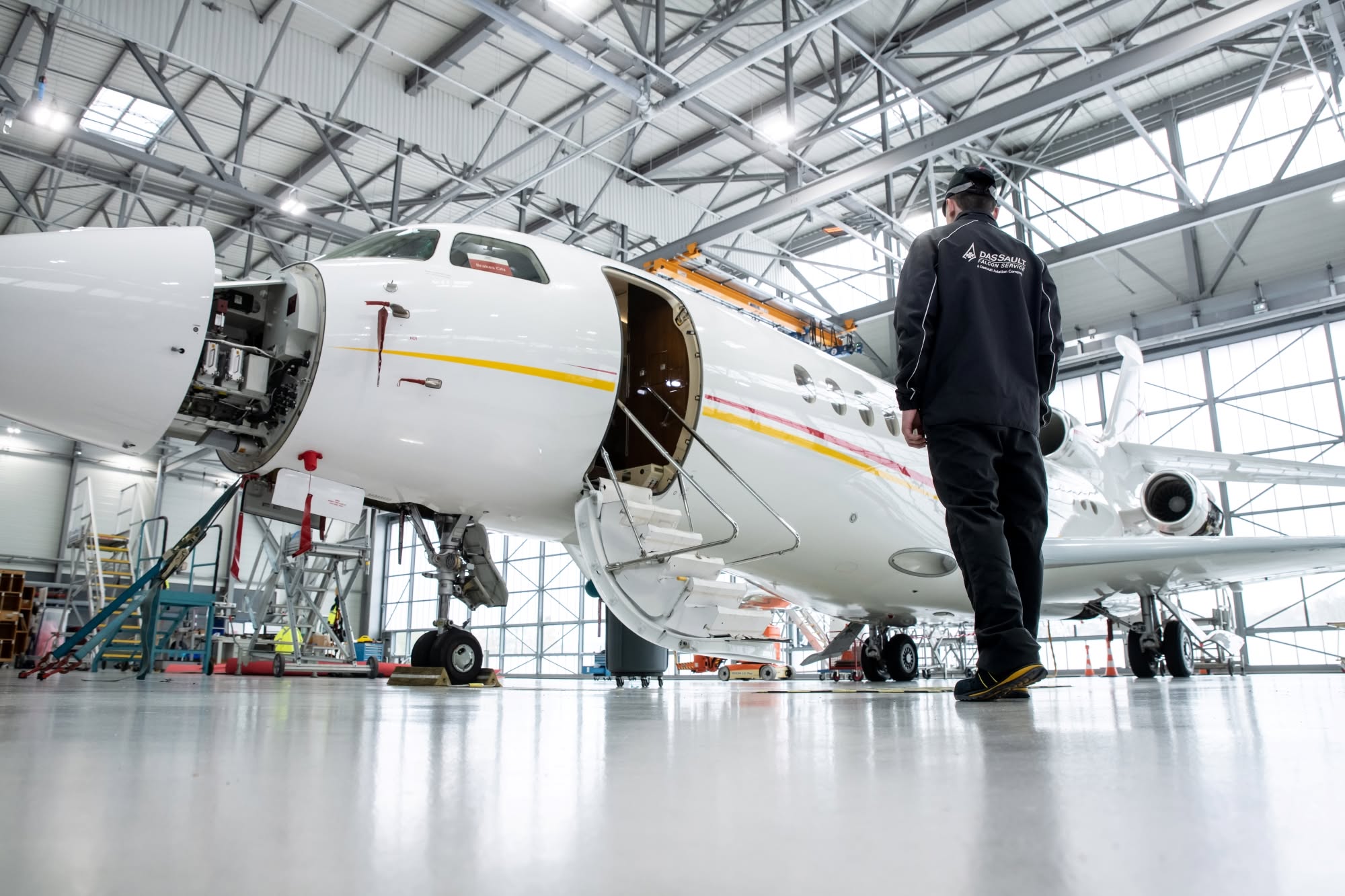

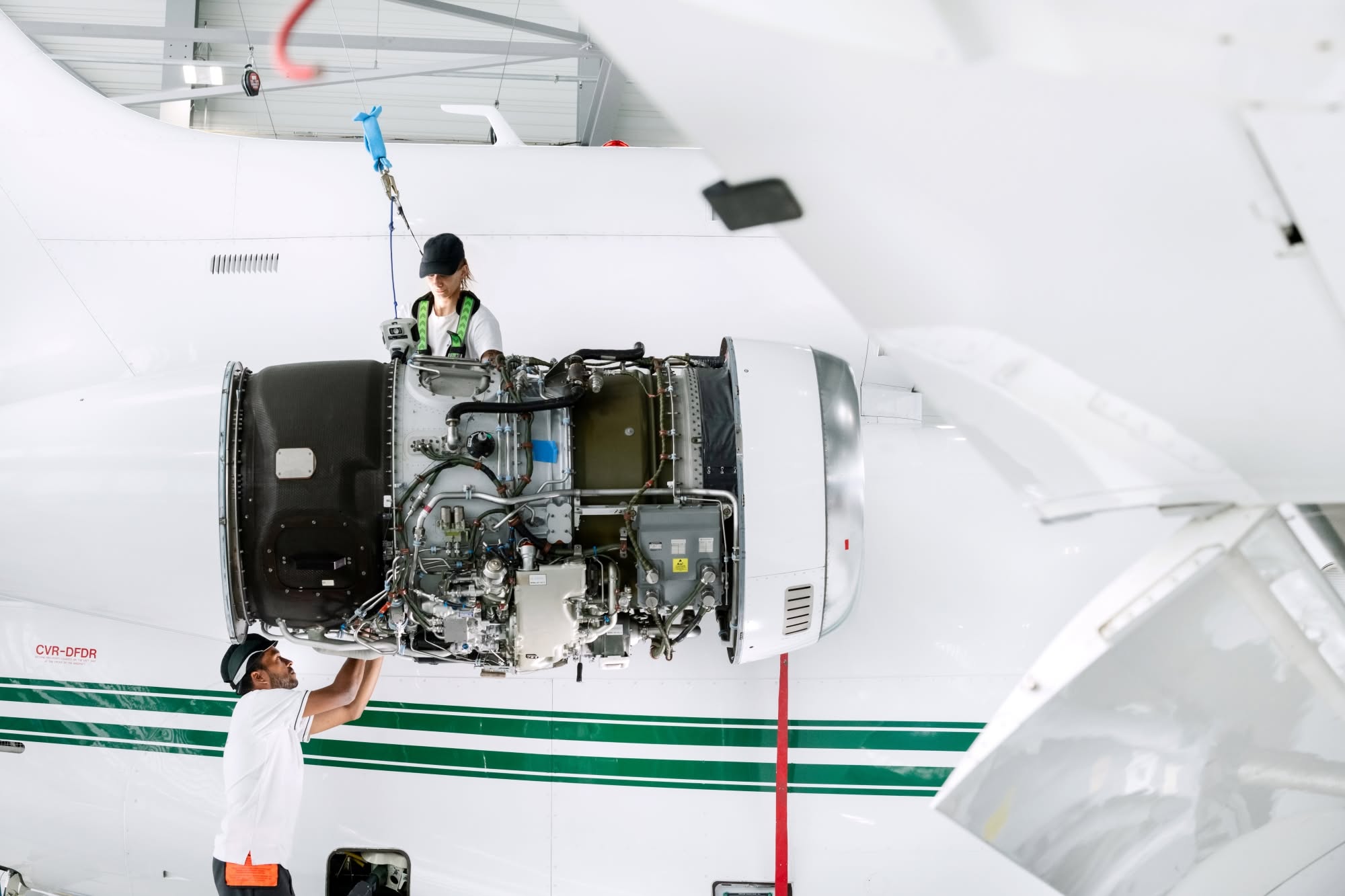
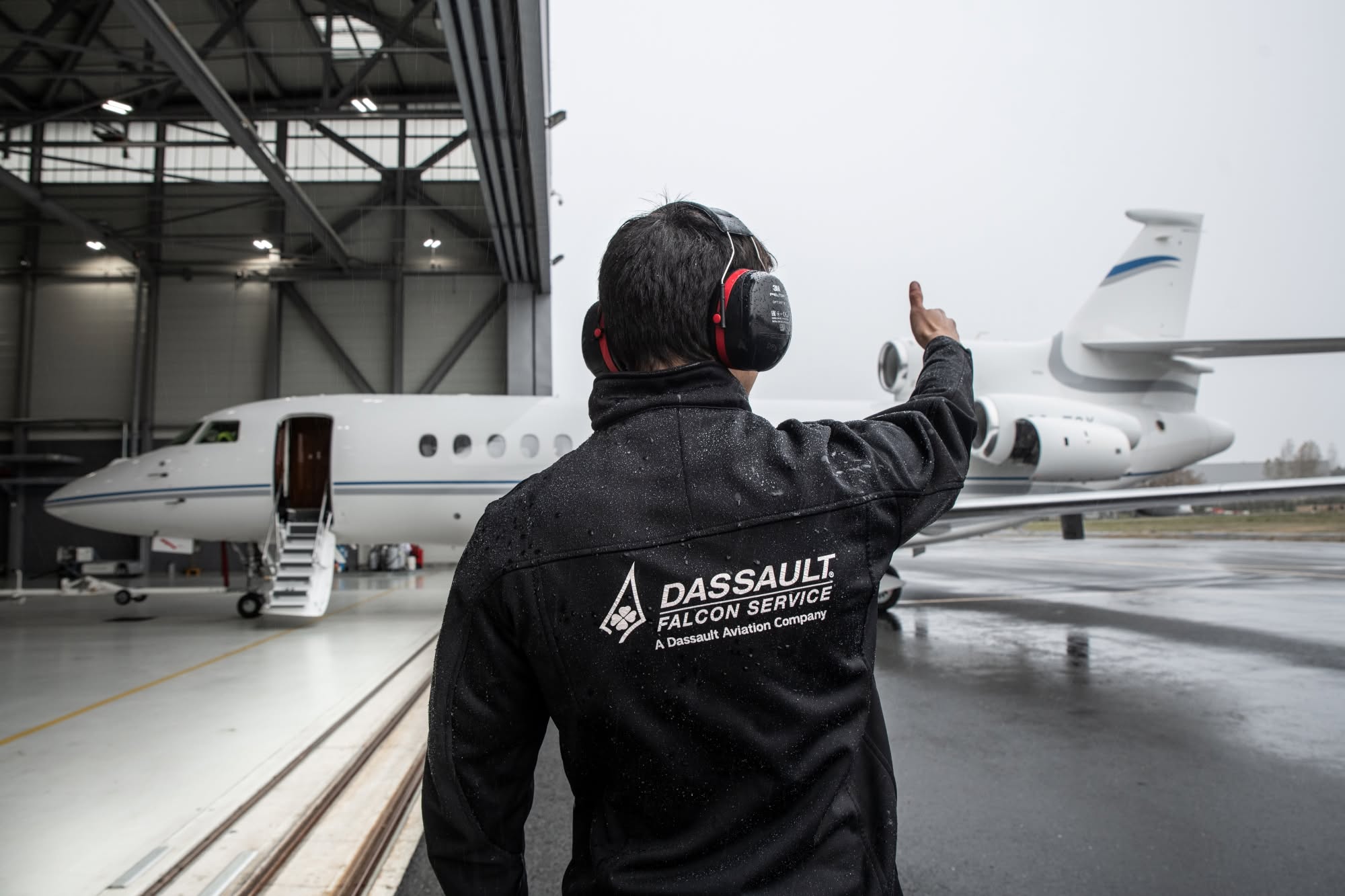
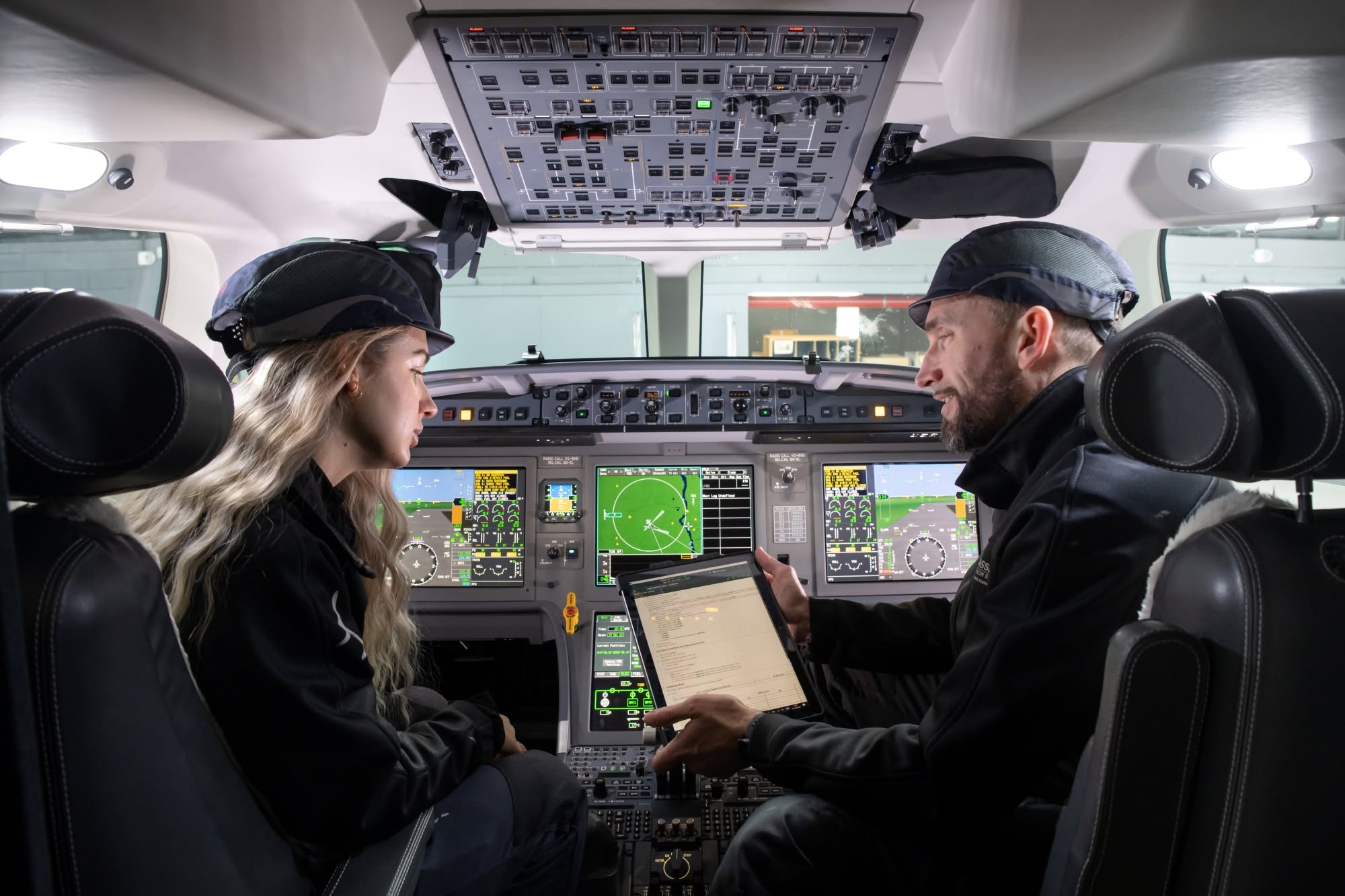
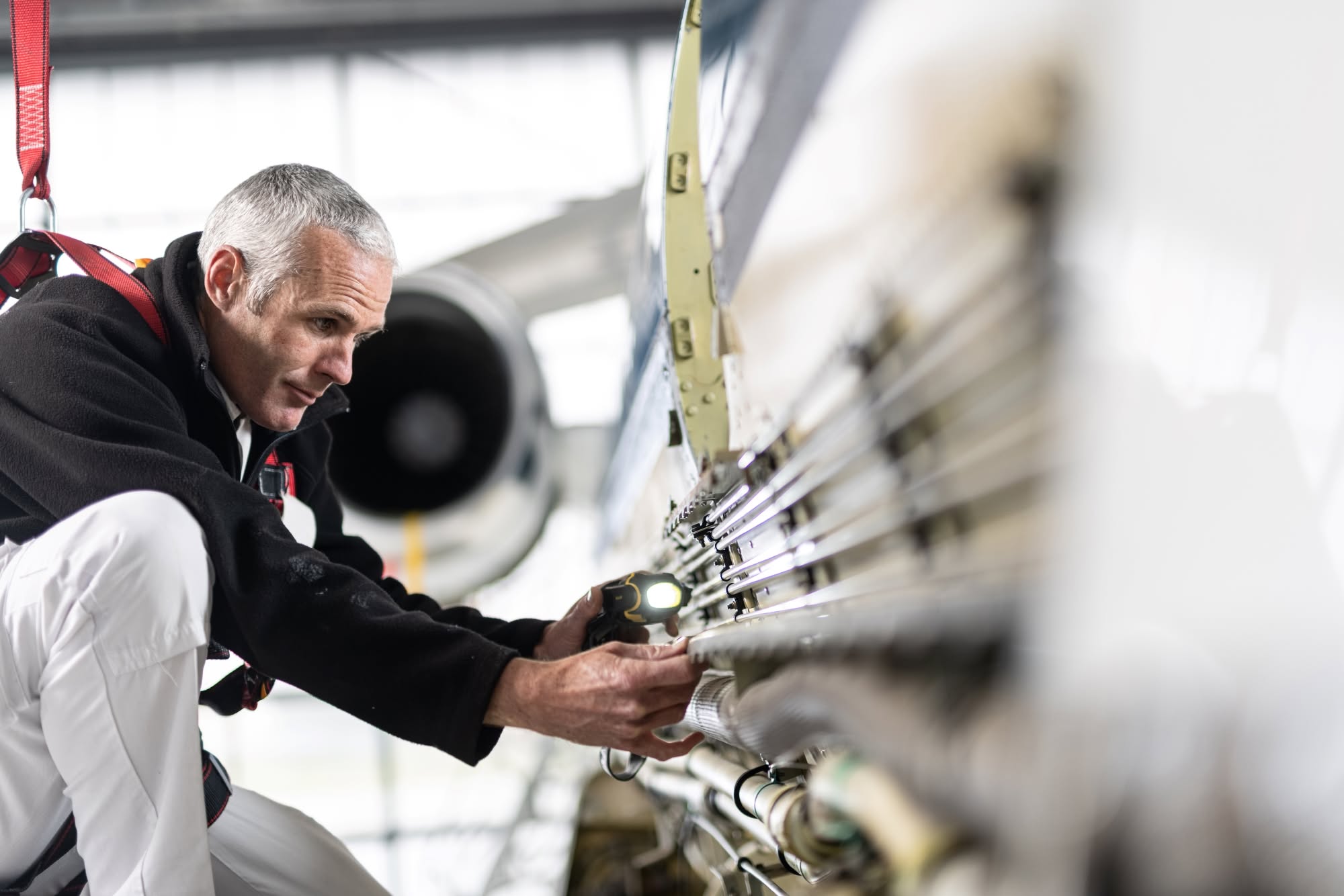
The Mérignac centre was first announced in 2014 and was originally intended to serve the Falcon 5X as well as the 7X and 8X. The 5X programme, launched in 2013, was shelved by Dassault in late 2017 after its Safran Silvercrest engine failed to meet performance targets; its basic airframe and systems work was later carried forward into the Falcon 6X, which was launched in December 2017. The facility opened for business in October 2016, receiving its first Falcon 7X inputs that month, roughly in line with Dassault’s original mid-2016 target. At its fifth-anniversary mark in 2021, the centre was reported to employ a crew of 62 across a 7,500-square-metre building, figures that have since grown to the current 70-employee count.
The Falcon 7X, Dassault’s first fly-by-wire business jet, entered service in 2007; the extended-range 8X variant followed in October 2016, the same year the Mérignac facility opened. The Falcon 6X, a large-cabin, long-range twinjet, first flew in March 2021 and entered service in November 2023 after certification delays attributed to pandemic-related supply chain disruption. The Falcon 10X, intended as Dassault’s ultra-long-range flagship with the largest cabin cross-section of any purpose-built business jet, was launched in 2021 with an original service-entry target of 2025. That date has since slipped twice, first to 2027 and now to 2029; the aircraft completed its first flight only this year, in March 2026, following the rollout of the first test article.
A business aviation maintenance facility reaching its tenth year of operation is not, on its own, an unusual event. What makes the Mérignac milestone a more useful data point for the wider market is its location and function within Dassault’s support network rather than its age: the facility sits directly alongside the final assembly line for the aircraft it services, giving it a level of access to engineering and production expertise that a standalone or third-party MRO facility cannot straightforwardly replicate. For operators weighing where to send an aircraft for a C-check or a structural repair, proximity to the original design and manufacturing teams is a meaningful factor, particularly for older, high-utilisation long-range types such as the 7X, where unusual findings during heavy maintenance are more likely to require engineering sign-off.
The facility’s gradual widening of scope — from the 7X and 8X, to the 2000 EASy and 900 EASy families, to the newer 6X — also illustrates a structural feature of business jet maintenance economics that is often overlooked in coverage of new aircraft launches. A manufacturer’s maintenance network has to grow in step with its in-service fleet composition, which typically lags several years behind its delivery and sales activity; a facility built in 2016 around a single aircraft type is, by the ten-year mark, managing a portfolio shaped as much by what has entered service in the interim as by what it was designed for. The eventual addition of the Falcon 10X to Mérignac’s scope will be a further test of this: with that aircraft’s entry into service now expected in 2029, the facility’s stated intention to support it is a multi-year commitment rather than an immediate operational change, and one that will depend on how the 10X’s own certification and early in-service performance unfold.
More broadly, the Starlink connectivity installation and EASy IV avionics work mentioned in the release point to a pattern across business aviation MRO generally: an increasing share of facility revenue and hangar time is now tied to retrofit and upgrade work on ageing but still-current airframes, rather than solely to scheduled heavy checks. For a long-range fleet where individual aircraft can remain in active commercial or private use for two decades or more, the capacity of manufacturer-aligned service centres to keep pace with avionics and connectivity standards — which evolve on a far shorter cycle than the airframes themselves — is becoming as material to an operator’s choice of maintenance provider as the traditional heavy-check capability the C-check figures in this release are intended to showcase.
Photos by Dassault.
Cover photo by Dassault.


