ExecuJet MRO Services Malaysia Completes Its First Heavy Check on Falcon 8X
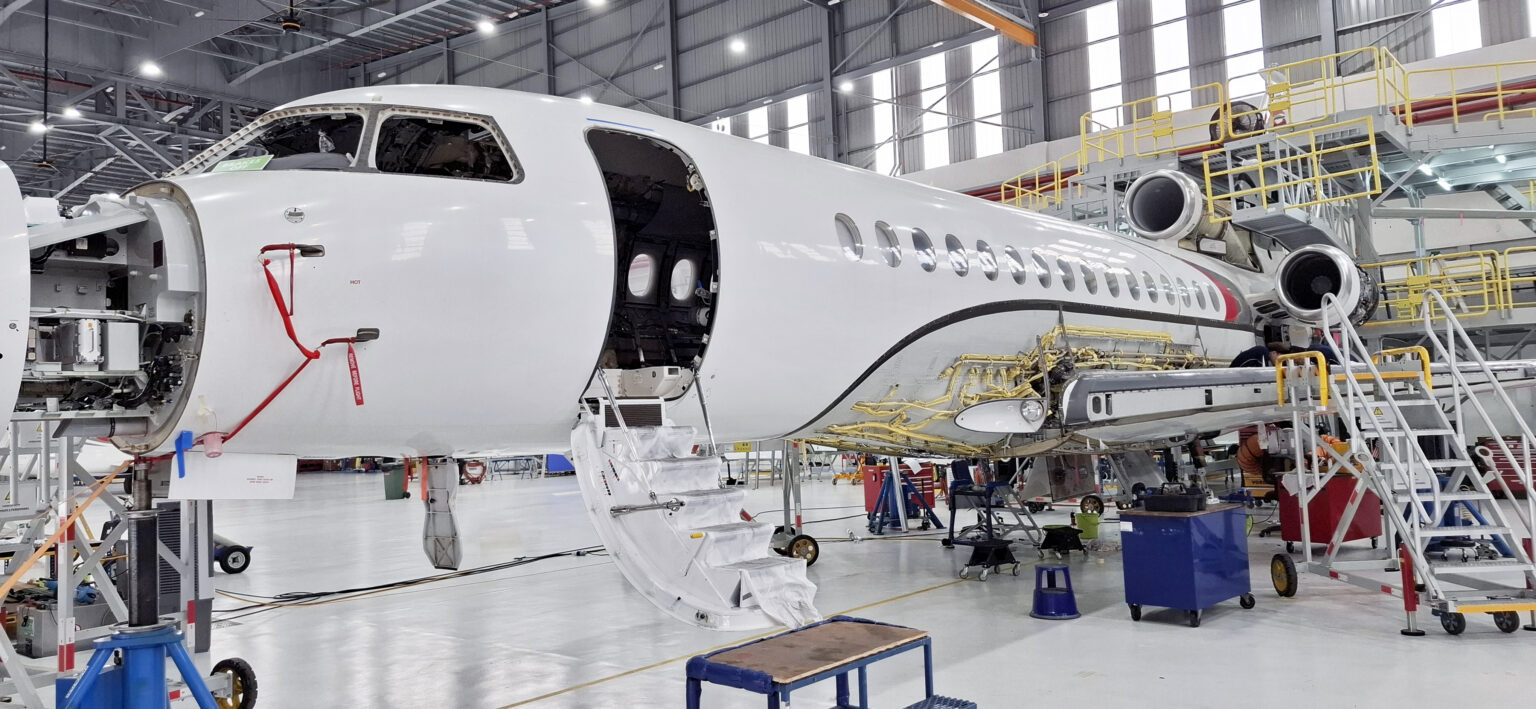
ExecuJet MRO Services Malaysia, a wholly owned subsidiary of Dassault Aviation, has completed a C-check on a Falcon 8X, the facility’s first heavy maintenance check on that aircraft type, the company said on 27 August 2026.
The Falcon 8X, which is operationally based in Asia, underwent the scheduled maintenance at ExecuJet’s heavy maintenance facility at Subang Airport near Kuala Lumpur. The facility is equipped to support major inspections on all in-production Falcon aircraft types, the company said.
A Falcon C-inspection is a major maintenance check involving extensive inspection of aircraft structures and systems, and is typically required after eight years of service, marking a significant milestone in an aircraft’s maintenance cycle.
ExecuJet said the project reflects a broader trend of Falcon operators based in Asia increasingly seeking maintenance support within the region, rather than sending aircraft elsewhere for heavy checks. The facility is scheduled to carry out additional C-inspections on Falcon 8X aircraft this year, with aircraft arriving from other parts of Asia, the company said.
According to data from Asian Sky Group, the Falcon 8X is a popular ultra-long-range business jet in the Asia-Pacific region, with close to 20 aircraft currently operating there.
“Completing the first C-inspection on a Falcon 8X demonstrates the growing confidence Falcon operators have in our facility and technical capabilities. As the number of Falcon aircraft expands in Asia-Pacific, operators are now increasingly looking for high-quality maintenance support within the region. Our facility is well positioned to meet the growing demand through our experienced workforce, purpose-built infrastructure and access to the wider Dassault MRO network support. The presence of a Dassault Aviation customer support team in the facility adds value to the customers’ experience.”
Ivan Lim, regional vice president for Asia at ExecuJet MRO Services
Falcon aircraft currently account for 60% to 65% of the facility’s total maintenance workload, according to ExecuJet, which said the share continues to grow as part of a broader increase in the company’s Falcon-related maintenance activity.
ExecuJet MRO Services Malaysia has expanded its Falcon maintenance capabilities in recent years. The facility previously carried out heavy checks on the Falcon 2000EX, Falcon 900LX and Falcon 7X, and has also handled cabin refurbishment and repaint work on Falcon aircraft alongside scheduled maintenance. The Subang Airport site holds approvals from aviation authorities including the U.S. Federal Aviation Administration and the European Union Aviation Safety Agency to work on Dassault’s in-production Falcon models.
The Falcon 8X is a three-engine, ultra-long-range business jet developed as a stretched derivative of the Falcon 7X. It made its first flight in February 2015 and was certified in June 2016, entering service later that year. With a fuselage roughly 3.6 feet longer than the 7X’s, the 8X has the longest cabin in the Falcon range, while sharing the same maximum seating capacity of 19 passengers. Powered by three Pratt & Whitney Canada PW307D engines, the aircraft has a maximum range of about 6,450 nautical miles, enabling nonstop flights between city pairs such as Hong Kong and London or Beijing and New York.
The completion of ExecuJet’s first Falcon 8X C-check is a modest but useful marker of how the maintenance, repair and overhaul sector in Asia-Pacific is evolving alongside the region’s expanding business jet fleet. With close to 20 Falcon 8X aircraft currently operating in the region, according to Asian Sky Group, and heavy checks typically required roughly every eight years, the type is only now beginning to generate meaningful demand for the C-check segment of maintenance work in Asia. ExecuJet’s move to bring that capability in-house at Subang Airport, rather than requiring operators to send aircraft to Europe or North America, reflects a broader pattern across the region’s MRO industry, where local providers have steadily built out heavy-maintenance capacity to match growing in-region fleets of long-range business jets.
For Dassault Aviation and its MRO network, the milestone also reinforces the manufacturer’s strategy of expanding regional service coverage to support aircraft it sells into fast-growing markets such as Southeast Asia. As ExecuJet noted, Falcon aircraft now make up 60% to 65% of the Subang facility’s total maintenance workload, underscoring how closely the site’s business has become tied to Dassault’s regional fleet growth rather than a broader mix of business jet types. That concentration brings efficiencies for Falcon operators, who benefit from technicians and infrastructure purpose-built around the type, but it also means the facility’s fortunes are closely linked to how Dassault’s aircraft sales and deliveries in the region develop over time. ExecuJet MRO Services operates a wider network of facilities beyond Malaysia, including sites in Australia and Belgium, giving Falcon operators across several regions access to comparable heavy-maintenance capability under the same Dassault-owned group.
More broadly, the case illustrates a wider trend in business aviation: as ultra-long-range jets such as the Falcon 8X age into their first major structural inspections, operators are placing growing value on proximity when choosing MRO providers, weighing ground-time and logistics costs against the reputational pull of established maintenance hubs further afield. Should ExecuJet’s additional scheduled C-inspections this year proceed as planned, the facility would further cement its position as a regional option for operators seeking to avoid the time and cost of ferrying aircraft outside Asia-Pacific for heavy maintenance, a consideration likely to grow in relevance as more of the region’s Falcon 8X fleet reaches the eight-year threshold in the coming years.
The development also comes at an important period for Dassault’s Falcon business, which has faced supply chain pressures affecting new-aircraft deliveries in recent years even as demand for maintenance and support services across its in-service fleet has continued to grow. For operators, that dynamic can make robust aftermarket and MRO support, rather than production speed alone, an increasingly important factor when weighing long-term ownership costs and aircraft availability, particularly for owners of long-range types who rely on their jets for extended intercontinental missions and cannot easily tolerate lengthy periods out of service.
Stefano Villanti named Managing Director of Leonardo Helicopters
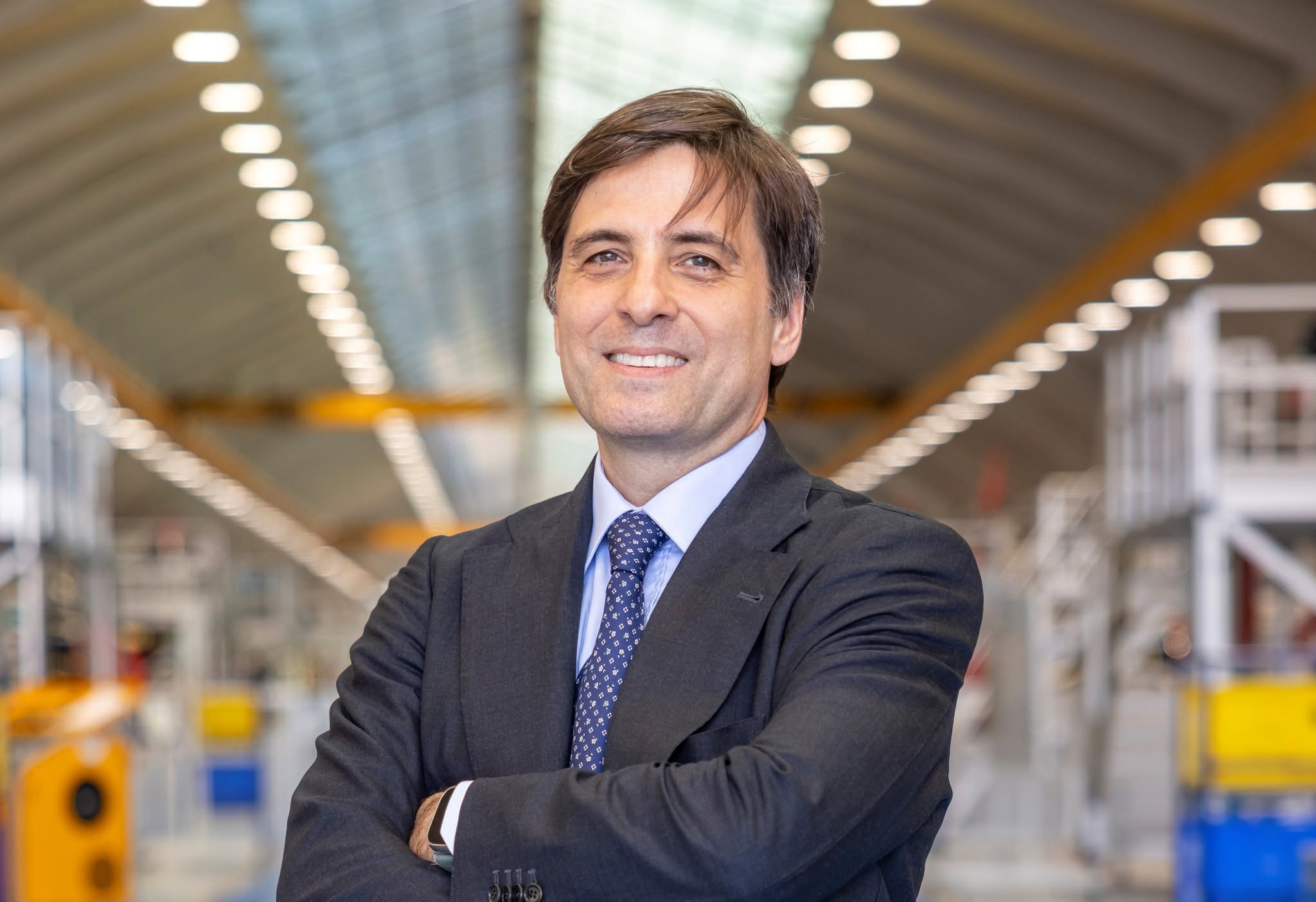
Leonardo has appointed Stefano Villanti as Managing Director of Leonardo Helicopters, effective 1 September 2026, the Italian aerospace and defence group said.
Villanti has spent the past decade in senior leadership roles within Leonardo Helicopters, most recently leading the division’s sales, marketing and contracts functions over the last three years.
In his new role, Villanti will be responsible for Leonardo Helicopters’ commitments to customers, the division’s industrial strategy and its growth objectives, the company said.
“Rotorcraft technology, with its unique performance, versatility and capability features, continues to provide an invaluable contribution across all defence, public service and civil markets. We are committed to further strengthening this strategic area of business, increasingly benefitting from synergies across our entire organisation. This will allow us to rapidly understand, adapt to and respond to evolving requirements, anticipating new trends both in terms of innovation and operational needs. I wish Stefano Villanti, in his new role, and his team continued success to achieve further growth and new global competitiveness objectives.”
Lorenzo Mariani, CEO and General Manager of Leonardo
“Leonardo is a major global player in the rotorcraft industry — a sector that, like much of the wider Aerospace, Defence and Security landscape, is navigating a period of considerable change. This environment calls for a balanced approach: continuity in execution and performance, combined with a careful assessment of longer-term priorities and the opportunities most valuable to maintaining and strengthening Leonardo’s competitiveness. With customers at the centre of everything we do, we will place acceleration in execution and innovation at the core of how we work, while continuing to enhance quality. We are fully committed to delivering on these priorities, drawing on the expertise, dedication and enthusiasm of everyone across the Division.”
Stefano Villanti
Leonardo Helicopters is one of the world’s largest helicopter manufacturers, producing a range of civil and military rotorcraft including the AW139, AW169 and AW189 families, as well as military types such as the AW101 and NH90. The division supplies customers across commercial, government and defence markets worldwide, with production and support facilities in Italy, the United Kingdom and other countries.
The appointment marks a change in leadership for one of Leonardo’s core business units, which has in recent years expanded its order book across VIP, offshore, emergency medical and defence segments in markets including the Middle East, Asia-Pacific and Europe. Leonardo has not said who Villanti succeeds or provided further detail on the transition.
Leonardo Helicopters reported first-quarter 2026 revenues of €1.226 billion, up 5.6% from a year earlier, with 29 helicopters delivered in the period, according to the group’s results. The division forms part of Leonardo S.p.A., the wider Italian aerospace, defence and security group, which posted 2025 group revenues of €19.5 billion, up 11% on the previous year.
Leadership changes at major helicopter manufacturers are closely watched across the industry, given the long lead times involved in helicopter development, certification and fleet support contracts that can span decades. Villanti’s decade of experience within Leonardo Helicopters, including his recent oversight of sales and contracts, suggests a degree of continuity for customers and suppliers accustomed to the division’s current commercial strategy, at a time when Leonardo has been pursuing sizeable multi-year fleet orders from operators such as Saudi Arabia’s The Helicopter Company and expanding its presence in VIP and corporate markets in Asia.
For airlines, offshore operators, emergency services and defence customers with existing or pending contracts, continuity in leadership can matter as much as the appointment itself, since large helicopter orders and support agreements typically unfold over years rather than months. How Villanti balances Leonardo’s civil growth ambitions against its defence and military helicopter commitments, an increasingly important segment amid heightened European defence spending, may become one of the clearer early signals of his priorities in the role, and one that customers, suppliers and industry observers alike will be watching in the months ahead. With deliveries and orders both trending upward across the division in recent quarters, maintaining that momentum is likely to be an early test of his tenure.
Photos by respective brands.


