Honda Aircraft Company Celebrates Type Validation of HondaJet Elite II in Brazil at LABACE 2026
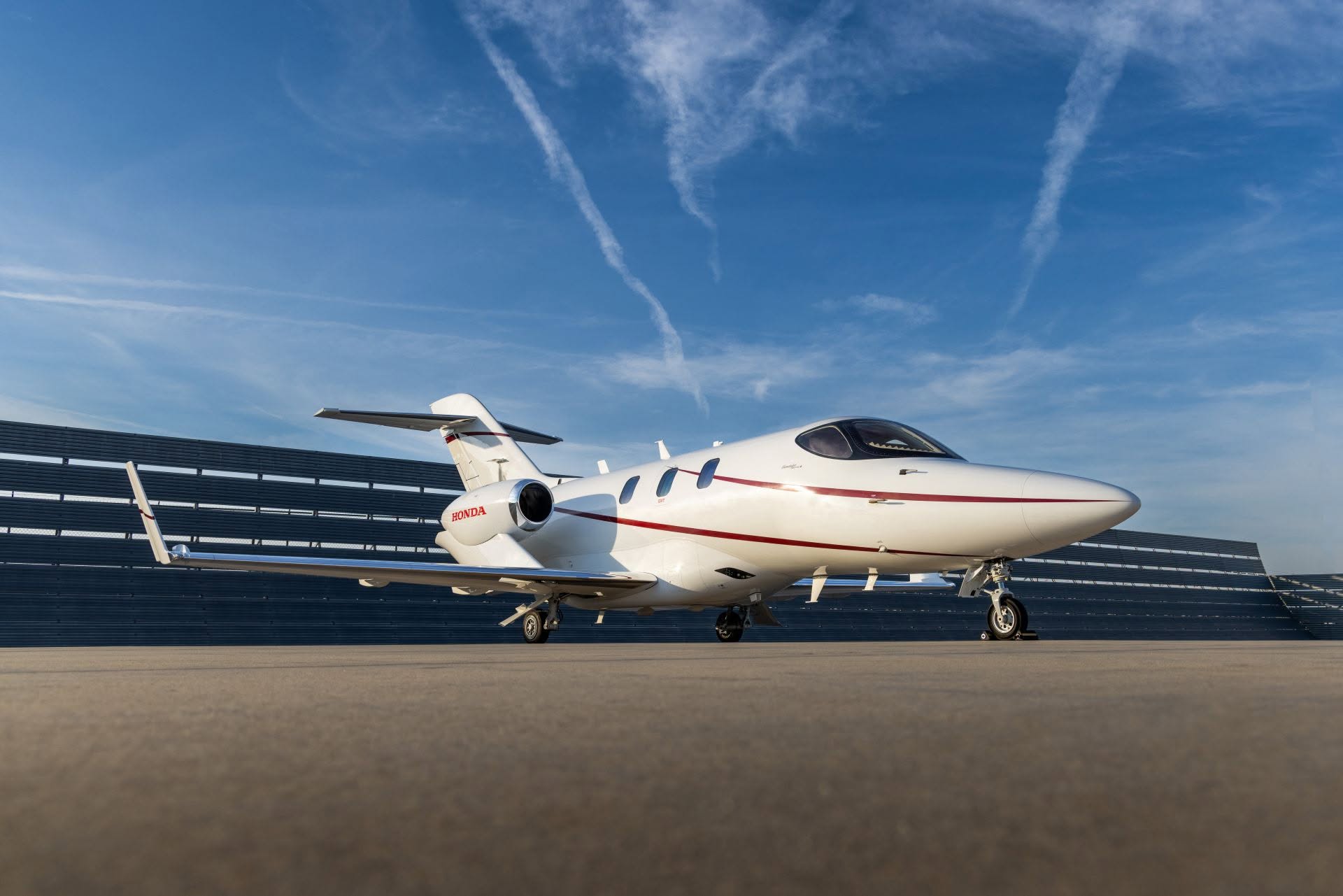
Honda Aircraft Company announced the first delivery of its HondaJet Elite II in Brazil on 4 August 2026, following type validation of the aircraft by Brazil’s National Civil Aviation Agency, known as ANAC. The announcement was made at LABACE 2026, Latin America’s largest business aviation show, held from 4 to 6 August at Campo de Marte Airport in São Paulo, where the Elite II is on static display.
ANAC’s validation confirms that the Elite II meets the regulator’s safety and performance standards and clears the aircraft for registration in Brazil, paving the way for further sales in the country. The aircraft will continue to be sold through Lider Aviação, which Honda Aircraft describes as the exclusive authorised sales representative for the HondaJet in Brazil.
Lider Aviação, headquartered in Belo Horizonte, has held the HondaJet dealership in Brazil since 2015, when Honda Aircraft first expanded sales of the jet into South America. The company says it is Latin America’s largest private aviation business, operating 22 fixed base operations across the country. Including the latest delivery, Lider Aviação has supported nine HondaJet deliveries in Brazil since 2017.
“This delivery underscores Honda Aircraft Company’s commitment to building a global fleet presence while delivering meaningful value to customers worldwide. The enhanced features of the Elite II will enable customers in Brazil and across South America to travel farther, more efficiently, and with an elevated level of comfort.”
Amod Kelkar, Senior Vice President, Chief Commercial Officer
The Elite II is the latest and, according to Honda, the last variant in the HondaJet’s original 420 series, which began with the aircraft’s launch more than a decade ago. It builds on the earlier HondaJet, Elite and Elite S models with a range of performance and technology upgrades, Honda said.
The aircraft has a maximum NBAA IFR range of 1,547 nautical miles, an increase Honda attributes to greater fuel capacity and other performance improvements, which the company says expands the jet’s mission capability and enables more direct city-pair connections across South America.
The Elite II also introduces automation features intended to reduce pilot workload, including autothrottle, which, once activated, can automatically manage engine power to keep the aircraft at a desired speed, a system Honda says increases passenger comfort as well as easing the pilot’s task. The Elite II was the first production twin-turbine very light jet to be certified with autothrottle, by the US Federal Aviation Administration in October 2024. Honda has also certified the aircraft with Garmin’s Emergency Autoland system, which can autonomously control and land the aircraft if a pilot becomes incapacitated.
The jet is powered by two GE Honda Aero HF120 turbofan engines mounted above the wings in Honda’s Over-The-Wing Engine Mount configuration, a design the company says reduces drag and cabin noise while increasing usable cabin space. The aircraft has a cruise speed of around 422 knots and seats up to eight occupants, typically configured with a pilot and up to seven passengers.
Lider Aviação, founded in 1958 and based in Belo Horizonte, began as a charter operator before expanding into aircraft sales, maintenance, ground handling and helicopter operations. The company has previously served as a sales agent for other manufacturers, including Learjet, and has operated offshore helicopter services in Brazil since the 1970s. It has held the HondaJet dealership continuously since Honda Aircraft first entered the Brazilian market in 2015, and this year also became Brazil’s distributor for electric aircraft maker Beta Technologies, according to trade publication Aviation International News.
For prospective buyers in Brazil and the wider South American market, ANAC’s type validation removes a regulatory barrier that had, until now, kept the newest HondaJet variant out of reach locally, even as the aircraft was already in service elsewhere. Type validation is generally required before an aircraft can be registered and legally operated in a given country, so the announcement effectively opens Brazilian sales of the Elite II rather than simply marking a single delivery; further orders from Brazilian operators can now proceed through the same regulatory pathway.
The development is also a signal of confidence in Brazil’s business aviation market, which has grown into one of the largest in the world outside the United States. A market of that size, combined with the country’s geography — vast distances between major cities and comparatively limited regional airline connectivity in parts of the country — has historically supported demand for light jets capable of point-to-point travel between cities that lack convenient scheduled flights. The Elite II’s extended range and its ability to link more city pairs without a fuel stop, as Honda has described it, speaks directly to that kind of demand, potentially giving private and corporate operators more flexibility over the routes and schedules they can fly.
For existing and prospective HondaJet owners, the presence of an established local sales and support network is likely to matter as much as the aircraft’s specifications. Lider Aviação’s decades-long history in Brazilian aviation, its network of more than 20 bases and its maintenance capabilities give buyers a degree of assurance that servicing, parts and technical support will be available locally rather than requiring aircraft to be sent abroad — a practical consideration for any operator weighing the total cost and convenience of ownership, not just the purchase price. The safety features built into the Elite II, including Garmin’s autothrottle and Emergency Autoland systems, may also appeal to single-pilot operators and smaller flight departments in the region, since they are designed to reduce the workload and risk associated with flying without a second crew member.
Textron Aviation Marks 500th Citation CJ4 Delivery as Gen3 Era Nears Certification
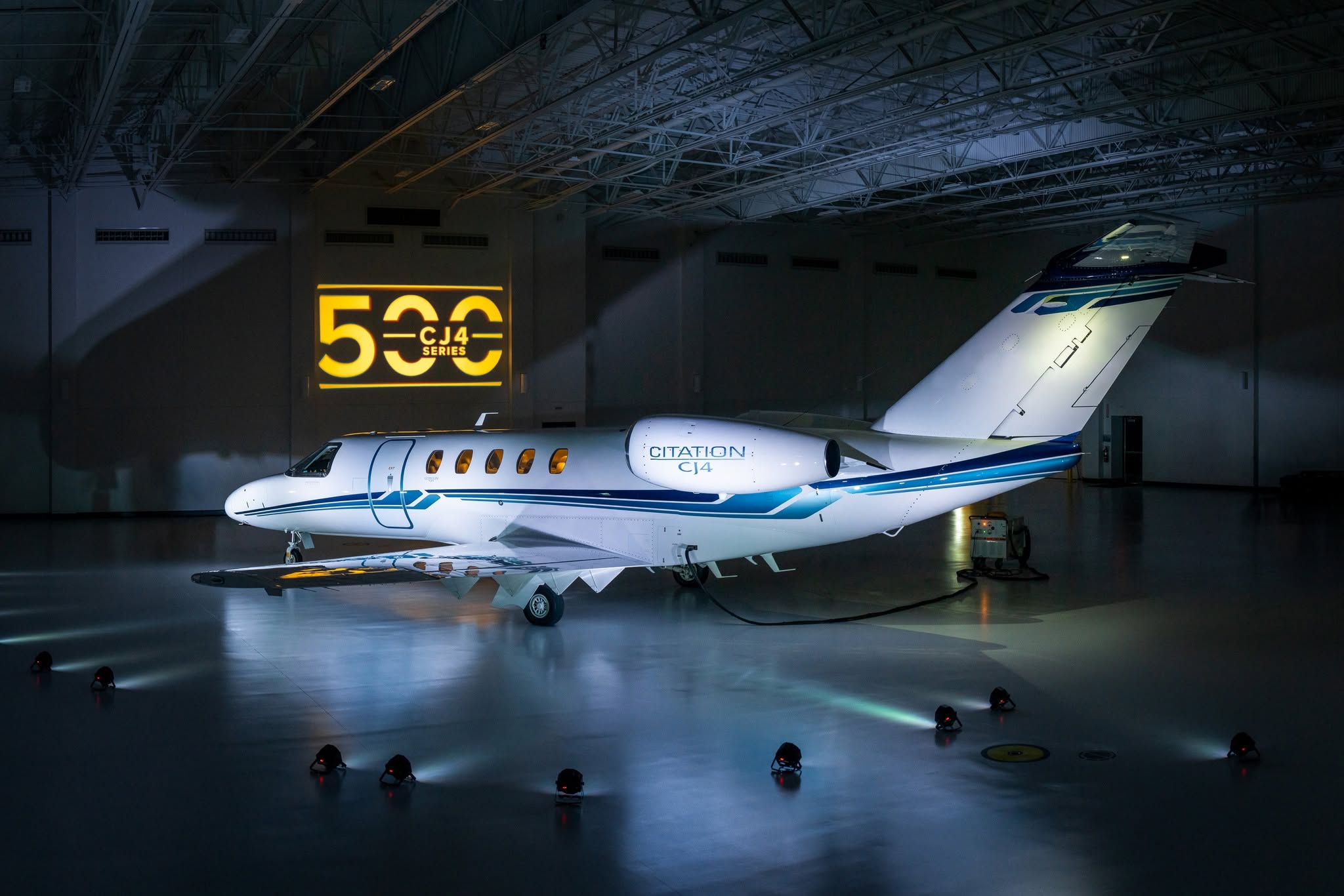
Textron Aviation Inc. said Monday it has delivered its 500th Cessna Citation CJ4-series business jet, a milestone the company said reflects more than a decade of sales for its largest light jet as a newer version of the aircraft, the Citation CJ4 Gen3, moves toward certification.
The milestone aircraft, a Citation CJ4 Gen2, was delivered to a customer based in the Philippines. Textron Aviation, a subsidiary of Textron Inc. (NYSE: TXT), said the delivery point reflected the aircraft’s use by operators around the world.
The company said the CJ4 has been used by both individual owner-operators and larger fleet customers for missions ranging from business travel to special-mission operations.
“The Citation CJ4 has set the standard in its class for more than a decade, and with the Citation CJ4 Gen2 and the upcoming Citation CJ4 Gen3, we’re continuing to invest in the innovation, technology and capabilities our customers value most. As we look to the future, our focus remains on delivering the performance, efficiency and confidence operators need to succeed in an evolving aviation landscape. Reaching 500 deliveries is a meaningful milestone that reflects the strength of the CJ4 platform and the trust customers around the world place in Textron Aviation.”
Lannie O’Bannion, senior vice president of sales and marketing at Textron Aviation
Textron Aviation said the Citation CJ4 Gen3 is expected to receive Federal Aviation Administration certification this year. The aircraft’s flight test programme has logged more than 880 flight hours across two test aircraft so far, the company said.
The Citation CJ4 Gen3 is being positioned as the largest aircraft in Cessna’s light jet segment. It is designed to be flown by a single pilot and will be equipped with Garmin’s G3000 PRIME avionics suite, along with Garmin’s Emergency Autoland system, which is designed to land the aircraft automatically if the pilot becomes incapacitated. Textron Aviation said the aircraft would offer more standard features than others in its class.
According to the company, the Citation CJ4 Gen3 is expected to have a maximum range of 2,165 nautical miles and a maximum payload of 2,200 pounds. It will seat up to 11 occupants and offer 1,040 pounds of baggage capacity. Textron Aviation said the aircraft is intended for both owner-operators and corporate flight departments, and that the CJ4 series more broadly has also been used for missions including air ambulance service, maritime patrol, search and rescue, and aerial survey work.
The CJ4 first entered the market more than a decade ago as part of Cessna’s Citation Jet family, which spans several light jet models of varying size and range. The current-generation CJ4 Gen3 follows earlier updates to the platform and is one of several Citation light jets Textron Aviation has been refreshing under its “Gen3” programme, alongside newer versions of the smaller Citation CJ3 and Citation M2. The CJ3 Gen3 completed its first flight in July, and the M2 Gen3 flew for the first time in June, according to earlier company announcements.
The 500th delivery is a notable production milestone in the light business jet segment, a category where Textron Aviation, through its Cessna Citation line, has long held a leading market position against rivals such as Embraer’s Phenom series and Bombardier’s Learjet family, the latter of which Bombardier discontinued in 2021. Reaching 500 units for a single model within roughly a decade points to sustained demand from both individual aircraft owners and operators running special-mission fleets, a customer base that has helped the CJ4 remain in production even as broader business jet demand has fluctuated with economic cycles.
The looming certification of the CJ4 Gen3 also illustrates a broader pattern across the light jet market, where manufacturers are refreshing existing, well-established airframes with updated avionics and safety systems rather than launching entirely new aircraft designs. The addition of Garmin’s Emergency Autoland system, which allows an aircraft to land itself if a pilot is incapacitated, reflects a wider industry push toward automated safety technology in single-pilot-certified jets, a feature increasingly expected by buyers and regulators in this segment. Should the Gen3 receive FAA certification as expected this year, it would extend the CJ4’s run as one of the more consistently updated platforms in the light jet class, alongside parallel Gen3 upgrades to the smaller CJ3 and M2 models.
For the wider business aviation market, the milestone also underscores the extent to which light jets continue to serve as an entry point for new aircraft owners and a workhorse for operators running varied missions such as medical evacuation and aerial survey work, beyond conventional executive travel.
Photos by respective brands.
Cover photo by Hondajet.


