
Dassault Aviation’s Falcon 10X, a large-cabin business jet the French manufacturer designed to compete at the top of the long-range corporate aviation market, completed its first flight on 19 June 2026, opening a flight test campaign that will run over the next several months.
“This inaugural flight is another milestone for Dassault. It is a reflection of the dedication and high skill of our engineering, production, and flight teams, and also the quality of our global network of partners. All of us are excited to see this day as we launch into a new phase for the 10X.”
Chairman and CEO Eric Trappier
Test pilot Sébastien Dupont de Dinechin and co-pilot Fabrice Dougnac took off from runway 23 at Bordeaux-Mérignac airport at 11:10 a.m. local time. The flight lasted two hours and 30 minutes.
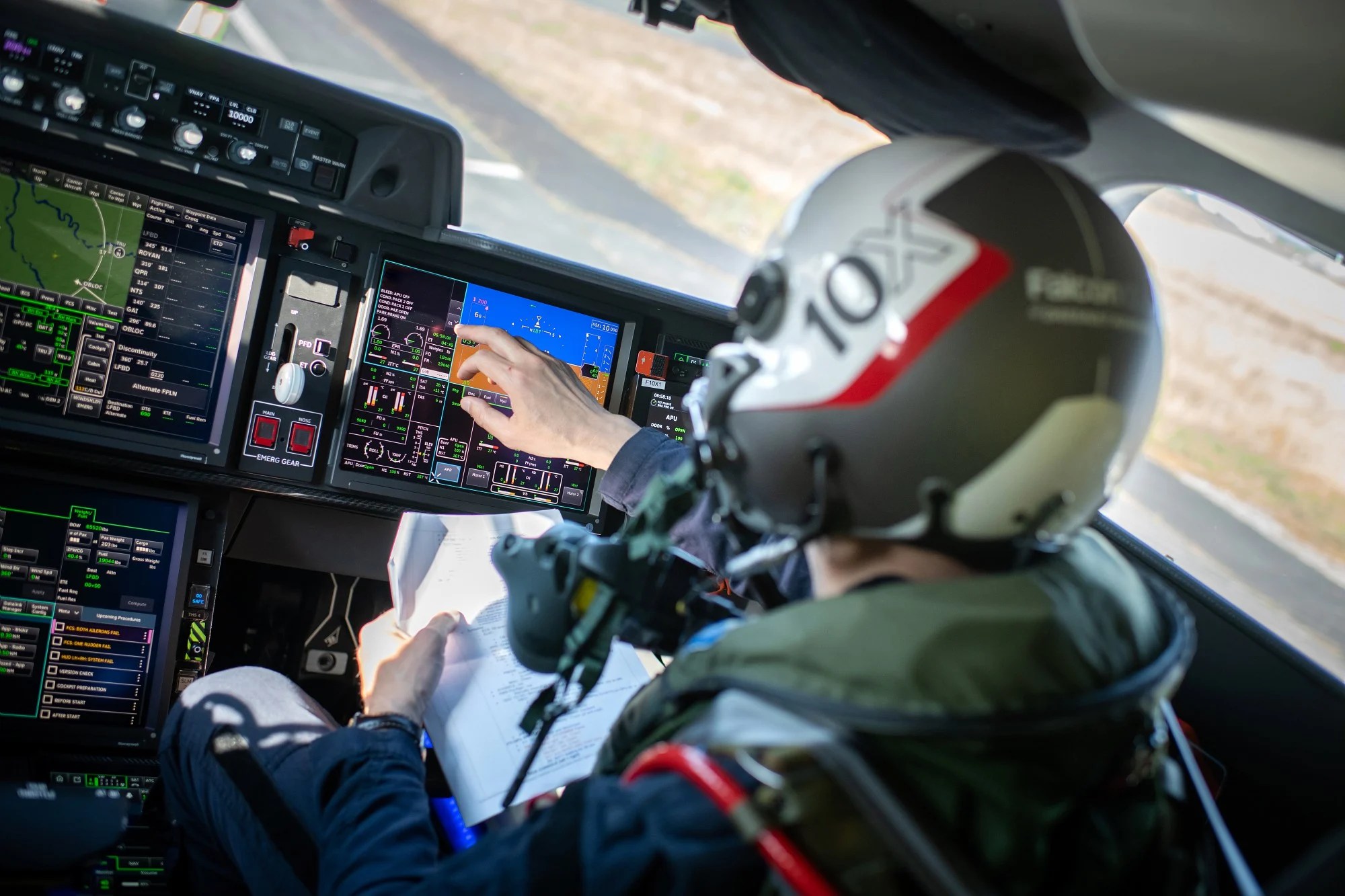
During the flight, the crew evaluated the aircraft’s handling qualities and systems at 15,000 feet before retracting the landing gear and movable surfaces and climbing to 40,000 feet, where the jet reached a speed of Mach 0.82. The aircraft returned to Bordeaux-Mérignac and landed at 1:40 p.m., according to Dassault.
“Today’s flight was the culmination of years of work by thousands of Dassault employees and partners. It paid off in a flight that went as planned and was a delight to fly”.
Sébastien Dupont de Dinechin
The flight marks the start of a multi-aircraft test program. A second test aircraft is nearing completion and is expected to fly in the coming months. A third aircraft is being fitted with a full interior and will be used primarily to test cabin systems and functional reliability, the company said.
Dassault, based in Saint-Cloud near Paris, builds both military and civil aircraft — the Rafale fighter jet and the Falcon line of business jets — and has described that combination as a long-term advantage for the company. Dassault says it is currently the only aircraft manufacturer in the world flying an entirely new aircraft type this year.


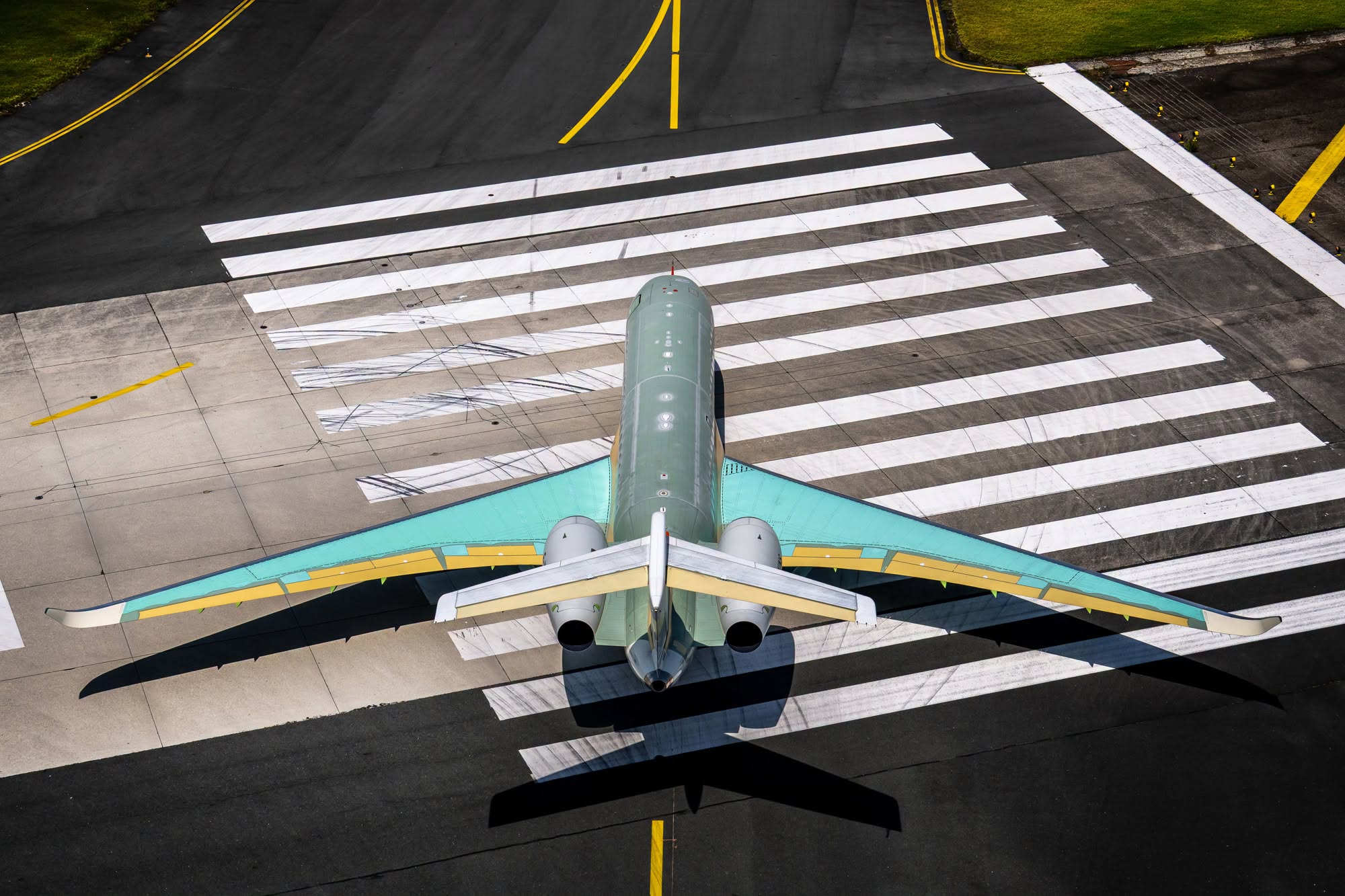


The Falcon 10X was launched in May 2021 as Dassault’s flagship entry into the ultra-long-range business jet segment, a category that includes the Bombardier Global 7500 and the Gulfstream G700. Dassault rolled out the completed aircraft at a ceremony in Bordeaux-Mérignac on March 10, 2026, ahead of Friday’s first flight.
The twin-engine aircraft is powered by two Rolls-Royce Pearl 10X engines, each producing more than 18,000 pounds of thrust. Dassault says the aircraft is designed to be compatible with 100% sustainable aviation fuel.
The jet’s wing — 33.6 meters (110 feet) wide — is built from carbon-fiber composite material, a first for a Dassault business jet, and uses a high-aspect-ratio design the company says draws on aerodynamic technology developed for the Rafale fighter. The aircraft measures roughly 33.4 meters (110 feet) in length.
Dassault says the Falcon 10X is designed for a maximum range of 7,500 nautical miles (13,890 kilometers) and a maximum operating speed of Mach 0.925, figures the company says would allow nonstop flights between city pairs such as New York and Shanghai, or Los Angeles and Sydney. The manufacturer says the aircraft is also designed for short-field and steep-approach performance that would allow it to use airports such as London City Airport, which larger long-range jets typically cannot access.
The cabin measures 2.77 meters (9 feet 1 inch) wide and 2.03 meters (6 feet 8 inches) tall, dimensions Dassault says make it the widest and tallest cabin among purpose-built business jets currently on the market. The cabin can be configured into as many as four zones, with options including a private stateroom, a dining and conference area and, in some configurations, a shower. Dassault says the aircraft has 38 windows, which it describes as larger than those on its earlier Falcon 8X model.
The company says the cabin will maintain a pressurisation altitude of about 3,000 feet while the aircraft cruises at 41,000 feet, a lower cabin altitude than most competing aircraft, which Dassault says is intended to reduce passenger fatigue on long flights.
The cockpit uses a system Dassault calls NeXus, which includes touchscreen displays and a single-lever throttle system the company has described as derived from Rafale fighter jet controls. The aircraft also uses Dassault’s FalconEye vision system, which combines synthetic and camera-based imagery and is paired with head-up displays that can serve as primary flight displays.
Dassault has listed the aircraft’s price at approximately $75 million to $80 million, depending on configuration, though the company has not published an official figure. The manufacturer has targeted certification and entry into service for late 2027, though the program has previously been delayed from an original target of 2025.
The Falcon 10X’s first flight is a milestone in a business jet market that has, in recent years, concentrated its most advanced engineering into a handful of ultra-long-range models aimed at corporations, government operators and wealthy individuals who fly intercontinental routes without refueling stops. For that relatively narrow set of buyers — the eventual “consumers” of this aircraft — a successful flight test program matters because it moves the jet closer to certification and delivery, and because early flight data will show whether the aircraft’s carbon-fiber wing, engines and flight-control systems perform as designed under real conditions rather than in simulation.
For corporate flight departments, charter operators and fractional-ownership programs that plan to add the Falcon 10X to their fleets, the aircraft’s progress also carries practical stakes: entry-into-service dates for new business jets have slipped before across the industry, and delays can affect delivery positions, financing arrangements and the used-aircraft market for older long-range jets that buyers might otherwise trade in.
Photos by Dassault Aviation.


