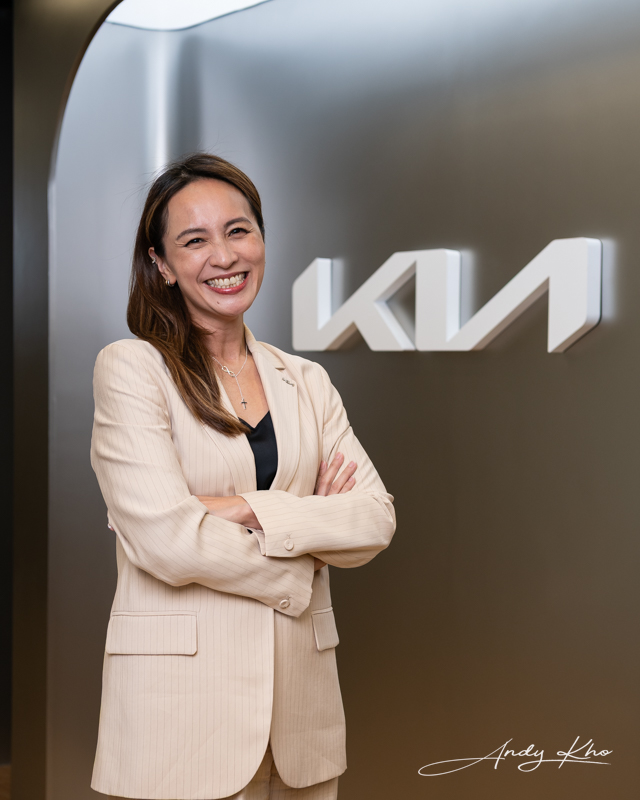
Emily Lek’s path to the top of a national automotive sales operation didn’t start on a showroom floor — it started behind a desk at HSBC, poring over financing deals for transport and logistics companies. As an economics graduate, banking was the logical first step. Cars were, at the time, simply a personal interest.
That changed the more she worked with automotive clients. Structuring investment and corporate financing for manufacturers, oil and gas players, and supply chain operators gave her a front-row view of what actually keeps a car business running — the capital, the logistics, the distribution networks few customers ever think about. It was enough to turn a hobby into a career plan, and in 2006 she made the jump, joining Mercedes-Benz Malaysia.
What followed was less of a straight climb than a deliberate tour through the business. She cut her teeth in network development, working directly with dealers to sharpen retail performance and customer experience. From there she moved into corporate communications, leading the brand’s PR function, before taking charge of parts sales and marketing and, finally, vehicle sales itself. Few executives collect that range of functional experience — sales, marketing, communications, aftersales — inside a single organisation, and Lek has said the willingness to keep stepping into unfamiliar territory has shaped how she leads today.
Her move to Chery Auto Malaysia raised the stakes further. She was handed the task of launching JAECOO in the Malaysian market, then followed it with the introduction of iCAUR. Under her watch, OMODA | JAECOO climbed into Malaysia’s top five best-selling automotive brands, closing 2025 with 17,489 units sold — a result that also helped position iCAUR as a serious new name in the country’s fast-growing EV segment on the back of a track record alone.
This streak of sorts was built almost entirely without a technical or engineering background — something Lek treats as beside the point. She said passion, not pedigree, is what pushes people to master a technical industry: understanding the engineering, sitting in on pre-delivery inspections and learning the standards that hold a premium ownership experience together. Skills, in her view, can be taught. Curiosity and adaptability are harder to instil, and matter more.
That combination of financial rigour, cross-functional range and an unusual entry point into the industry is now being tested at scale. Since January 2026, Lek has served as managing director of Kia Sales Malaysia — a young operation carrying a brand with almost three decades of history in the country, and the job of rebuilding it as a principal-led business under Kia, the world’s eighth-largest automaker. It’s a mandate that sits somewhere between corporate turnaround and brand stewardship, and one she approaches, by her own account, through what she calls a “microscope and telescope” lens — close enough to see the customer experience at every touchpoint, far enough back to keep the long-term strategy in view.
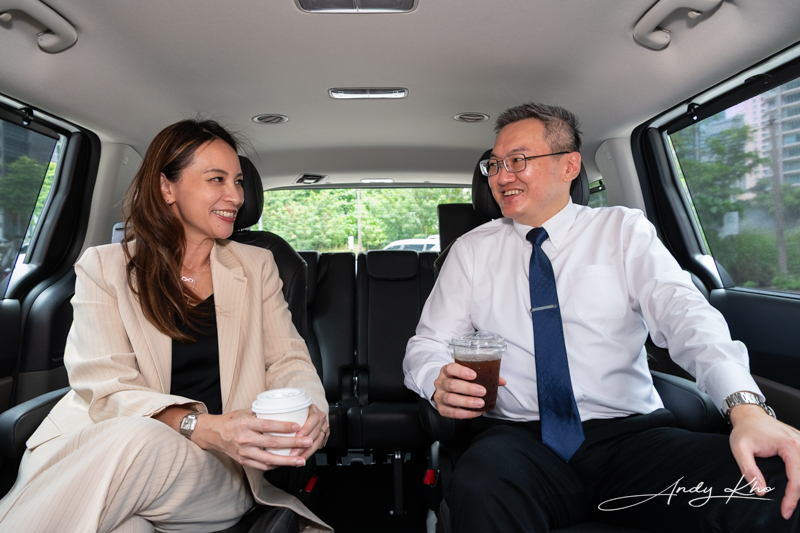
That balance — and how she applies it day to day — is what the rest of this most insightful conversation explores over coffee in the Kia Carnival.
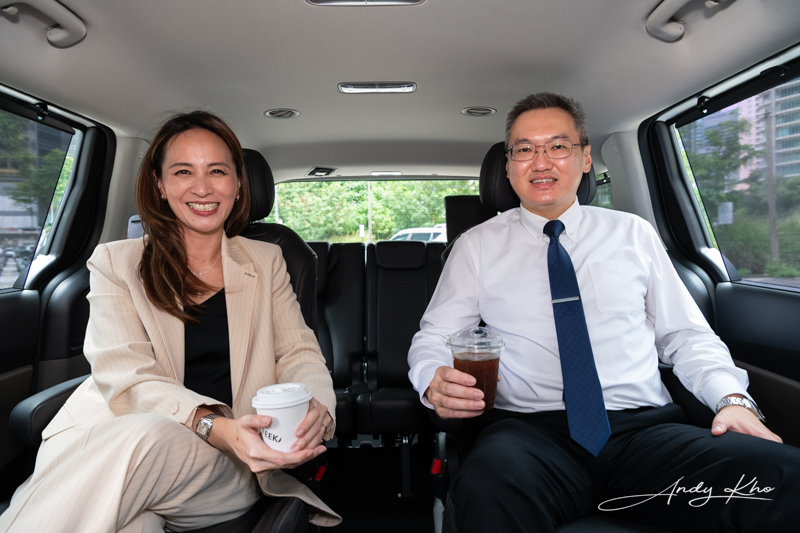
Tim Chew: What is the single most important solution your business provides to your customers, and why does it matter?
Emily Lek: At Kia Sales Malaysia, our priority is to deliver world-class vehicles backed by an exceptional ownership experience. We believe owning a Kia should be a rewarding experience long after customers leave the showroom.
Guided by our three strategic pillars—Return, Rebuild and Reposition—we are strengthening every aspect of the customer journey, from introducing the right products for the Malaysian market to enhancing our dealer and aftersales support, as well as spearheading future-ready mobility solutions.
At the same time, we are committed to positively supporting Malaysia’s automotive industry in line with the National Energy Transition Roadmap (NETR).
We believe that by getting these fundamentals right, we can earn customers’ trust, build lasting relationships and drive Kia’s sustainable long-term growth in Malaysia
Tim Chew: What are some unique selling propositions (USPs) that set your brand’s products and services apart from competitors?
Emily Lek: Malaysia’s automotive market is more competitive than ever, with consumers enjoying greater choices across every segment. This makes it even more important for brands to differentiate themselves through product quality, ownership experience, and long-term value, rather than competing on price alone.
For Kia Sales Malaysia, our strongest proposition is the quality and reliability of our vehicles. This reputation is built through consistent global recognition and real-world performance, which is then communicated through marketing and PR campaigns.
As the world’s eighth-largest automaker, Kia continues to demonstrate its strength on the global stage. This year, the company recorded its best-ever first-half global sales performance since it began vehicle sales in 1962; over 1.6 million cars sold, with the Kia Sportage remaining the best-selling model worldwide.
Our commitment to quality is also reflected in independent recognition. Most recently, the Kia Carnival was ranked No. 1 in the Minivan segment in the 2026 J.D. Power U.S. Initial Quality Study, reinforcing our focus on delivering vehicles that customers can depend on.
Here in Malaysia, being a principal-led operation gives Kia Sales Malaysia a distinct advantage. We have direct access to Kia’s global supply chain and expertise, allowing us to introduce products that are well suited to Malaysian customers while ensuring our operations, customer experience, and long-term strategy remain aligned with Kia’s global standards.
We are also fortunate to have a loyal and passionate customer base. Our focus now is to build on that strong foundation through our Return, Rebuild and Reposition strategy: strengthening our dealer network, enhancing the ownership experience and continuing to earn the trust of our customers.
Ultimately, our strategy is straightforward: to deliver world-class vehicles that customers can trust, backed by a rewarding ownership experience and strong long-term value.
Tim Chew: Will Kia continue expanding its dealer and aftersales network?
Emily Lek: To ensure our owners get the absolute best experience throughout their journey with us, having the right business partners is essential. Expanding our network is a key pillar of Kia Sales Malaysia’s long-term growth strategy.
Our priority is to make Kia more accessible to customers while strengthening ownership support and delivering a seamless and consistent experience across the country. This goes beyond expanding our physical footprint—it also includes initiatives such as the Kia Ownership Experience, held for the first time in May earlier this year, which allows us to engage directly with both new and existing customers and better understand their needs.
We are steadily growing our network with strong dealer partners, including the recent appointments of Cycle & Carriage and Heng Lian Enterprise Berhad, whose expertise in the automotive industry further strengthen the Kia network.
At the same time, we are actively recruiting new dealer partners to expand our nationwide presence. Looking ahead, we have plans to further strengthen our network across both Peninsular and East Malaysia, bringing Kia closer to more customers while continuing to raise the standard of service and ownership confidence.
Tim Chew: How would you describe your leadership style, and how has it evolved over time?
Emily Lek: My leadership style is to paint a picture and do my best to help the team understand and internalise the vision. At this moment, that shared vision is to build a successful brand that truly values its customers.
The foundation of the individual understanding has to be strong – that every member of the team, regardless of rank, plays a key role in the customer journey.
In a past life, I worked in a bank. This is a highly regulated and process-driven environment. A key learning that I have kept with me is that long-term success needs strong fundamentals and clear processes that result in efficiency and effectiveness.
I draw lessons from the different corporate cultures I have come into contact with. From the Germans, the need for a good, high-quality product and solid guardrails in business activities. In a Chinese automotive company, I learned how to maximise speed and be unburdened by unnecessary red tape. Now, in a Korean setting, I combine the best of both worlds – exercising as much agility as possible through proper channels and processes to produce, market and sell products that my team and I can be proud of.
I have a microscope and telescope analogy that guides my approach to decision-making. The former is about looking at every stage of the customer journey through the customer’s lens, paying close attention to every touchpoint and detail that shapes their experience. The latter is about keeping our long-term organisational goals and strategic direction firmly in sight. I share my views through both these perspectives with the team so that there is alignment and, crucially, full understanding that the customer is always the centre of our business.
Tim Chew: What are the most important skills a leader must have today?
Emily Lek: A leader must have a standout learning mentality and never be governed by their pride. An organisation succeeds on the backs of the team, nothing worthwhile can be achieved by one person alone no matter how capable they may be. Leaders must also be able to respond to change without losing sight of their long-term vision, while also communicating in a way that builds clarity and confidence across the organisation.
I believe consistency is fundamental to earning lasting trust. Whether with customers, business partners or internal teams, trust is built over time through reliable actions, made in day-to-day operations that lead up to your long-term goals for the business.
Tim Chew: How do you motivate and inspire your team during challenging times?
Emily Lek: Tough times are unavoidable. I try to create a tough team that will weather the storm. Even if the results are discouraging for reasons beyond our control, it is essential to recognise effort and celebrate any wins that come our way.
With the losses, we dissect them and find solutions together. From sharing every success and, more so, every failure, we continuously learn together. It is my sincere belief that improvement comes from understanding what was done well and what could have been done better, doing so collectively will push us to do better every day – for ourselves and each other.
Every business will go through shifts in the market, policy changes and other uncertainties, so alignment around shared goals becomes even more critical. My focus is always on ensuring the team understands where we are heading and why it matters.
Leadership, to me, is also about leading by example—staying calm, being consistent, and showing that you are dependable when things are not straightforward. Open communication and transparency are key, because people perform best when they understand the bigger picture and see how their work contributes to it.
Just as important is recognising effort and building trust within the team. When people feel supported, valued and trusted, they become more resilient and are better able to navigate challenges together.
Tim Chew: Can you share a difficult leadership decision you made and what you learned from it?
Emily Lek: There are no easy decisions, because there are no perfect decisions that come without risk. As such, I don’t view any decision as being comparatively difficult compared to another. Once again, I consistently apply the microscope and telescope approach.
When I revisit earlier decisions, even the good ones, there are learning points; I pay close attention to what I can replicate in future and critically assess undesirable outcomes. Ultimately, I avoid regretting any decisions – every bad call is an opportunity to improve a future one.
Tim Chew: What are the biggest challenges your company is facing right now?
Emily Lek: We are in the unique position of being a young organisation holding an established brand in the market. We commenced sales and operations in January of this year, but Kia has been in Malaysia for almost three decades.
Thus, we have the benefit of legacy and a vibrant history, however, we must now reconstruct the local brand identity as a principle-led organisation. We are not a distributor; we are a subsidiary of the 8th largest automotive manufacturer in the world and must accept the expectations that come with it.
Our long-term priority is to build a sustainable business foundation centered on strong customer trust, an exceptional ownership experience and responsible, long-term growth.
Our strategy is anchored on three pillars: Return, Rebuild and Reposition. This reflects our commitment to strengthening Kia’s presence in Malaysia and ensuring the brand is clearly positioned for the next phase of growth.
Tim Chew: How can individual team members contribute more effectively to the company’s goals?
Emily Lek: Every team member has an important role to play in achieving our long-term vision. Our team may be lean and incredibly diverse—we come from different backgrounds, cultures and experiences, and I see that as one of our greatest strengths.
Everyone is seen as equal; rank is not important. Everyone has a role in contributing to the success of the team and is given space for their voice to be heard. Problem-solving is done together as a team – in what we call our “no-stupid-ideas sessions”.
No one is judged, and every person feels that they have the freedom to speak and share ideas. In many of these sessions, I realise that this has given the best output and the team feels valued.
Tim Chew: How do you delegate responsibilities and ensure accountability?
Emily Lek: I don’t believe in delegation. I believe in creating project owners. I set clear objectives, define the parameters and explain the purpose behind the project. Once those expectations are established, I encourage the team to think creatively, challenge themselves and take ownership of the outcome.
One phrase I often use is, “Go Big, But Don’t Go Crazy.” I want the team to be ambitious and bring forward bold ideas, but they also need to be practical and keep the overall strategy and business objectives in mind.
For me, accountability starts with ownership. When people are entrusted and understand the end goal, they will deliver their absolute best work.
Tim Chew: What do you do to develop and retain talent in your organisation?
Emily Lek: The first step is always to hire the right people. I take the time to understand and evaluate every new hire to ensure best fit – both within the role and as a member of the team.
As an ongoing step, I cultivate an environment that allows my team to learn and develop, continuously becoming better versions of themselves. At certain milestones, I may then share my plans for their future growth with them. This insight gives them clarity on what they should aim for next, and what is expected of them in order to be deserving of the next step.
There are times when I can tell that their abilities surpass their confidence – this is when I push them to take on challenges that I know they are ready for. People who are passionate about their work get immense satisfaction when they succeed in ways they may have never thought possible.
When the team is clear of their role and their respective importance in achieving organisational goals, and have been empowered to constantly challenge themselves, they will surely thrive.
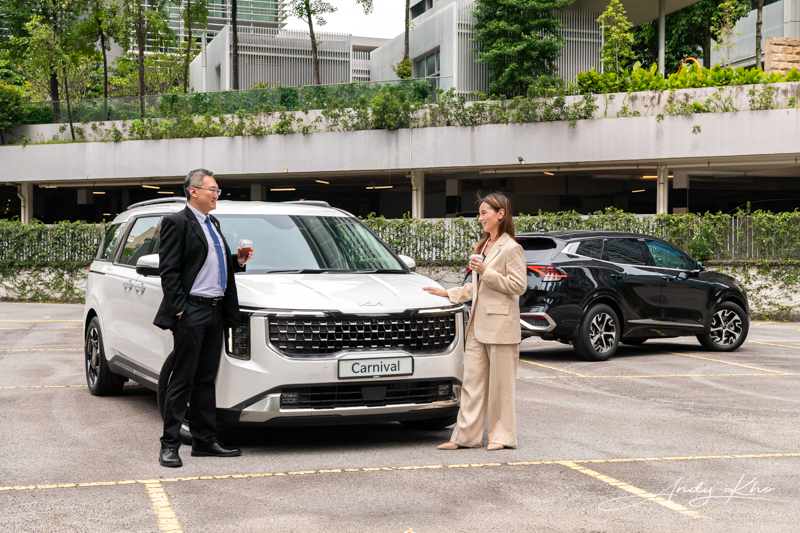
In December 2025, Kia Corporation formally launched Kia Sales Malaysia Sdn Bhd (KSM) — a wholly owned subsidiary established a month prior on 3 November 2025 — marking the brand’s transition to a principal-led model after concluding its four-year partnership with Bermaz Auto, whose subsidiary Dinamikjaya Motors had served as the official distributor since 2021. Effective 1 January 2026, KSM assumed full responsibility for sales, aftersales, training and retail operations in Malaysia, with President and CEO, Hyung Ho Kim and Managing Director, Emily Lek at the helm.
The shift brings Kia’s Malaysian operations under direct oversight of its global parent for the first time, giving KSM more direct access to Kia’s product planning, supply chain and after-sales standards as it rebuilds the brand’s local presence.
Two of the models currently anchoring that lineup are the Kia Carnival and the Kia Sportage.
The Kia Carnival, Kia’s flagship MPV, is offered in Malaysia across three grades — an 11-seater and two six/seven-seater configurations — built around Kia’s 2.2-litre turbo-diesel engine paired with an 8-speed automatic transmission. Cabin technology includes a 12.3-inch digital instrument cluster paired with a 12.3-inch infotainment display, an available 11-inch head-up display, and a Bose 12-speaker sound system on higher grades. Depending on variant, occupants get relaxation seats with heating and ventilation, smart power sliding doors and tailgate, and a suite of driver-assistance systems including forward collision-avoidance, blind-spot collision-avoidance and rear cross-traffic collision-avoidance assist, alongside eight airbags.
The Kia Sportage, Kia’s compact SUV, is available in four grades spanning 2.0-litre naturally aspirated and 1.6-litre turbocharged petrol engines, with the top grade offered in all-wheel drive. Shared across the range are a curved dual-12.3-inch digital cluster, Apple CarPlay and Android Auto connectivity, and a Surround View Monitor. Higher grades add a Harman Kardon 8-speaker system, ambient lighting and an expanded driver-assistance suite covering lane-keeping and lane-following assist, smart cruise control, and blind-spot view monitoring.
Both models form part of KSM’s broader push, under its Return, Rebuild and Reposition strategy, to strengthen its product line-up and ownership experience as it establishes itself as a principal-led operation in Malaysia.
Read about my recent experience driving the Kia Sportage 1.6T here: Part 1 and Part 2.
Photos by Andy Kho (http://andykho.com)

 timchew.net