
In December 2025, Kia Corporation formally launched Kia Sales Malaysia Sdn Bhd (KSM) — a wholly owned subsidiary established a month prior on 3 November 2025 — marking the brand’s transition to a principal-led model after concluding its four-year partnership with Bermaz Auto, whose subsidiary Dinamikjaya Motors had served as the official distributor since 2021. Effective 1 January 2026, KSM assumed full responsibility for sales, aftersales, training, and retail operations in Malaysia, with President and CEO Hyung Ho Kim and Managing Director Emily Lek at the helm.
Kia recently showcased several global models at KLIMS 2026 (read about it here: https://timchew.net/2026/06/12/kia-sales-malaysia-showcases-four-global-models-launches-eight-year-totalcare-programme-at-klims-2026/), and apart from admiring the new models, the Kia Sportage caught my eye; hence, I decided to ask Kia Sales Malaysia to lend me one for a weekend.
The Kia Sportage, one of two models currently available in the local lineup alongside the 2026 Kia Carnival (read about it here: https://timchew.net/2026/01/19/kia-sales-malaysia-launches-the-new-carnival-with-bolder-design-and-updated-technology/), carries the brand’s renewed ambitions into the Malaysian market.
The Sportage draws attention without demanding it. Its silhouette reads as a bold and futuristic SUV from every angle, but the details reward a closer look. The front fascia is anchored by Kia’s “Opposites United” design language — a DRL-integrated grille that stretches wide across the nose and flows seamlessly into the LED projector headlamp clusters. The effect is a face that makes a statement where it goes, be it at Tropicana Golf & Country Resort or a 5-star hotel in Kuala Lumpur.
At 4,660mm long, 1,865mm wide and riding on a 2,755mm wheelbase, the Sportage occupies a meaningful footprint in the C-segment SUV class. The proportions feel balanced in person — not imposing, but not modest either – suitable for the narrow roads of old Petaling Jaya, yet spacious and comfy enough for the highways. The 18-inch alloys on the 1.6T High fill the arches well, shod in 235/60/R18 rubber.
At the rear, a notch-shaped tail lamp design connects left and right clusters into a single continuous form, executed cleanly. The hidden rear wiper keeps the tailgate surface uncluttered — a small but appreciated detail on a vehicle that will see its share of Malaysian rain.


The 1.6T High is powered by Kia’s Gamma II 1.6 T-GDI turbocharged petrol engine — a 1,598cc inline-four producing 177 hp at 5,500 rpm and 265 Nm of torque across a broad 1,500 to 4,500 rpm band. Drive goes to the front wheels via a seven-speed dual-clutch transmission with e-shift.
On paper, those numbers position the Sportage 1.6T High comfortably above the base 2.0G variants — 154 hp and 192 Nm. In practice, the powertrain is competent and unobtrusive, pulling away cleanly in urban conditions and settling into a comfortable cruise on the highway, with the broad torque band doing most of the work without requiring the driver to be particularly deliberate with the throttle. It is, in short, a powertrain tuned for real-world usability rather than outright performance — which is precisely what most buyers in this segment are looking for. In no situation did I feel that there was power lacking to climb an incline or conduct an overtaking manoeuvre.
The Drive Mode Select system — Normal, Eco, Sport, and Smart — offers meaningful variation to suit different driving conditions and moods. Being someone who appreciates more torque on tap and a stiffer, more responsive ride, I mostly drove the Sportage in Sport mode, which in my opinion is the most fun and enjoyable mode of all. Of course, when I had a passenger in the car, I drove in Normal mode, which provided a smoother and more comfortable ride.
The suspension setup — MacPherson struts at the front, multi-link at the rear — returns a ride quality that is settled and well-judged for Malaysian road conditions. At 181mm of ground clearance, the Sportage handles urban surfaces and minor potholes without complaint. The 1,626 kg curb weight keeps the front-wheel-drive dynamics predictable and confidence-inspiring.
Where the Sportage 1.6T High distinguishes itself most meaningfully is in its extensive driver assistance and safety (ADAS) suite — and that, as it turns out, is reason enough to pay closer attention to this variant. Features such as Lane Following Assist and Smart Cruise Control with Stop & Go operate directly within the driving experience, reducing fatigue on longer runs in a manner that feels genuinely useful rather than ornamental.
The full scope of the Sportage’s Advanced Driver Assistance Systems — which extend well beyond what most competitors offer as standard at this price point — will be addressed in detail in Part 2.
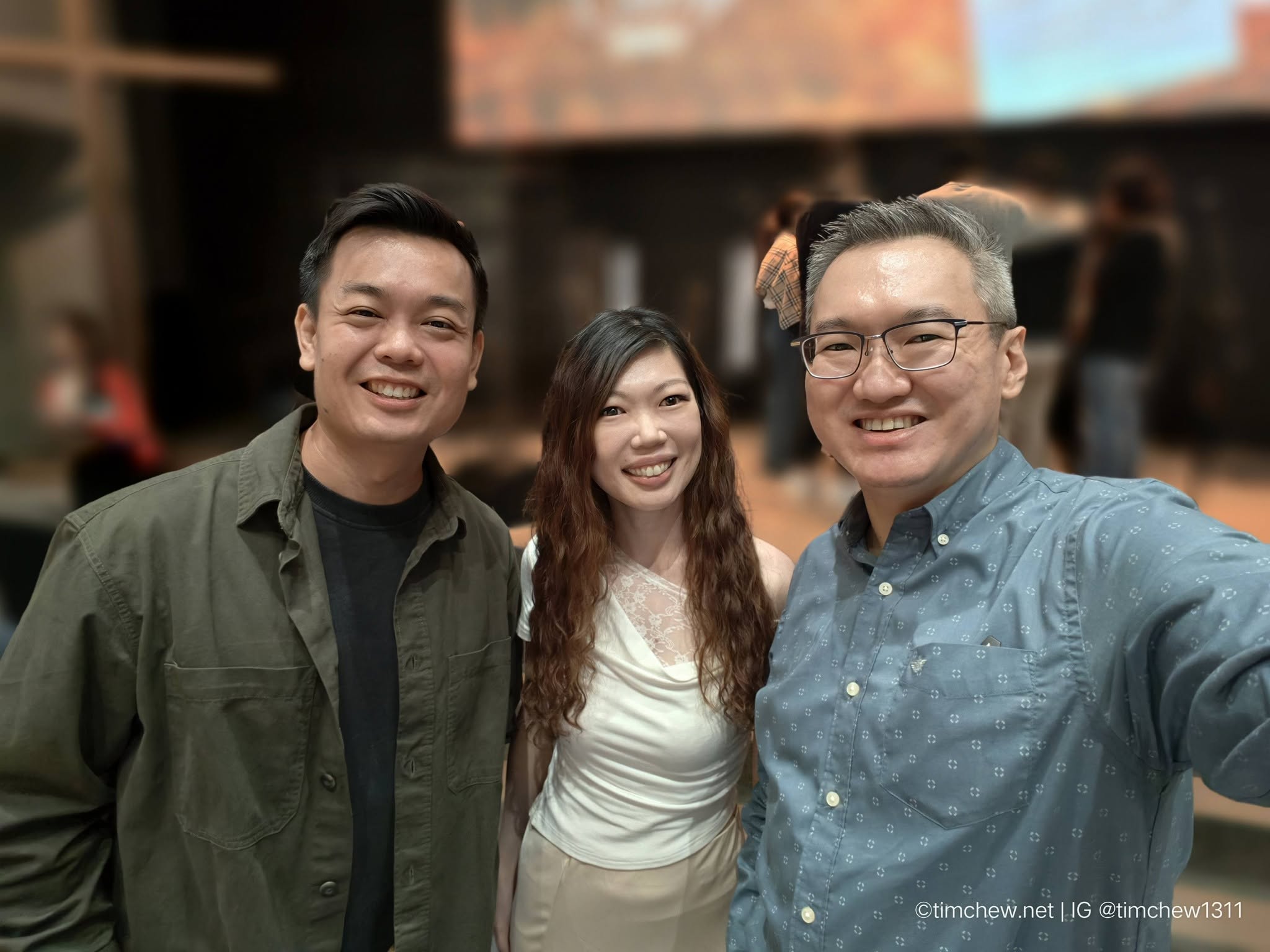
We drove the Kia Sportage on a bright and sunny Sunday morning to HTBB at Lot 10 Kuala Lumpur for Sunday church service, after which we strolled over to Lai Ching Yuen, the Cantonese restaurant at Grand Millennium Kuala Lumpur, for their all-you-can-eat dim sum buffet that has built a following among both families and corporate diners looking for a more communal lunch format. The restaurant is also one of the few non-halal Chinese restaurants operating within a hotel setting in Malaysia, a distinction that gives it a clearer culinary identity than many hotel Chinese restaurants are able to claim.
The buffet runs daily, with two pricing tiers depending on the day. On weekdays, from noon to 3 p.m., it is priced at RM88++ for adults and RM58++ for children aged five to twelve and senior citizens. On weekends and public holidays, the service runs slightly longer, from 11 a.m. to 3 p.m., at RM108++ for adults and RM78++ for the same concession categories. Items ordered but left unconsumed are charged at the regular à la carte rate, a standard buffet safeguard worth noting for larger groups.
The kitchen’s dim sum programme is led by Executive Dim Sum Chef Thye Yoon Kong, who has been with Lai Ching Yuen since 1990 and has spent 36 years in the trade. Chef Kong’s tenure at the restaurant spans more than three decades of Cantonese dim sum preparation, a length of service that reflects a level of institutional continuity uncommon in hotel dining.


We indulged in a range of dishes across the steamed and fried dim sum sections, both substantial categories on the menu. The steamed selection includes familiar Cantonese staples alongside a few less common options. The steamed prawn dumpling, a standard reference point for any Cantonese kitchen, came with a thin, translucent skin. The steamed siew mai with fish roe added a layer of fish roe over the usual pork-and-prawn filling, and the steamed spare ribs in black bean sauce carried the fermented, savoury character typical of that preparation.
A handful of dishes are less commonly seen on standard dim sum menus. The steamed crystal dumpling with conpoy pairs a translucent wrapper with dried scallop, while the steamed glutinous rice meatball is finished with egg white sauce and tobiko, giving it a different texture from the usual siew mai or har gow format. The steamed glutinous rice with Chinese sausage and chicken, wrapped lotus-leaf style, is a heartier, more substantial dish than the smaller steamed items around it. Steamed chicken feet in black pepper sauce round out the steamed selection with a spicier alternative.
The fried dim sum section runs in parallel. The deep-fried barbecued pork bun has a crisp, lightly sweetened exterior around a pork filling, distinct from the more commonly seen steamed version. The deep-fried bean curd roll with shrimp is wrapped in bean curd skin rather than the usual spring roll pastry, and the deep-fried shrimp dumpling with garlic, prepared in the Bei Fong Tong style, carries a more pronounced garlic and chilli profile than the steamed prawn dumpling. The pan-fried chive dumpling has a lightly charred base typical of the format, and the wok-fried radish cake is prepared in a homestyle style rather than the more common pan-fried block.
The dessert and porridge sections round out the buffet. The porridge with century egg and lean pork offers a savoury option for diners who prefer not to end on something sweet, while the red bean soup with tangerine peel is a more conventional Cantonese dessert.
Beyond the dim sum, the black vinegar-glazed pork ribs from the main course selection are a notable option among the mains: the glaze carries the characteristic tang-and-sweetness balance of the preparation, and the ribs are well-rendered. As a shared main course, the dish gives the meal a point of structure beyond the dim sum offerings, which can be useful when dining in a larger group.
For corporate diners, the format itself is worth considering. An all-you-can-eat buffet removes much of the friction around ordering for a mixed group with different appetites and preferences, while the restaurant’s multiple private rooms offer a quieter, more contained setting for client lunches or team gatherings that call for a degree of privacy. The restaurant’s decor — built around two connected pavilion-style dining areas finished in red and black — leans into a more formal, considered atmosphere than the buffet format might suggest, making it a reasonable fit for entertaining clients as well as hosting family celebrations.
Lai Ching Yuen is located at Grand Millennium Kuala Lumpur, 160 Jalan Bukit Bintang, 55100 Kuala Lumpur, and is open daily. Lunch service runs from noon to 3 p.m. on weekdays and 11 a.m. to 3 p.m. on weekends, with dinner service from 6 p.m. to 10 p.m. daily. Reservations can be made by calling +603-21174180
For more info, head over to https://www.millenniumhotels.com/en/kuala-lumpur/grand-millennium-hotel-kuala-lumpur/lai-ching-yuen/#/

Kia Sales Malaysia loaned this vehicle for the purpose of this review.
Read part 2 here: https://timchew.net/2026/07/15/weekend-with-the-kia-sportage-1-6t-high-part-2-dinner-at-thb-bistronome-petaling-jaya/
Photos shot by the author using the vivo X300 Pro.


