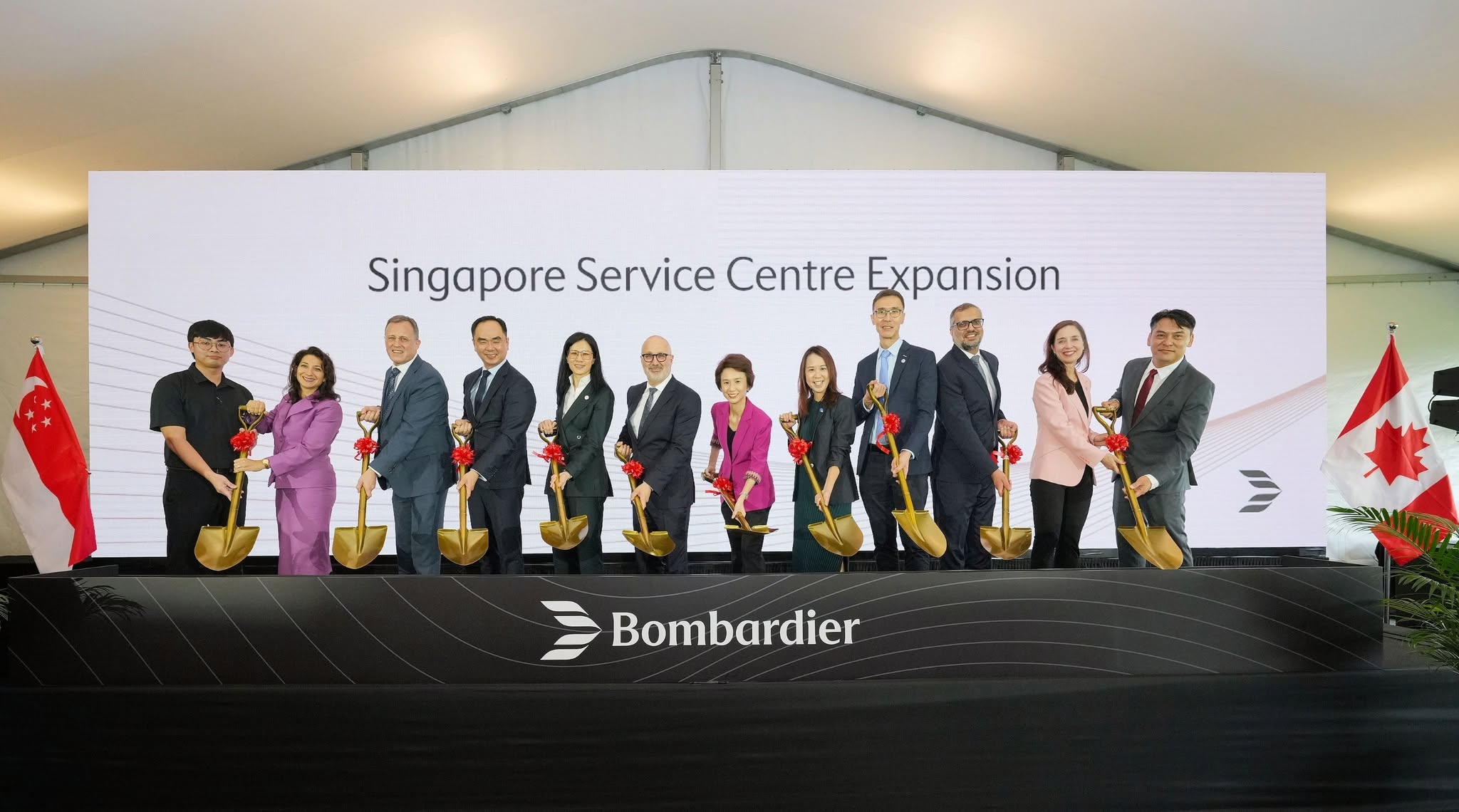
Bombardier Inc. announced a series of moves in June 2026 expanding its footprint in Asia and delivering its newest long-range business jet to first-time markets in Africa and Asia. The Montreal-based manufacturer announced on 9 June 2026 that it plans to nearly double the size of its service centre in Singapore. A week later, on 16 June 2026, the company announced that it had delivered the first Global 8000 aircraft in Africa, to BUA Group, a Nigerian conglomerate with operations in cement, food, oil and gas, energy, infrastructure, ports and terminals, and real estate. On 23 June 2026, Bombardier announced it had delivered the first Global 8000 in Asia, to an unnamed customer based in Shanghai.
Bombardier said it will add a newly built facility of approximately 250,000 square feet (about 23,000 square meters) next to its existing Singapore Service Centre at JTC’s Seletar Aerospace Park. The company put the planned investment at approximately 100 million Singapore dollars and said the project is expected to create about 200 new jobs. Construction is planned to begin in 2026, with operations starting in the second half of 2028, according to Bombardier.
The addition is the company’s third development at the Singapore site since 2014. Bombardier said its existing Seletar facility currently employs more than 300 local staff, including about 250 licensed engineers and technicians, and supports approximately 2,000 aircraft annually. The new facility is planned to include aircraft hangars, a component repair and overhaul workshop, capabilities for aircraft recompletion work such as paint and interior finishing, a customer lounge and a dedicated crew rest area.
Bombardier also said it has joined the A*STAR Advanced Remanufacturing and Technology Centre’s industry consortium as an anchor member, a collaboration the company said is intended to advance digitalisation, artificial intelligence and automation in its maintenance operations.
“Our Singapore Service Centre has long been a cornerstone of service and support excellence in Asia-Pacific, supporting approximately 2,000 aircraft annually as regional demand continues to grow. This expansion reaffirms our commitment to supporting customers close to where they operate, while delivering a service experience defined by care, convenience and responsiveness, backed by Bombardier’s industry-leading expertise. Asia-Pacific remains an important hub for Bombardier, and this investment is expected to further strengthen our footprint and ability to serve customers across the region.”
Paul Sislian, executive vice president, Aircraft Sales and Bombardier Aftermarket Services
“Bombardier’s latest expansion will add new MRO and recompletion capabilities for next-generation business aircraft and create 200 new jobs,” Koh said. “This investment will further entrench Singapore’s status as Asia’s premier aerospace hub.” Koh added: “The collaboration with A*STAR ARTC on advanced MRO solutions exemplifies how globally leading companies can tap on Singapore’s vibrant and trusted ecosystem to drive new innovations in advanced manufacturing that will shape the future of aviation and aerospace.”
Cindy Koh, executive vice president of Singapore’s Economic Development Board
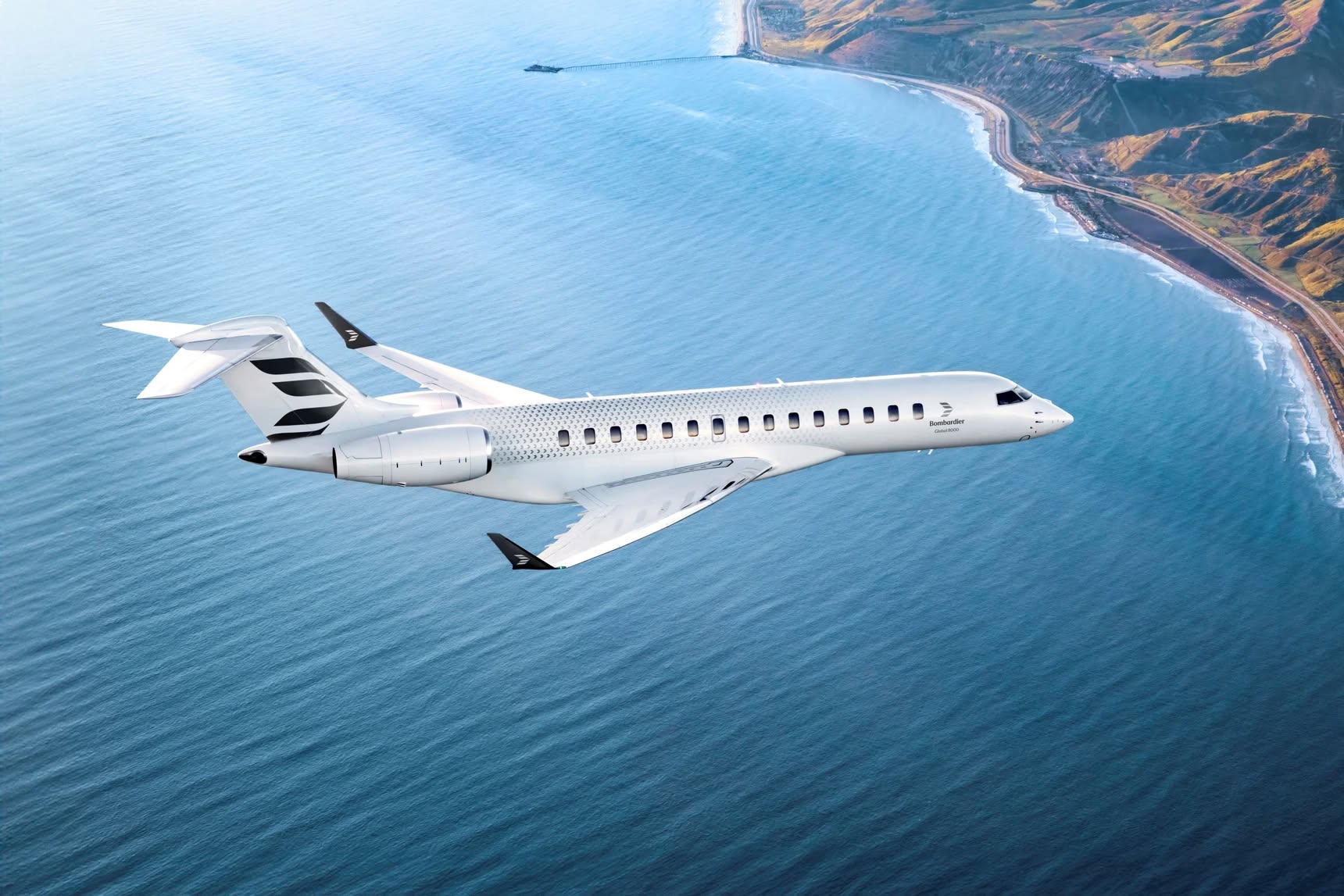
The aircraft delivered to BUA Group is the third Bombardier jet the company has purchased, according to Bombardier. It will be used for the company’s long-range international travel, with nonstop routes planned from Lagos to destinations including Los Angeles, Perth and Tokyo.
“The Global 8000 offers the range, speed, comfort, and reliability required to support our international business activities. For a group with international operations and commitments, the ability to reach more destinations non-stop while maintaining comfort and productivity on board is an important advantage.”
Abdul Samad Rabiu, founder and chairman of BUA Group
The delivery of Africa’s first Global 8000 to BUA Group is a significant milestone for both organisations and a proud moment in the strong relationship we have built over the years. We are honoured by BUA Group’s continued trust in Bombardier and pleased to support its international travel requirements with our flagship Global 8000 aircraft.”
Bombardier President and Chief Executive Officer Éric Martel
“We are proud to see the Global 8000 enter service in Africa with BUA Group, a long-standing and valued Bombardier customer. The Global 8000 represents the third new Bombardier aircraft delivered to BUA Group, underscoring the group’s continued confidence in Bombardier’s products, people and global support network.”
Hani Haddadin, regional vice president for Bombardier Aviation
The Global 8000 delivered in Shanghai went to a customer Bombardier did not identify. The company said the aircraft would be used for nonstop travel between major business hubs, citing potential city pairs such as Shanghai to New York, Shanghai to Dublin and Shanghai to Sydney.
“This first Global 8000 delivery in Asia reflects the region’s continued appetite for aircraft that combine range, speed and an exceptional level of comfort for its passengers. Asia is a strategic market for Bombardier, and the Global 8000 is particularly well aligned with the way customers in the region travel: across long distances, on tight schedules and with a strong focus on comfort, efficiency and nonstop global connectivity.”
Emmanuel Bornand, Bombardier’s vice president of sales for international markets
The Global 8000 is Bombardier’s longest-range business jet, developed as an extended-range successor to the Global 7500. Bombardier relaunched the program in its current form in 2022 and began deliveries in December 2025, when the first aircraft was handed over to fractional-ownership operator NetJets.
The aircraft is powered by two General Electric Passport engines and has a four-zone cabin. Bombardier has said the Global 8000 has a top speed of Mach 0.95, which the company describes as the fastest of any civil aircraft since the Concorde, and a manufacturer-stated range of 8,000 nautical miles. Bombardier also says the aircraft has a cabin altitude of 2,691 feet at cruising altitude, which it describes as the lowest among business jets currently in production; a lower cabin altitude is generally associated with reduced passenger fatigue on long flights. The company has said the aircraft can access roughly 30% more airports than what it considers its closest competitor, citing the jet’s takeoff and landing performance.
Existing owners of the Global 7500, an earlier and shorter-range Bombardier model, can have their aircraft modified to Global 8000 specifications through a service bulletin, according to the company. List prices for the Global 8000 have been reported in the range of $78 million to $82 million, though Bombardier has not published an official figure in its delivery announcements.
Taken together, the three announcements mark a coordinated push by Bombardier to grow the Global 8000 program beyond its initial customer base, seven months after the aircraft entered service. First deliveries into new regions are commonly used by manufacturers to signal that a new model is moving from an early customer base — often fleet operators such as NetJets that place high-volume launch orders — toward broader adoption among individual corporate and private buyers. Deliveries in both Africa and Asia within the same week, paired with a service-centre expansion in Singapore announced days earlier, suggest Bombardier is working to establish both sales and support infrastructure in markets outside North America and Europe, where ultra-long-range business jet demand has traditionally been concentrated.
For companies such as BUA Group, and for the undisclosed buyer in Shanghai, the practical appeal of an aircraft like the Global 8000 lies less in luxury than in logistics: the ability to fly executives nonstop between distant business centers without a refueling stop can save hours on trips that would otherwise require a layover, and it removes a scheduling variable — an intermediate stop, a connecting flight, customs clearance in a third country — that can complicate international business travel. That is a narrow use case, relevant mainly to multinational companies and wealthy individuals who can justify an aircraft priced in the tens of millions of dollars, plus millions more per year in operating costs.
The Singapore expansion speaks to a different, broader audience: the infrastructure — trained technicians, spare parts, hangar space — that manufacturers must build out as they place new aircraft types with operators far from their home factories in Canada. For Singapore, Bombardier’s investment translates into concrete, near-term economic effects the company and government officials quantified directly: about 200 new skilled jobs and a facility intended to reinforce the city-state’s position as a regional aerospace maintenance hub. Aviation maintenance work of this kind tends to have a longer economic tail than a single aircraft sale, since it recurs over the decades an aircraft remains in service, and it can support a broader ecosystem of suppliers, training programs and adjacent aerospace investment, as reflected in Bombardier’s new membership in the A*STAR ARTC consortium.
Finally, the deliveries offer an early, real-world test of manufacturer performance claims. Bombardier’s marketing has emphasized figures such as the aircraft’s 8,000-nautical-mile range, its cabin altitude and its speed relative to the rest of the business jet market; how the aircraft performs on actual long-haul routes for operators like BUA Group, and how reliably it operates once it accumulates flight hours outside factory testing conditions, will help determine whether the Global 8000 lives up to those figures in day-to-day commercial use. That track record, together with how quickly Bombardier’s expanded Singapore facility comes online to support the growing regional fleet, will shape resale values and the aircraft’s reputation among the relatively small pool of buyers who purchase ultra-long-range business jets.
Images by Bombardier.

 timchew.net