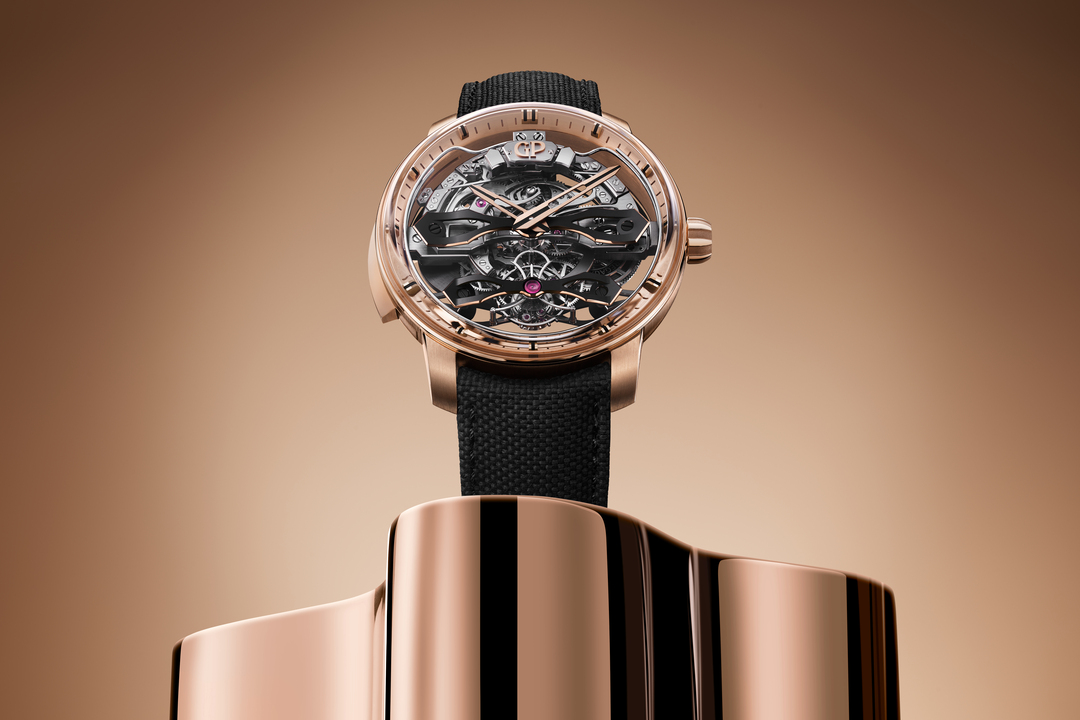
There are watches that tell time, watches that display it, and then watches that sing it. The minute repeater sits firmly in the third category — and among the manufactures that have pursued this complication with genuine conviction over generations, Girard-Perregaux occupies a particular position. The brand has been building chiming watches since the 1820s, and in the new Minute Repeater Flying Bridges, it has produced the most architecturally ambitious expression of that heritage to date.
The watch is built around Calibre GP9530, an entirely in-house movement that combines a minute repeater with a flying tourbillon and a new micro-rotor self-winding system within an openworked architecture. It is, by any measure, a demanding technical brief — and the fact that GP9530 is the third major new calibre the Manufacture has unveiled in under six months suggests a development pipeline operating at considerable pace.
To understand what makes the GP9530 distinctive, it helps to understand what a minute repeater actually requires — and how rarely it is executed with genuine acoustic ambition rather than mere mechanical achievement.
A minute repeater, at its core, is a mechanism that chimes the time on demand: hours on a low note, quarter hours on a two-tone sequence, and remaining minutes on a high note. The complications involved in storing, metering, and releasing that information through a sequence of hammers and gongs are considerable. But the sonic result — the actual quality of the sound that emerges from the case — depends on choices that go well beyond the striking train itself. It depends on materials, geometry, assembly, and the relationship between the movement and the case around it.
Girard-Perregaux has approached GP9530 as fundamentally an acoustic instrument that happens also to be a wristwatch. Every significant engineering decision in the movement traces back to that priority.
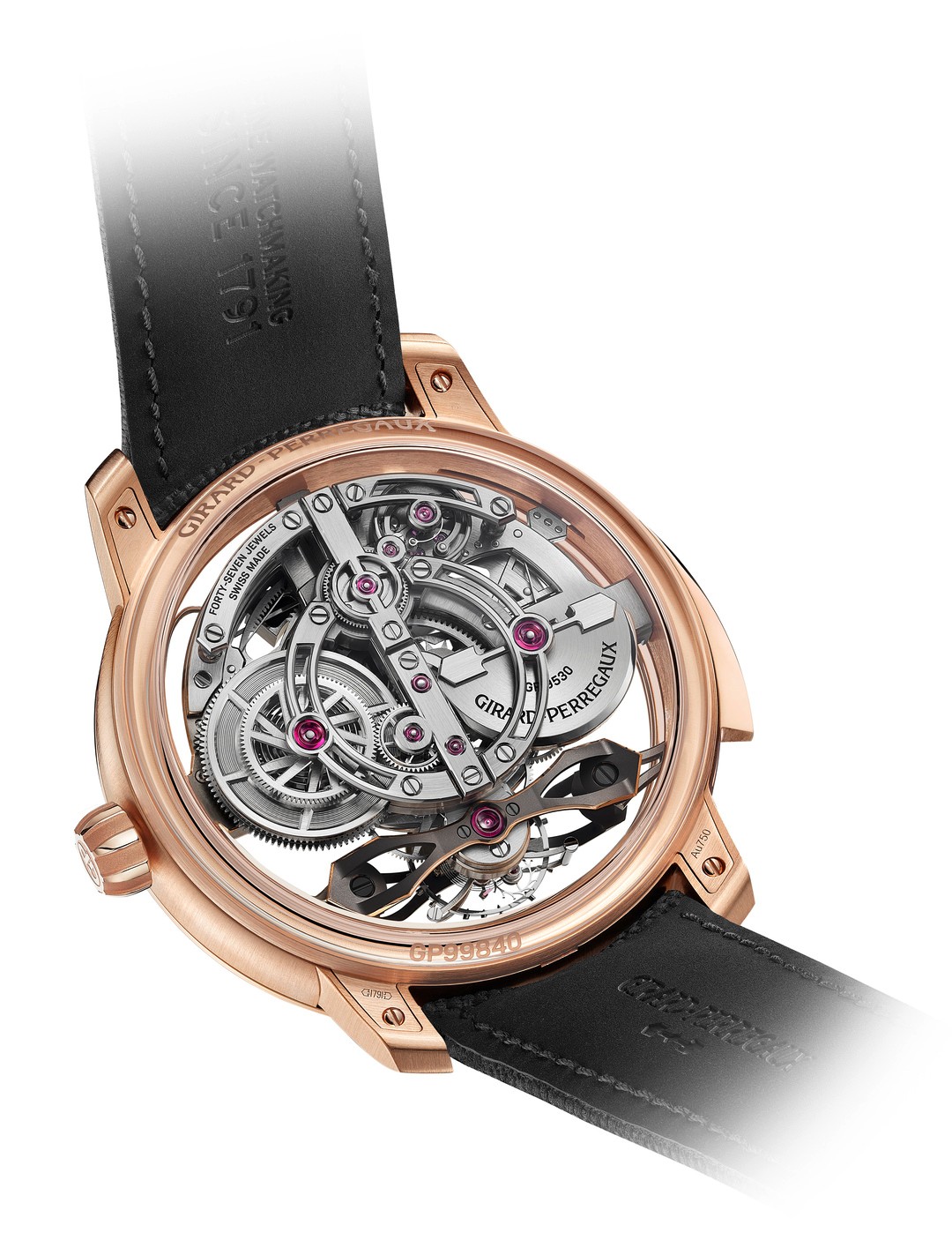
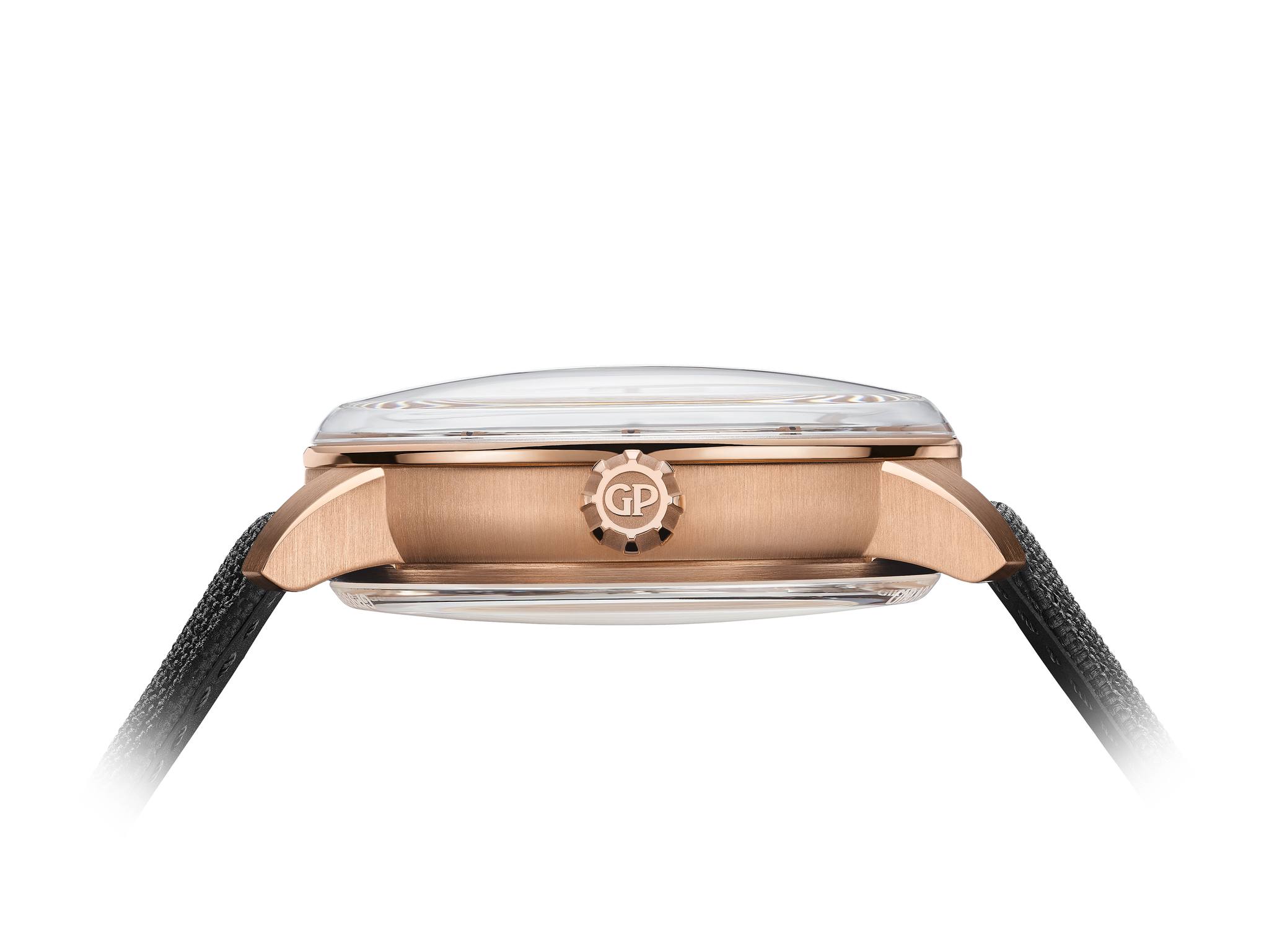
The mainplate and bridges are machined from titanium — chosen not for its lightness in isolation, but for its combination of rigidity and vibration propagation characteristics. In a chiming movement, the plate is the primary conductor of the sound energy generated by the hammers striking the gongs; titanium transmits those vibrations efficiently. More significantly, the mainplate has been fixed directly to the case rather than isolated from it, ensuring that the vibrational energy passes without attenuation from the movement into the pink gold case and outward through the domed sapphire crystals fitted to both dial and caseback sides. Both crystals are box-shaped — a curved geometry chosen specifically to amplify the resonance of the gong melody as it radiates outward.
To eliminate interference, the gongs and their mounting stud are machined from a single continuous piece of metal, removing the joint that in a conventional construction can absorb or muddy the sound. The centrifugal strikework regulator — which governs the rate at which the mechanism chimes — has been relocated to the back of the movement, away from the gongs, reducing acoustic crosstalk. The white gold micro-rotor of the self-winding system is jewel-fitted and engineered to oscillate in silence, contributing nothing to the acoustic environment except the chime itself.
The result is a minute repeater in which every element has been subordinated to the purity of what the wearer hears when they activate the slide.
The visual structure of GP9530 is inseparable from its acoustic logic. The movement is extensively openworked — not as a decorative afterthought, but because the open architecture allows sound to radiate freely through the case rather than being contained within a solid movement mass. What the eye sees and what the ear hears are products of the same decision.
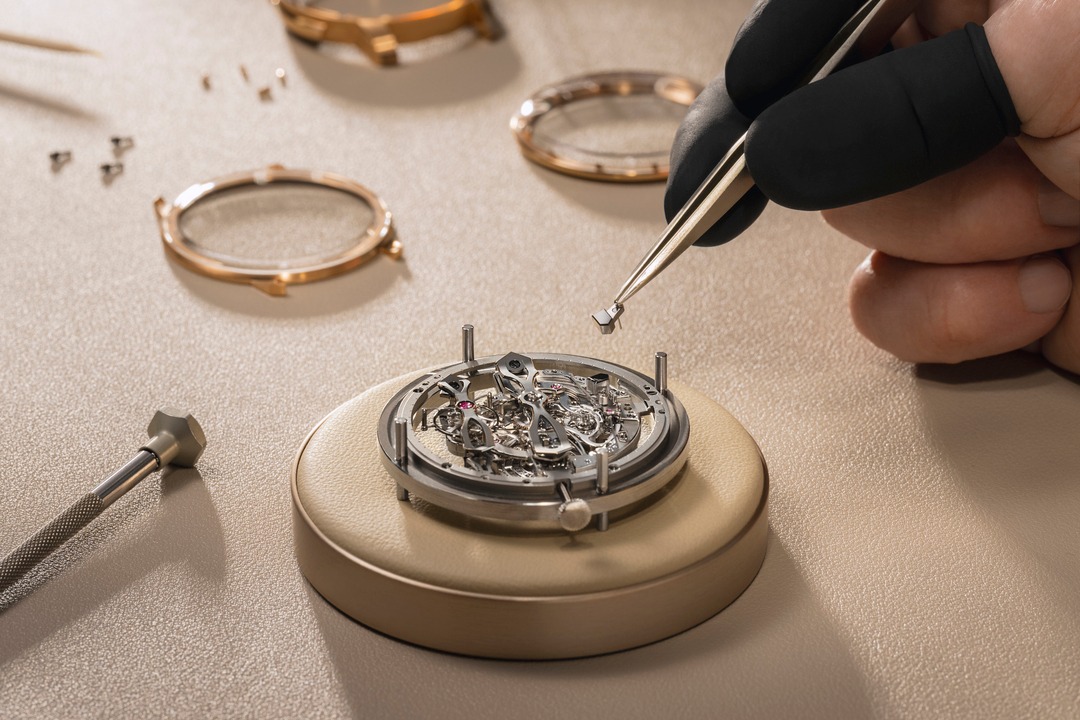
The movement measures 43.55 mm in diameter and 10.75 mm in height. It carries 475 components, 47 jewels, and a minimum power reserve of 60 hours, with functions encompassing the minute repeater, the tourbillon, hours, minutes, and small seconds displayed on the tourbillon cage itself. Its assembly and finishing require approximately 440 hours of work per piece — a figure that begins to explain why production is limited to 50 examples.
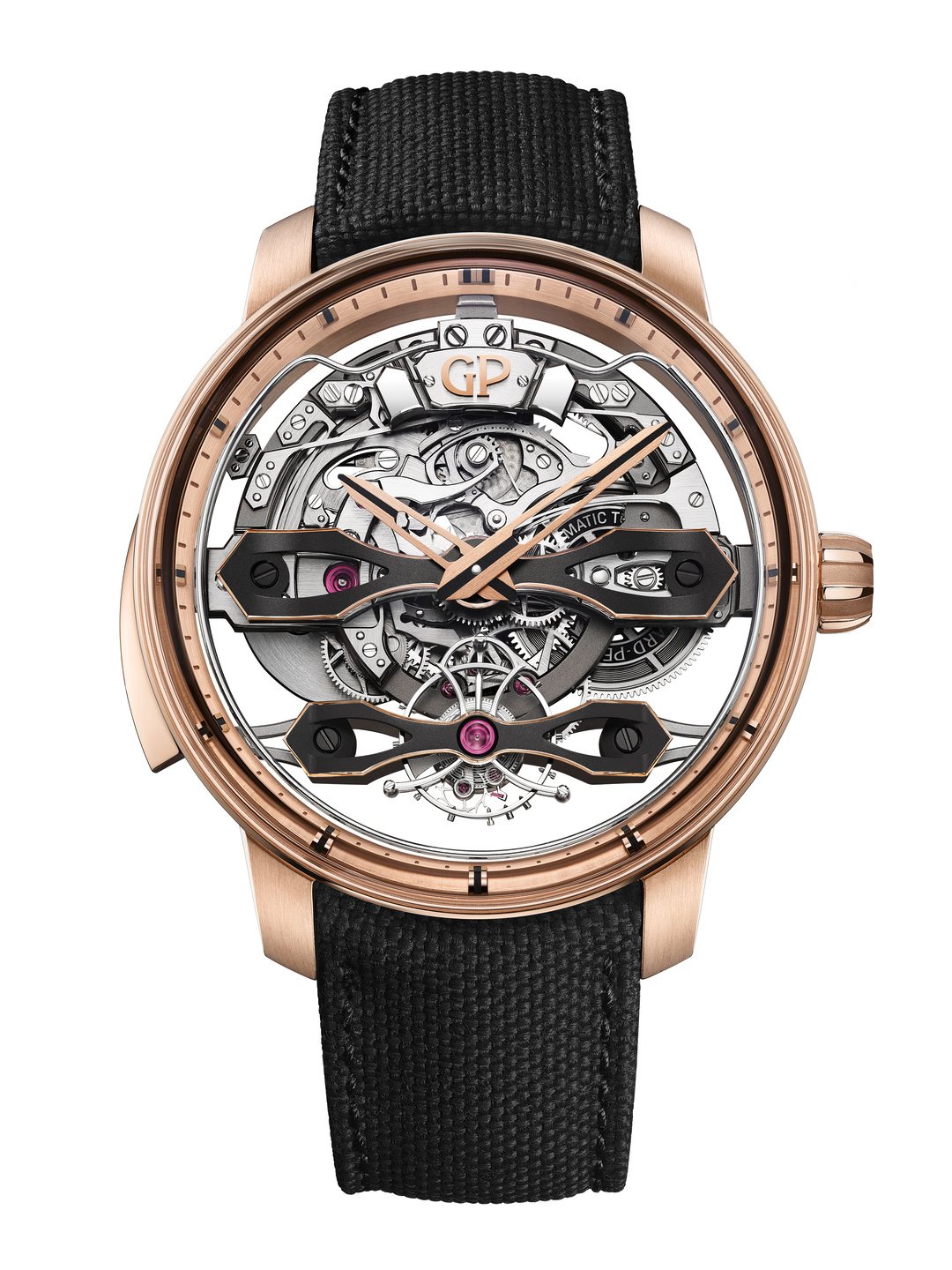
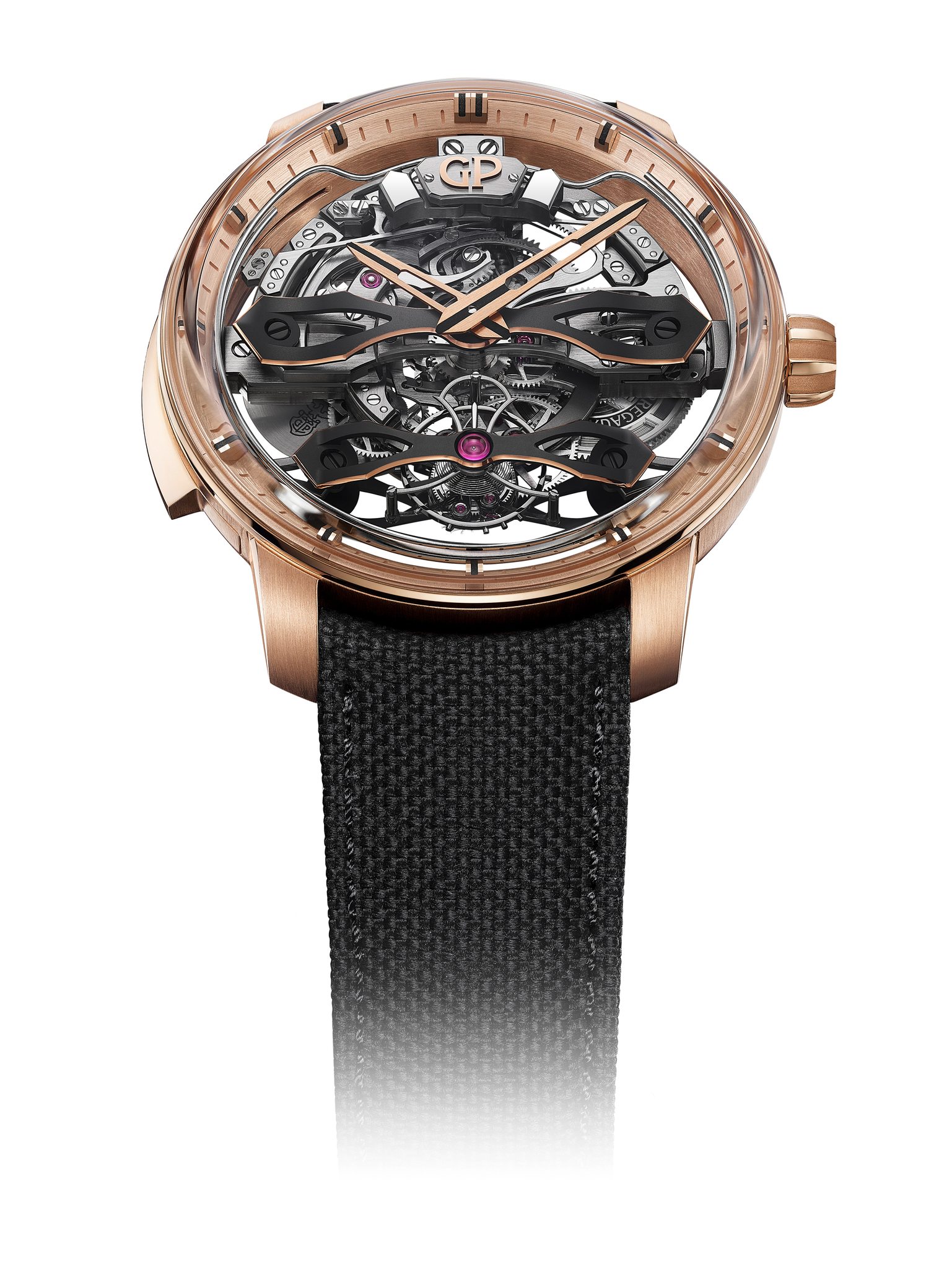
The Three Bridges — Girard-Perregaux’s iconic architectural signature since the mid-1800s — are present in their characteristic arrow-tipped form, here crafted in pink gold and arranged to create an impression of suspension across the open movement. The third bridge, in a departure from historical precedent, is positioned at the rear of the movement. The lyre-shaped tourbillon cage, a Girard-Perregaux tradition since the 19th century, doubles as a small seconds indicator with its own dedicated hand at the lower portion of the dial.
The arrow motif reappears throughout with notable consistency: on the tips of the Three Bridges, on the hammers and springs of the striking mechanism, on the oscillating micro-rotor weight, and on the new slide-piece that activates the chime. This slide-piece is integrated into the monobloc case-middle in a way that achieves something unusual for a minute repeater — water resistance to 30 metres. Chiming watches are typically among the most difficult to seal, because any mechanism that passes through the case wall creates a potential ingress point. The arrow-shaped slide-piece system resolves this without compromising either the tactile quality of the activation or the acoustic environment inside the case.
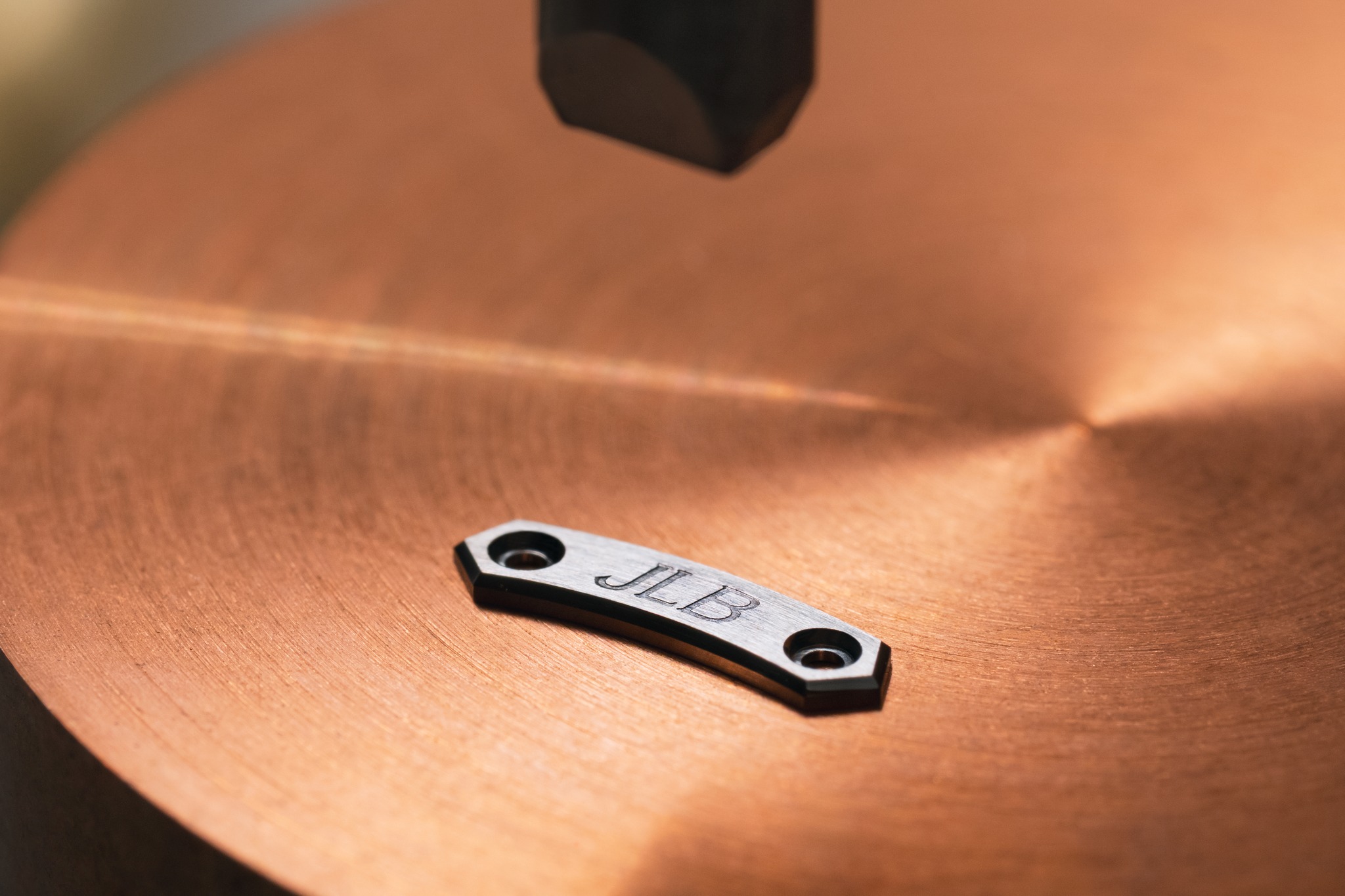
The 1,340 hand-polished chamfers across the movement — 295 of which are interior angles, among the most demanding to finish — ensure that the play of light across the components becomes an additional aesthetic dimension. A small plate bearing the initials of the master watchmaker who assembled each individual piece is incorporated discreetly into the skeletonised calibre, an acknowledgement that a movement requiring this degree of hand work is, in the most literal sense, a personal creation.
The case is pink gold, 46 mm in diameter and 17.90 mm in height — proportions that reflect the architectural ambition of the movement within. The openworked pink gold hands carry blue-emission luminescent material, as do the applied hour markers on the pink gold inner bezel ring. Both the dial-side and caseback crystals are domed, glare-proofed sapphire. The strap is black rubber with a textile texture, secured by a pink gold triple folding clasp.
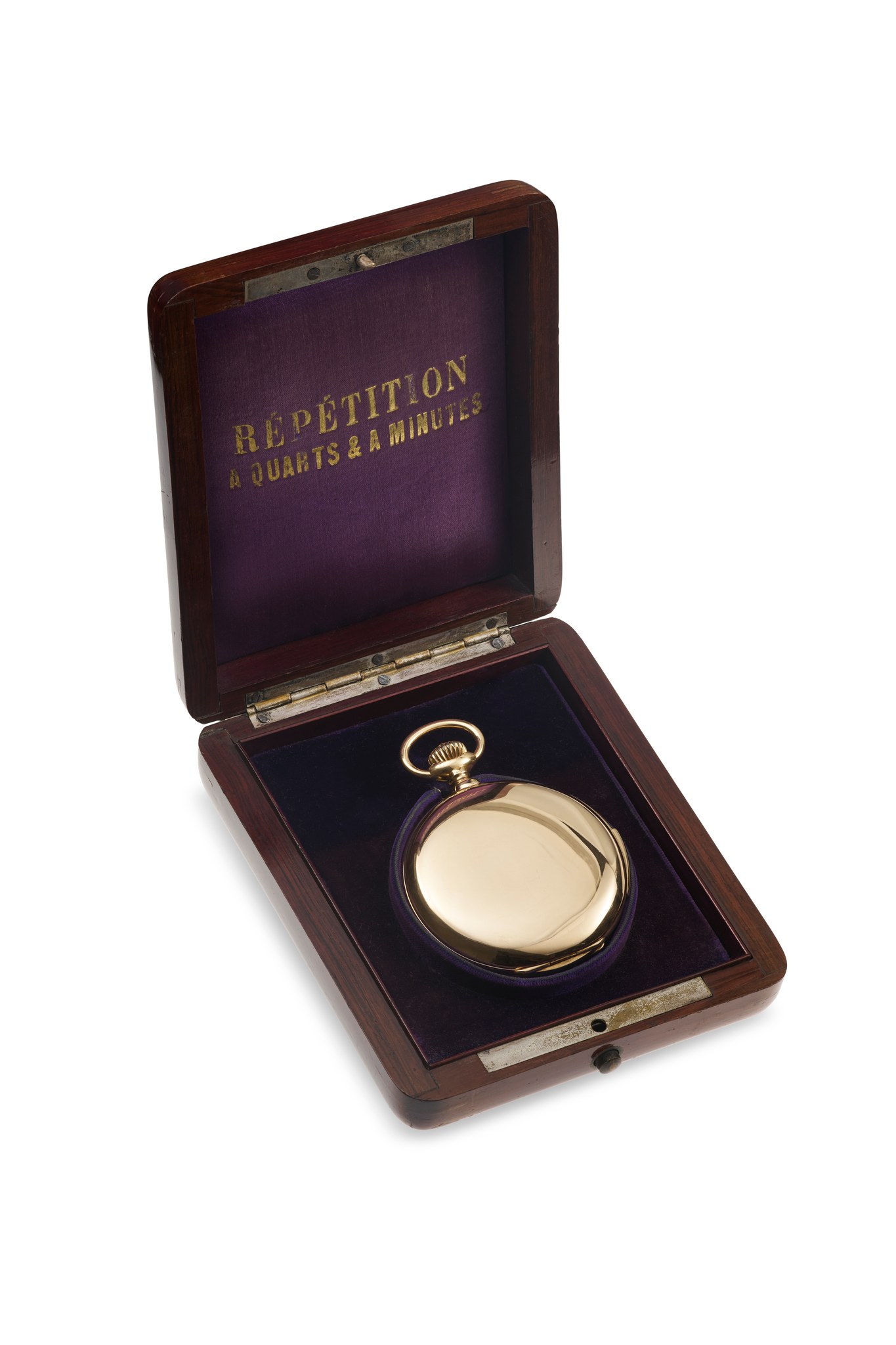
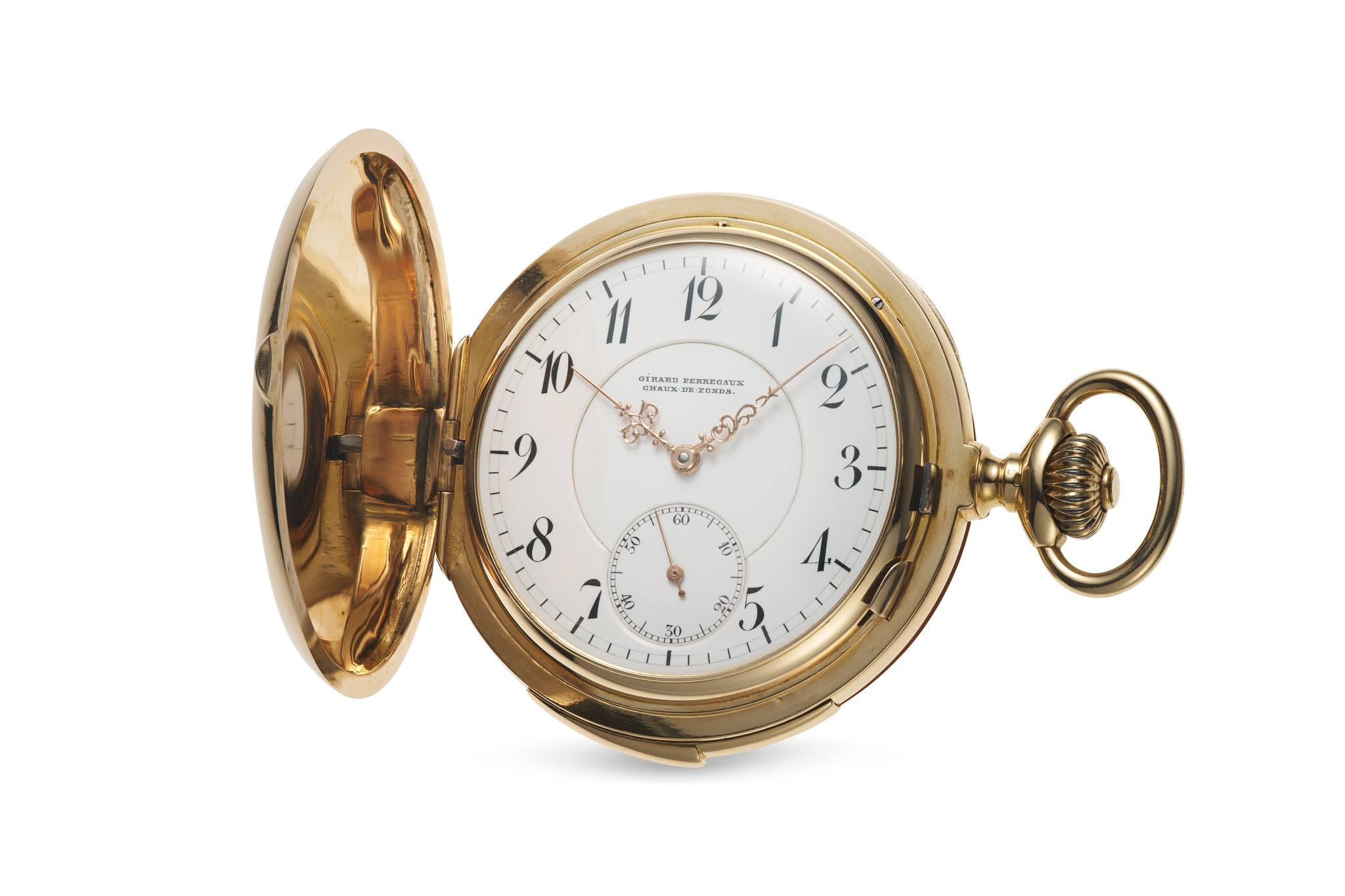
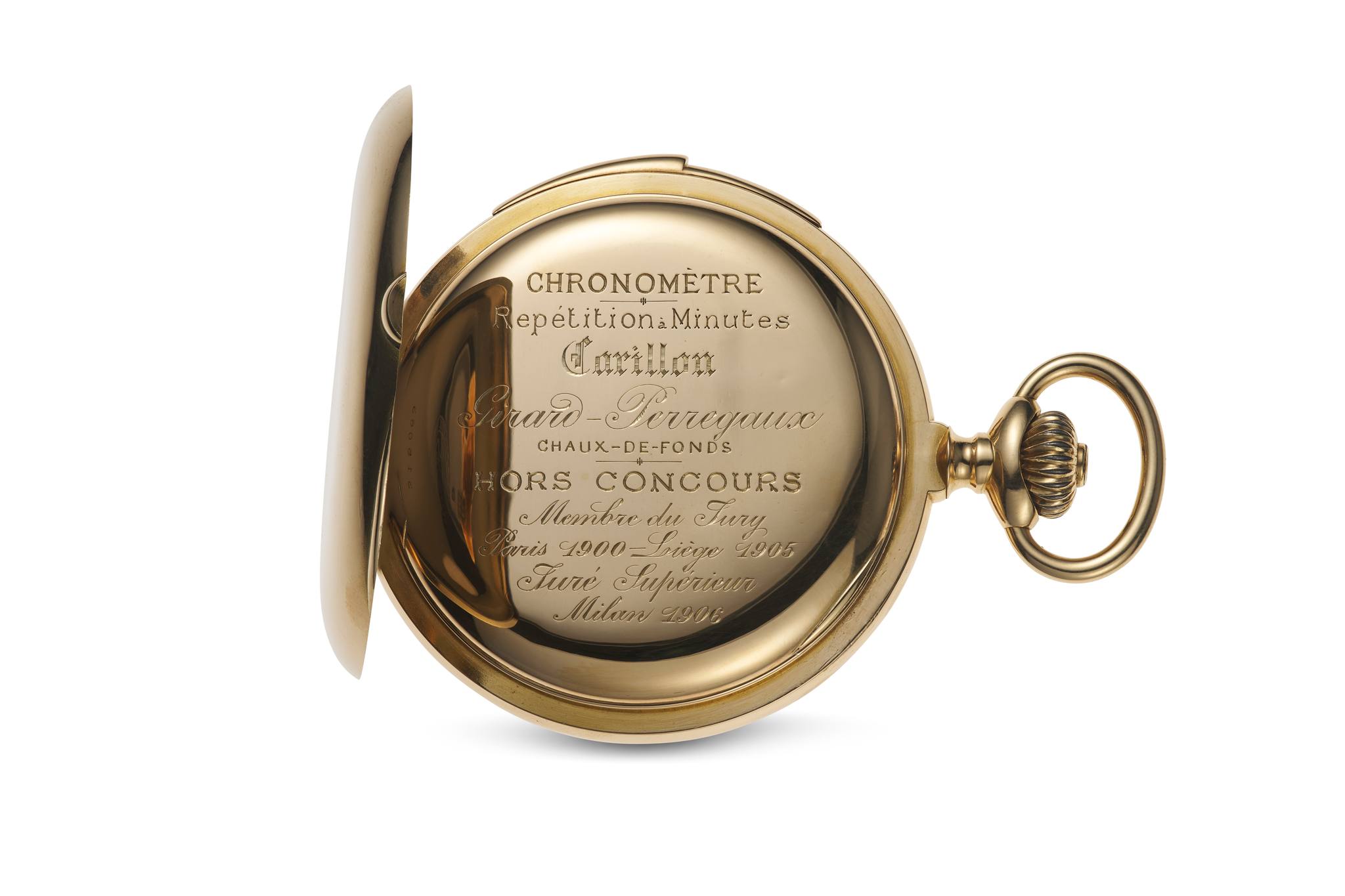
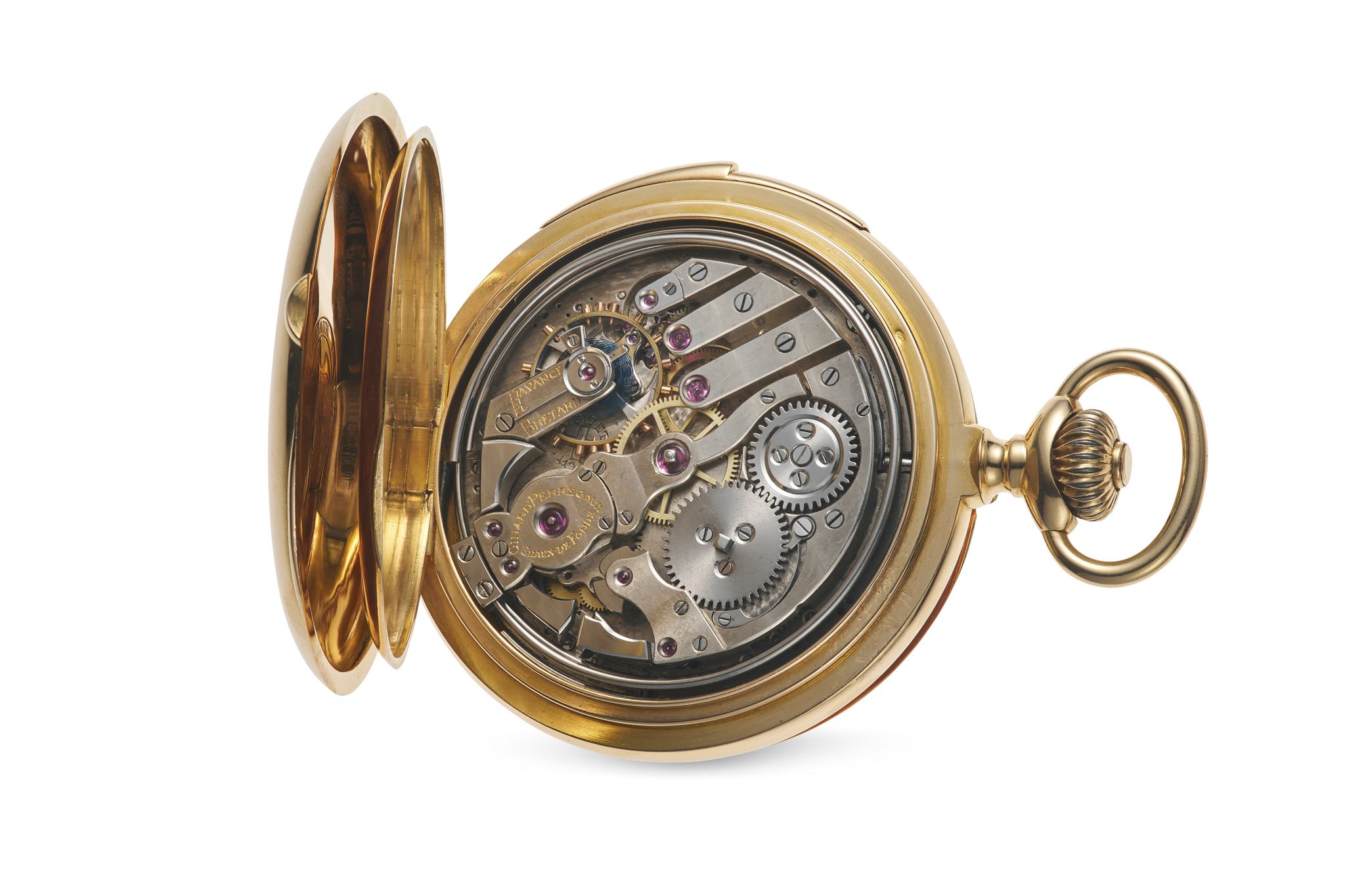
The heritage that informs this watch stretches back to Jean-François Bautte, the Geneva watchmaker born in 1772 whose early work on chiming mechanisms — and whose decision to bring all watchmaking trades under one roof rather than distribute work through the traditional établissage system — laid the foundation for what would become Girard-Perregaux. The brand was formally established in 1791, and by the 19th century, under Constant Girard-Perregaux and his son Constant Girard-Gallet, had developed Grande Sonnerie models, alarm watches, and minute repeaters combined with complications including chronographs and complete calendars. In 1996, Girard-Perregaux was the first to combine a minute repeater and tourbillon in a wristwatch.
The Minute Repeater Flying Bridges is the current expression of that unbroken line — a watch in which two centuries of accumulated acoustic and mechanical knowledge are applied to a movement that could only have been made now, by a manufacture that has spent that long understanding what it is trying to achieve.
Movement Specifications
Calibre GP9530 — Mechanical self-winding with white gold micro-rotor. Diameter: 43.55 mm. Height: 10.75 mm. Frequency: 21,600 vph (3 Hz). Components: 475. Jewels: 47. Power reserve: minimum 60 hours. Functions: minute repeater, tourbillon, hours, minutes, small seconds on tourbillon.
Case (Ref. 99840-52-2013-5CC) — Pink gold, 46.00 mm diameter, 17.90 mm height. Domed glare-proofed sapphire crystal, dial and caseback. Water resistance: 30 metres. Black rubber strap with fabric texture. Pink gold triple folding clasp.
The Minute Repeater Flying Bridges is a limited production and is priced at RM 2,623,200 in Malaysia.
.
Visuals courtesy of The Hour Glass

 timchew.net