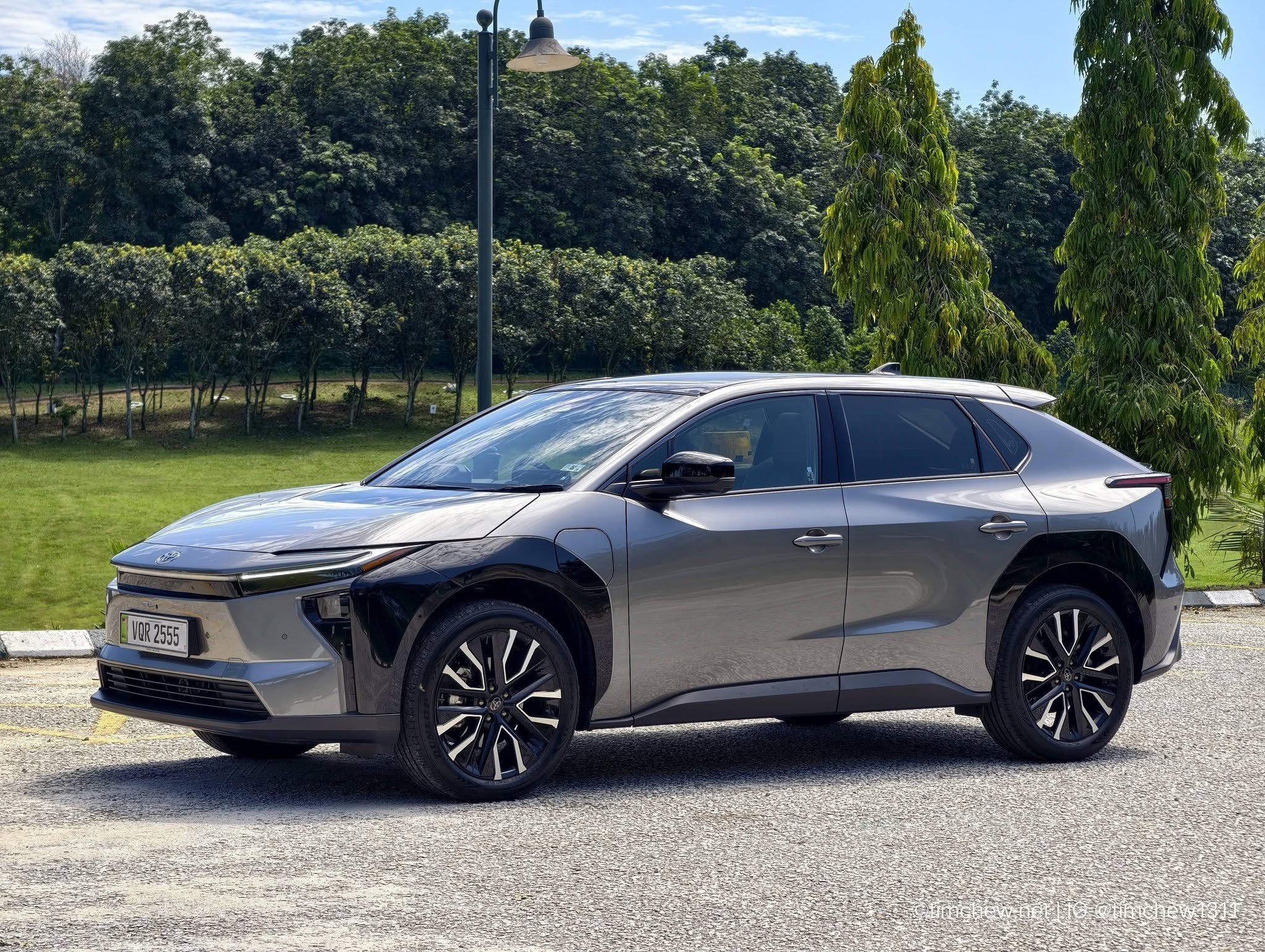
Toyota’s electric SUV took a while to reach Malaysian showrooms. The bZ4X arrived this year in facelifted form, fully imported from Japan and offered in a single front-wheel-drive variant at RM220,000 on the road, without insurance.
That is a lot of money for a Toyota, so we spent a weekend with the bZ4X to see what it gives back: how it looks, how it drives, what it is like to live with, and what the ownership package adds up to.
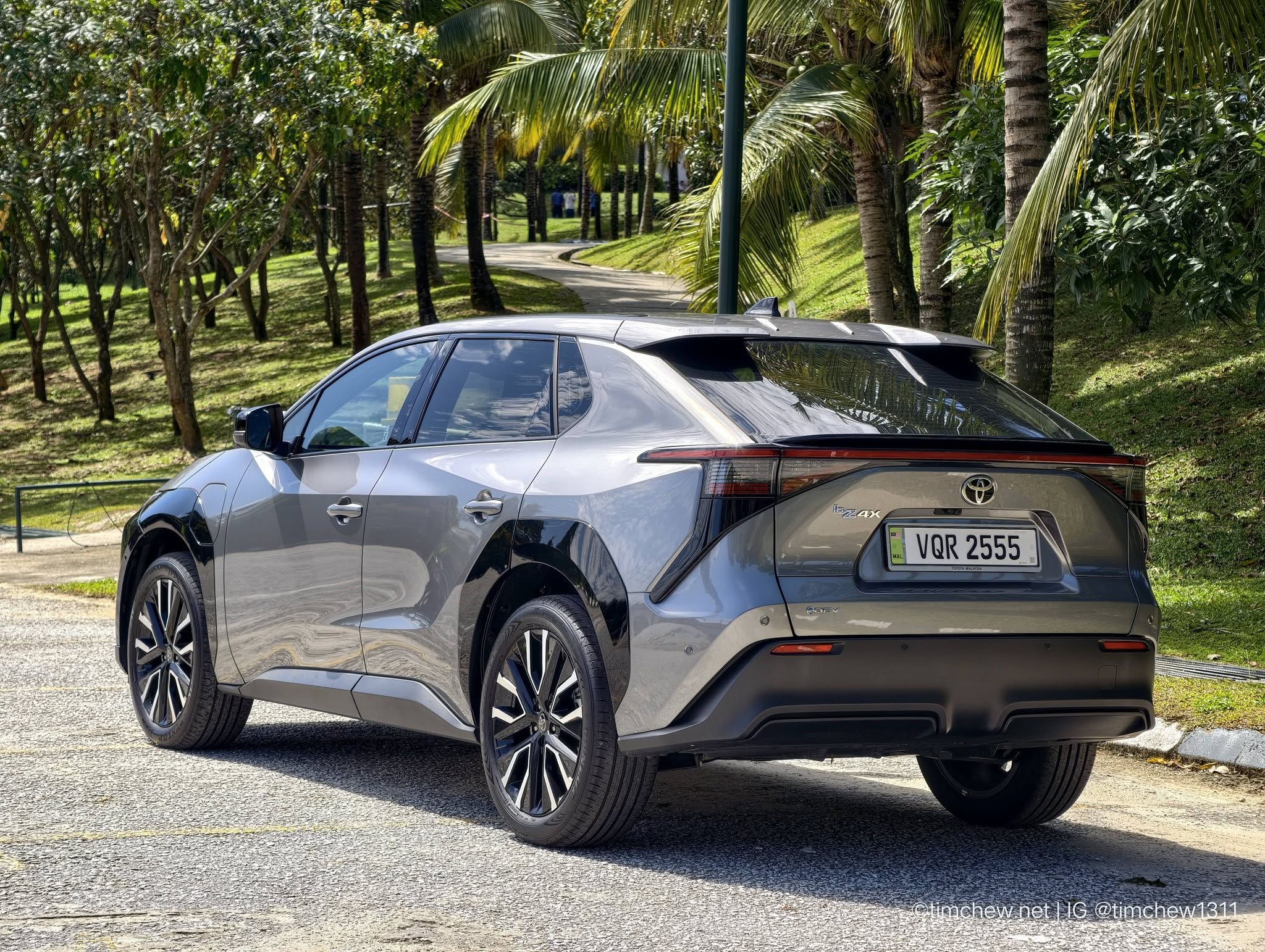
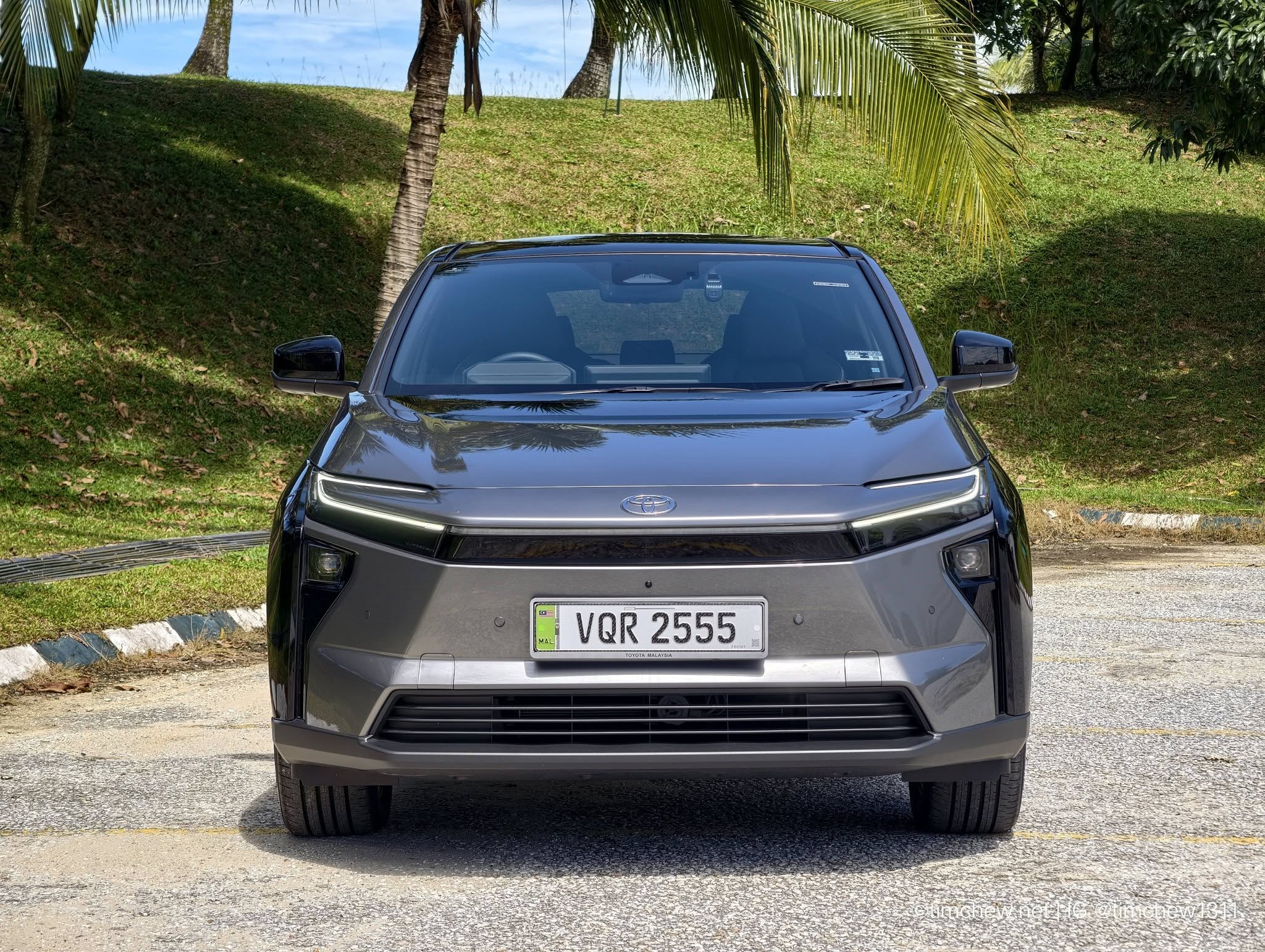
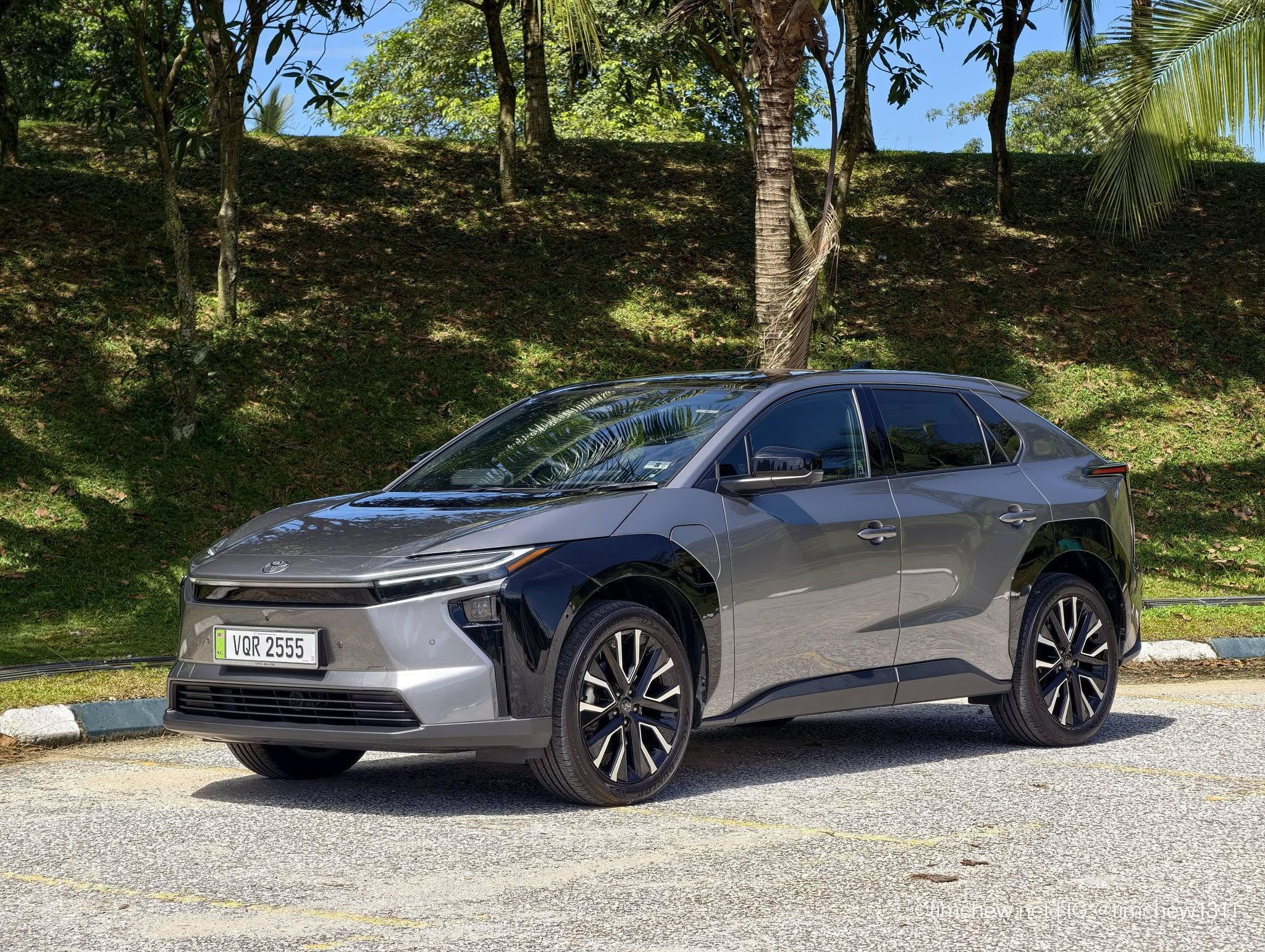
The bZ4X carries Toyota’s “hammerhead” front-end design, with slim daytime running lights and black three-dimensional panels around the lower body that give it a planted, slightly sporty stance. At the back, a roof spoiler and a ducktail lip spoiler finish the tail. Toyota quotes a drag coefficient of 0.27, a number that matters more in an EV than in a petrol car, since smoother airflow helps stretch range.
It measures 4,690 mm long, 1,860 mm wide and 1,650 mm tall, on a 2,850 mm wheelbase. In practice, that is a mid-size footprint: enough cabin and boot space for a family without the parking headaches of a larger SUV. Ground clearance is 180 mm and the turning radius is 5.6 m, which helps in tight car parks. Kerb weight is 2,020 kg. The bZ4X rides on 20-inch alloy wheels and comes in five colours: Attitude Black Mica, Dark Blue Mica, Platinum White Pearl, Precious Metal and Emotional Red II, with the last three carrying an RM800 surcharge.
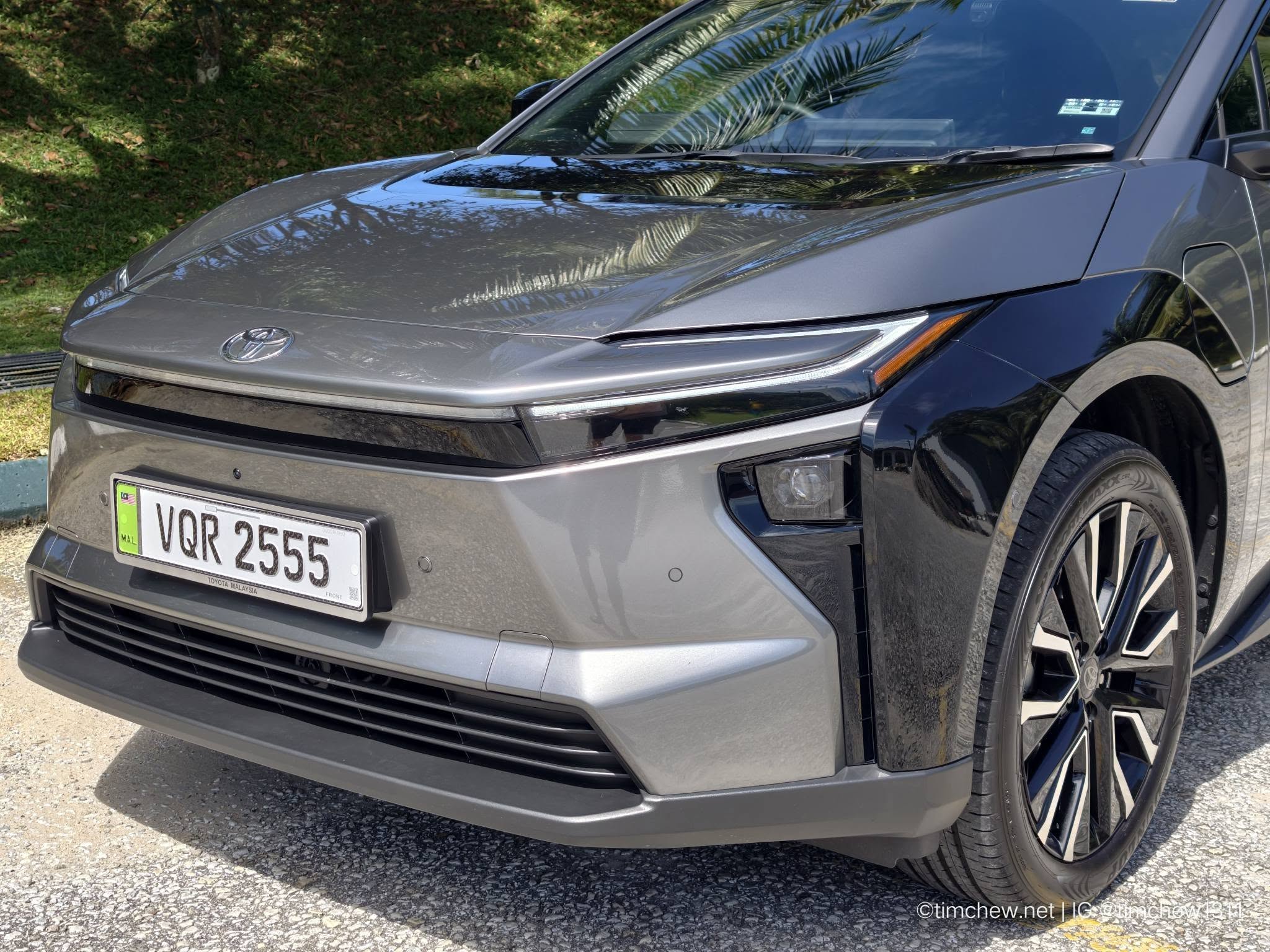
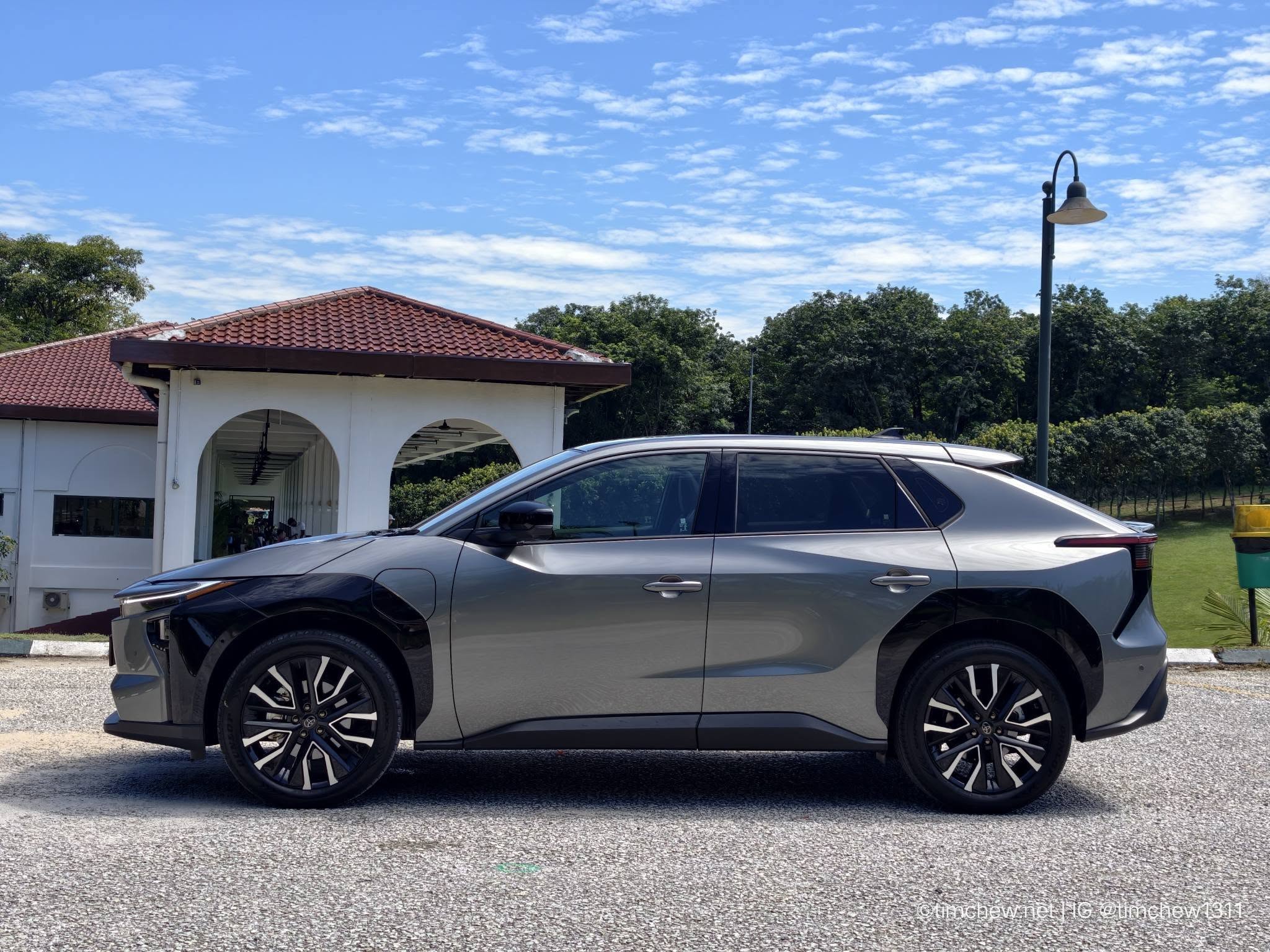
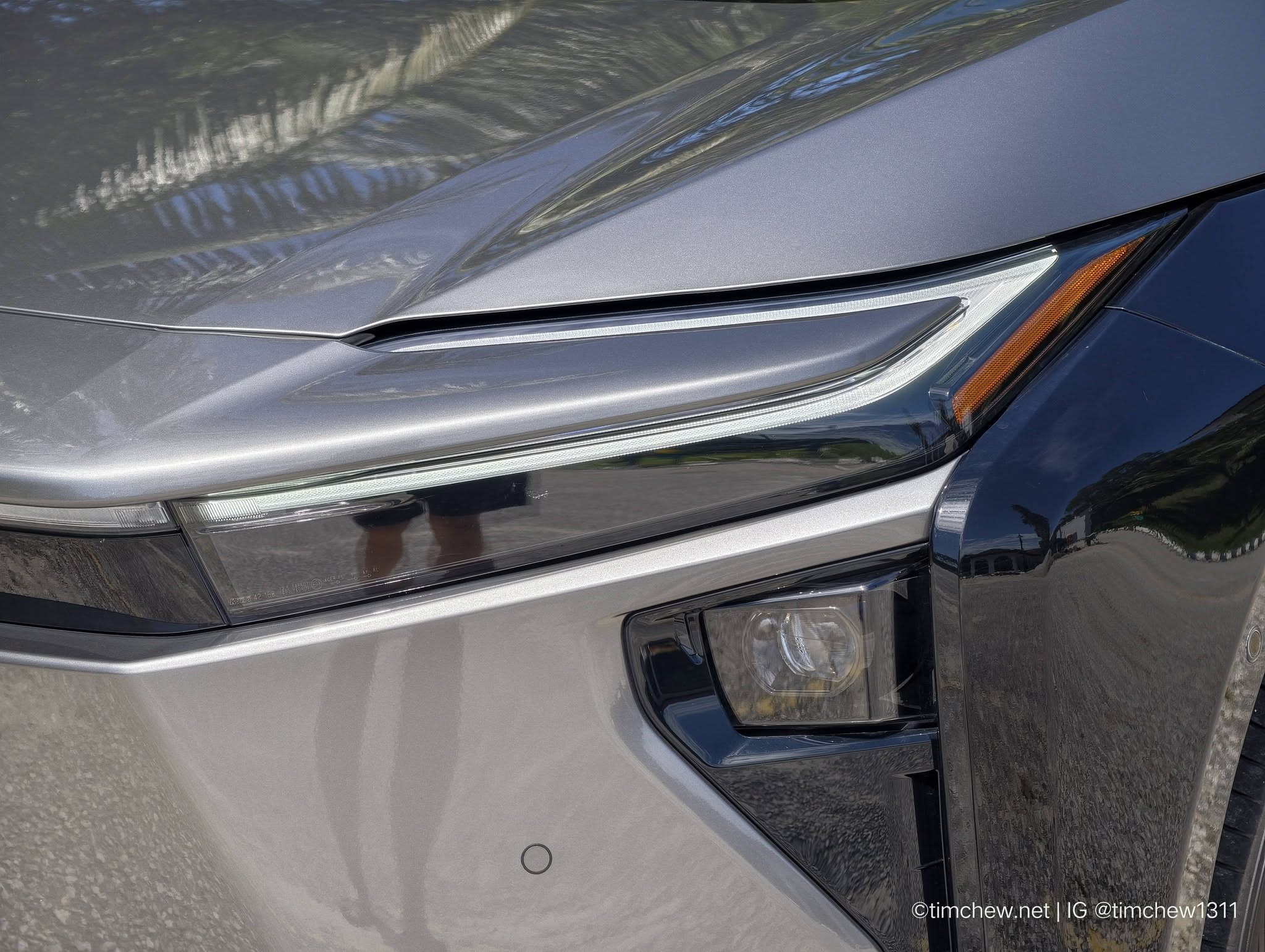
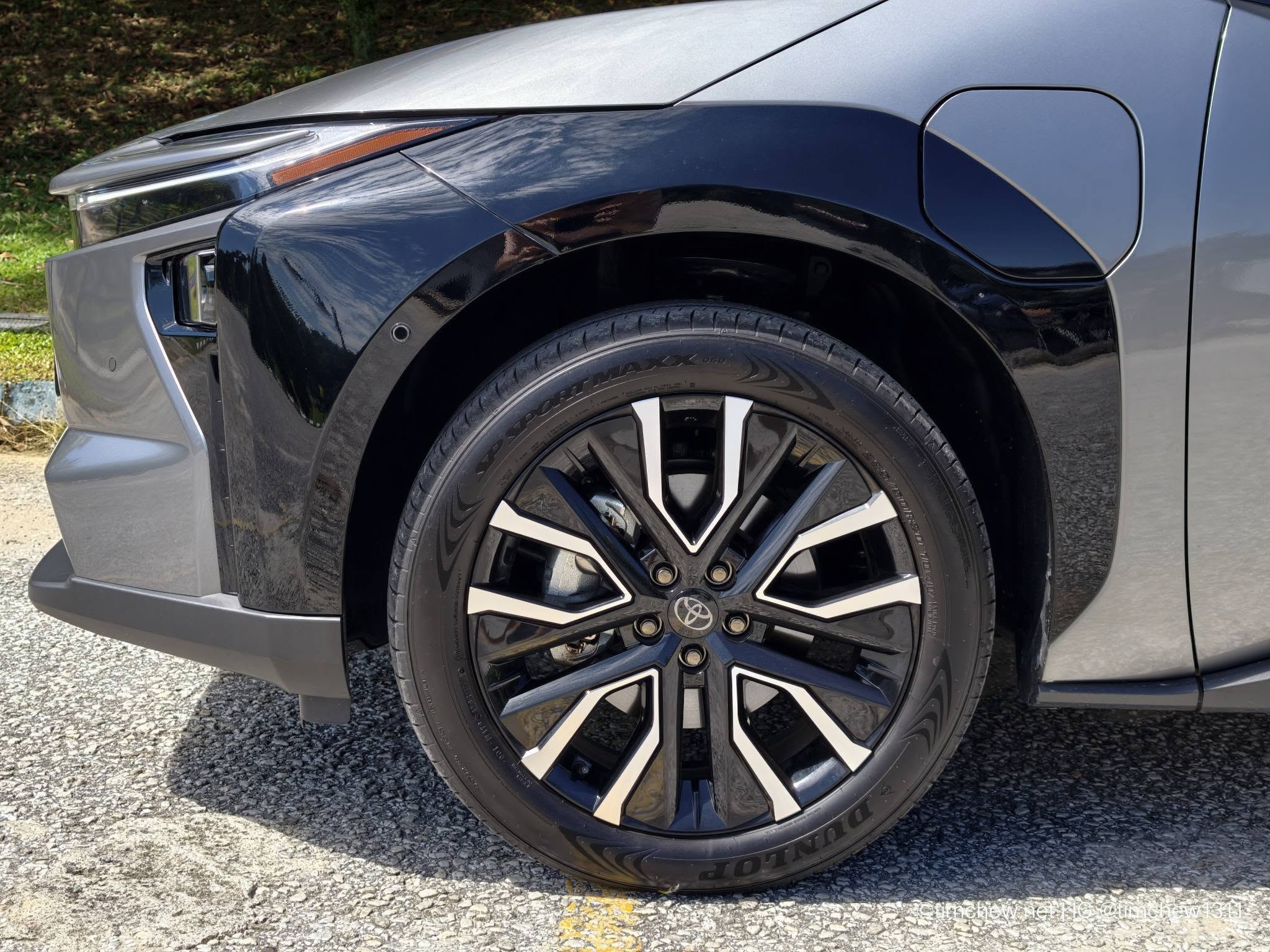
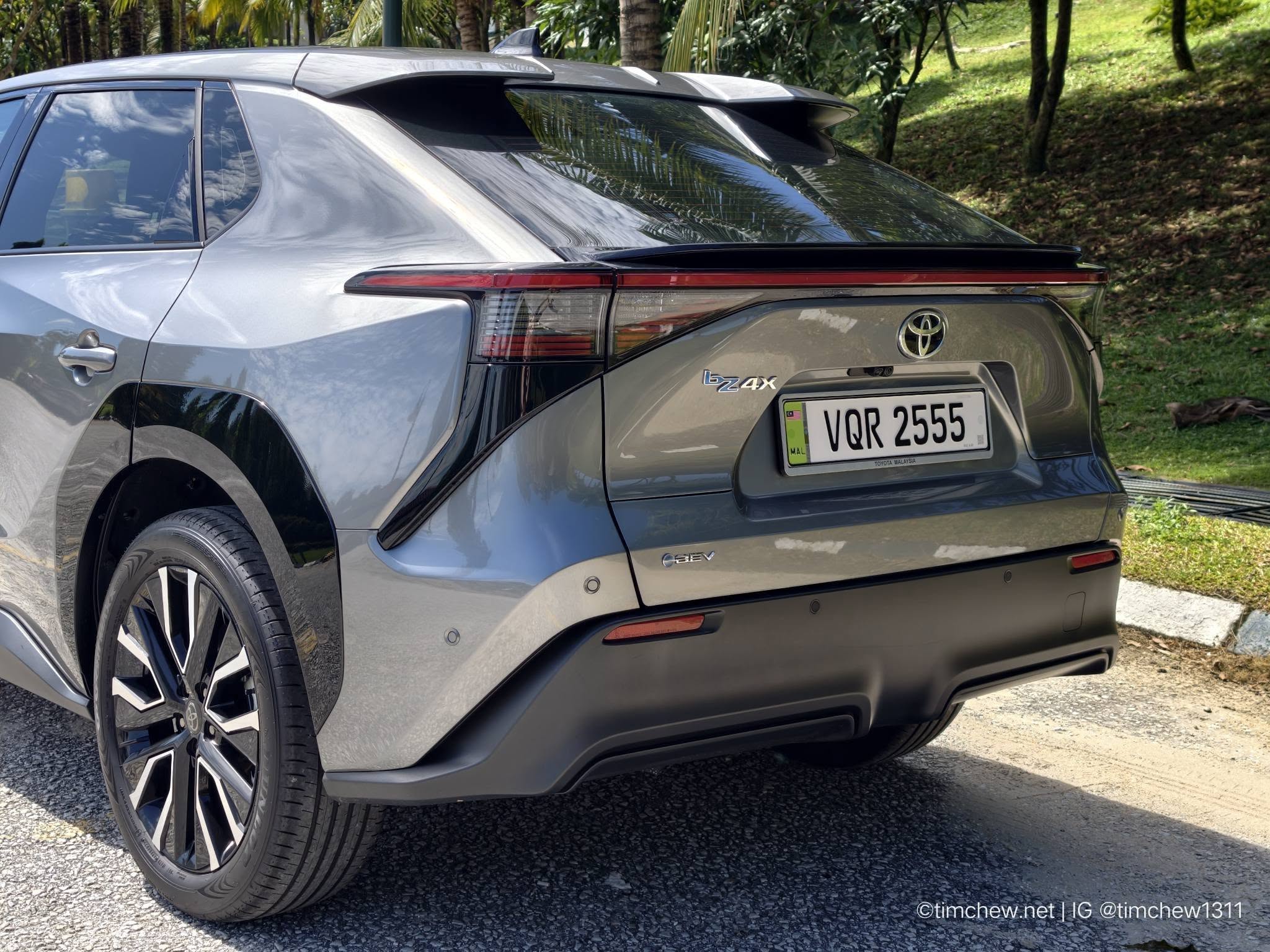
A single front motor makes 227 PS (167 kW) and 269 Nm, fed by a 73.1 kWh lithium-ion battery. Toyota claims 0-100 km/h in 7.4 seconds and a 160 km/h top speed. Those are respectable rather than dramatic figures, and they suit the car’s character: this is built for easy daily driving, not launch-control bragging rights.
The number most buyers will care about is range. Toyota quotes up to 525 km on the WLTP cycle, though real-world figures vary with driving style, speed, load and weather. For many urban commuters, that could mean charging less than once a week, which is the kind of convenience that makes an EV easier to live with. The drive mode selector also includes an Eco mode, for days when you would rather make each charge go further.
Charging is flexible. DC fast charging tops out at 150 kW, and launch reports cite about 28 minutes to go from 10 to 80 percent. AC charging goes up to 22 kW, useful for home or workplace chargers that support it. A full charge at that rate takes roughly two hours, according to the same reports.
Toyota says the facelift brought revised suspension tuning and acoustic glass for the front side windows, aimed at a quieter, more comfortable ride. The underpinnings are MacPherson struts at the front and a double-wishbone setup at the rear.
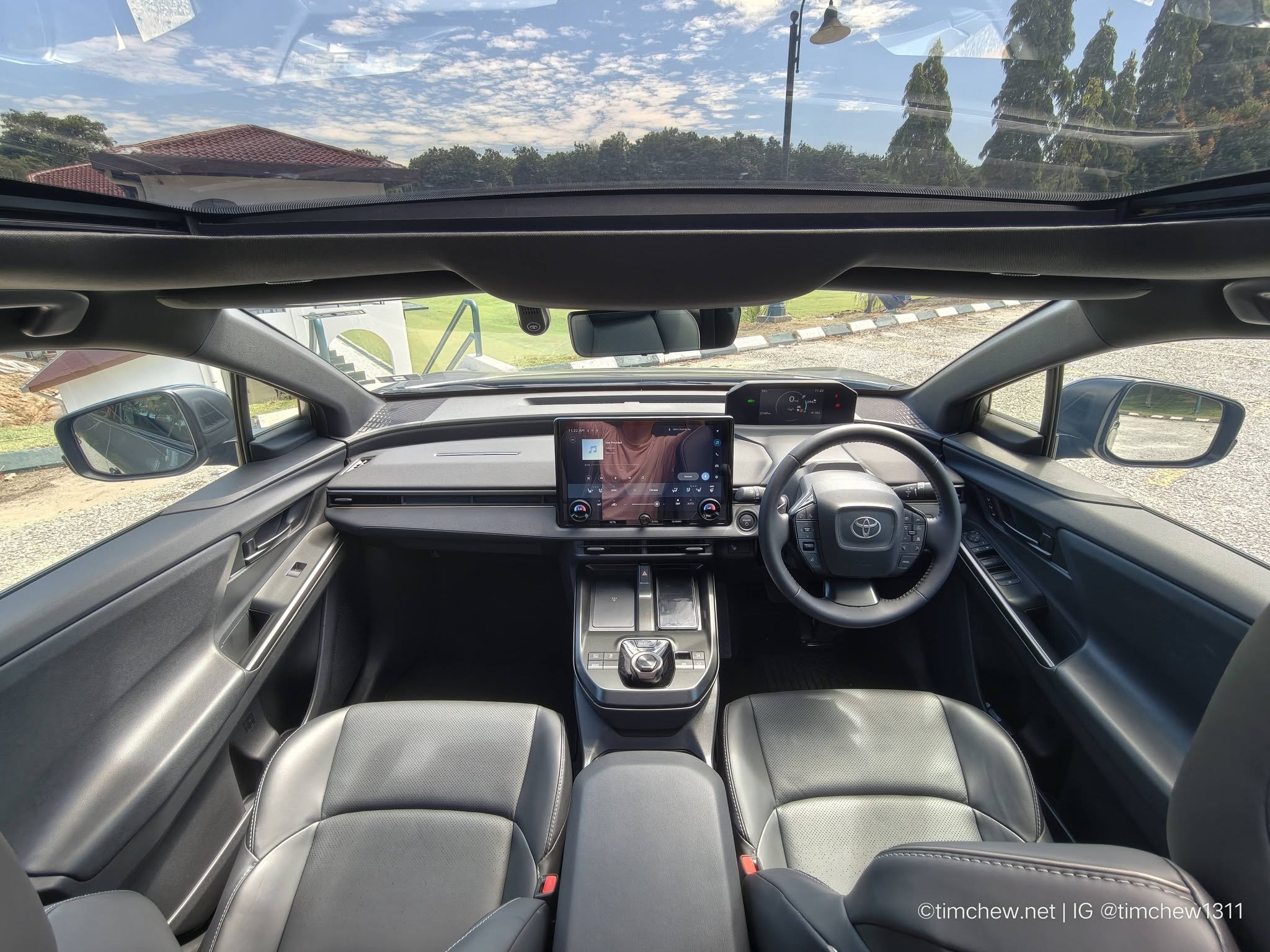
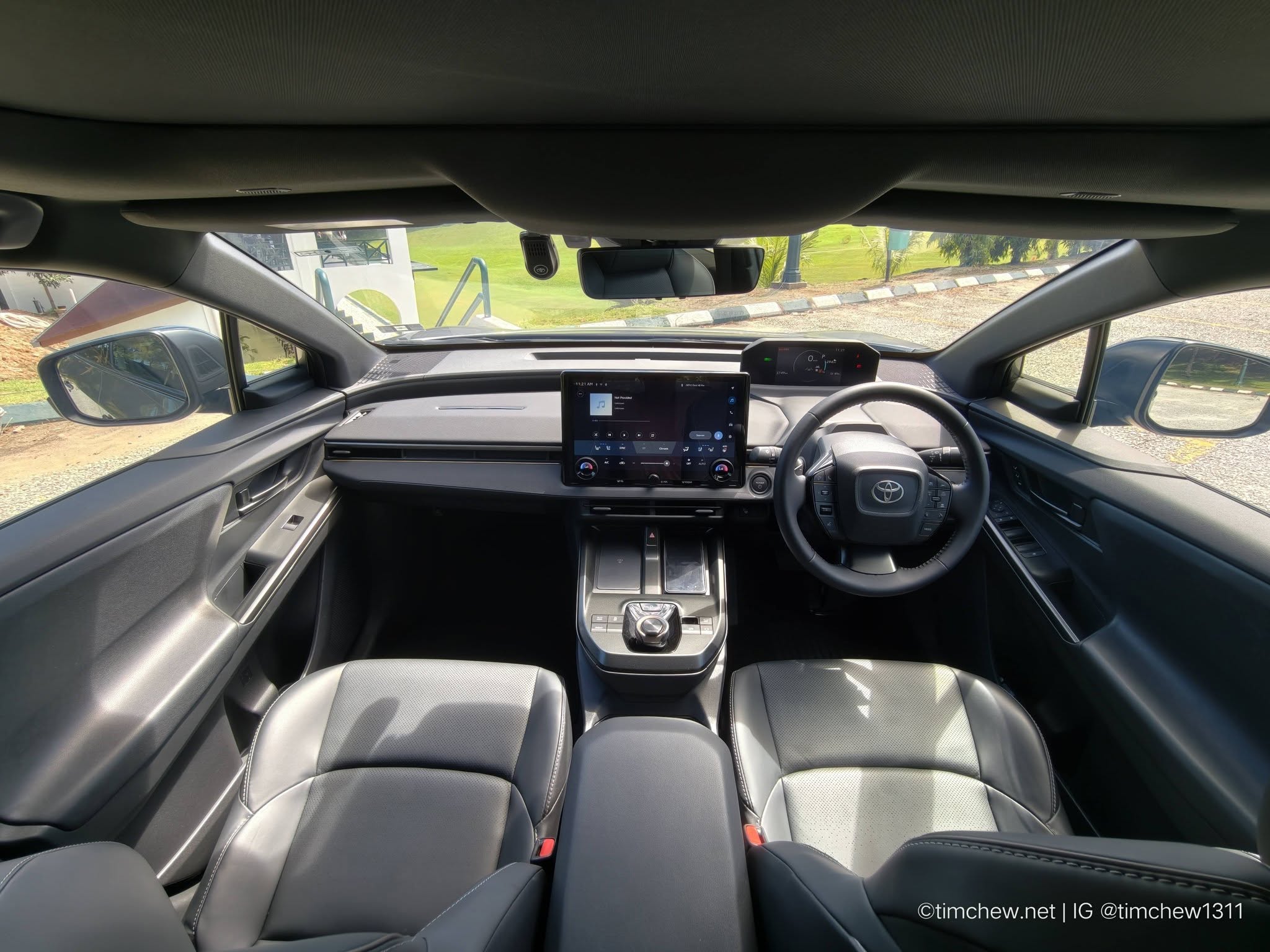
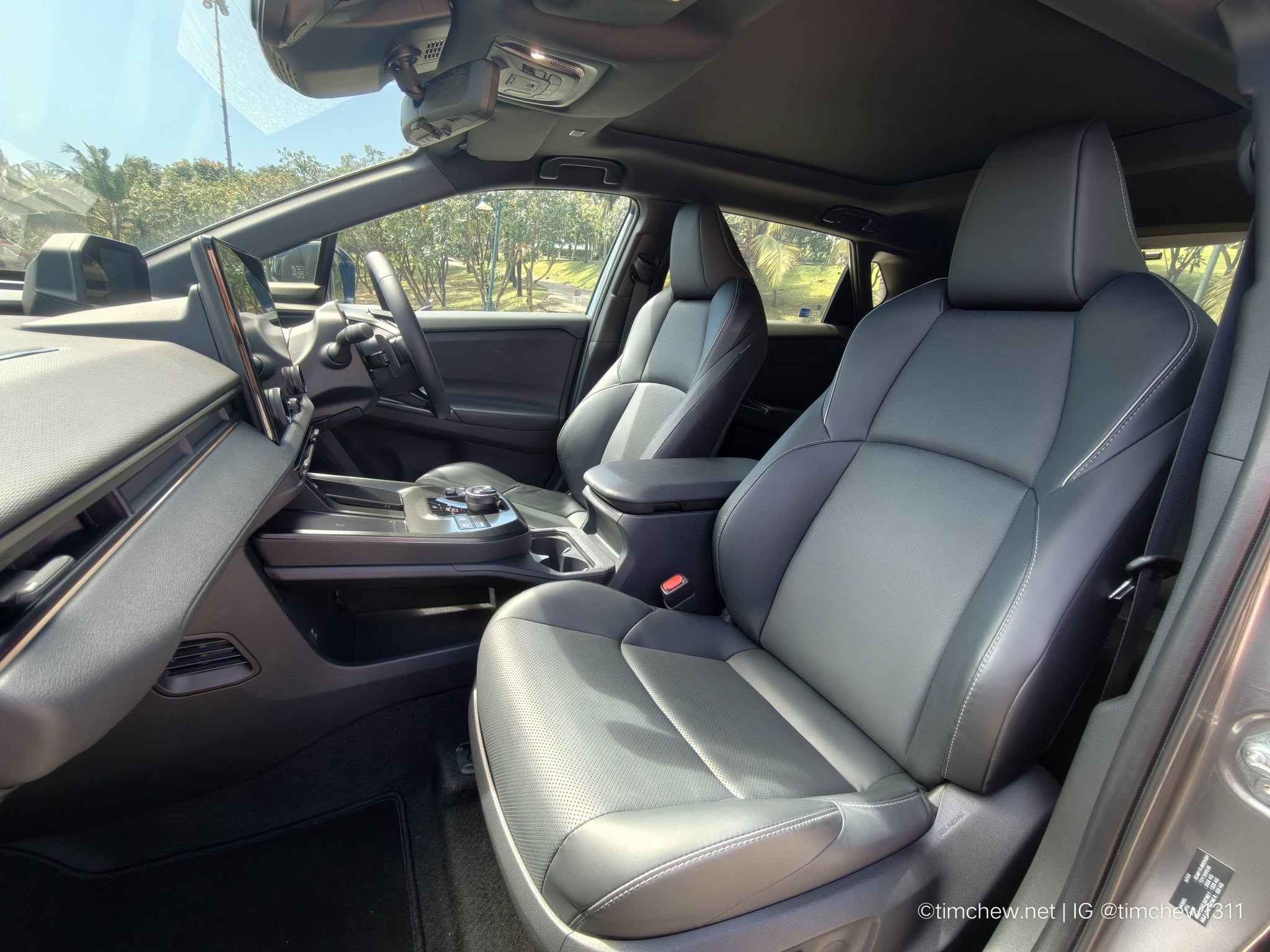
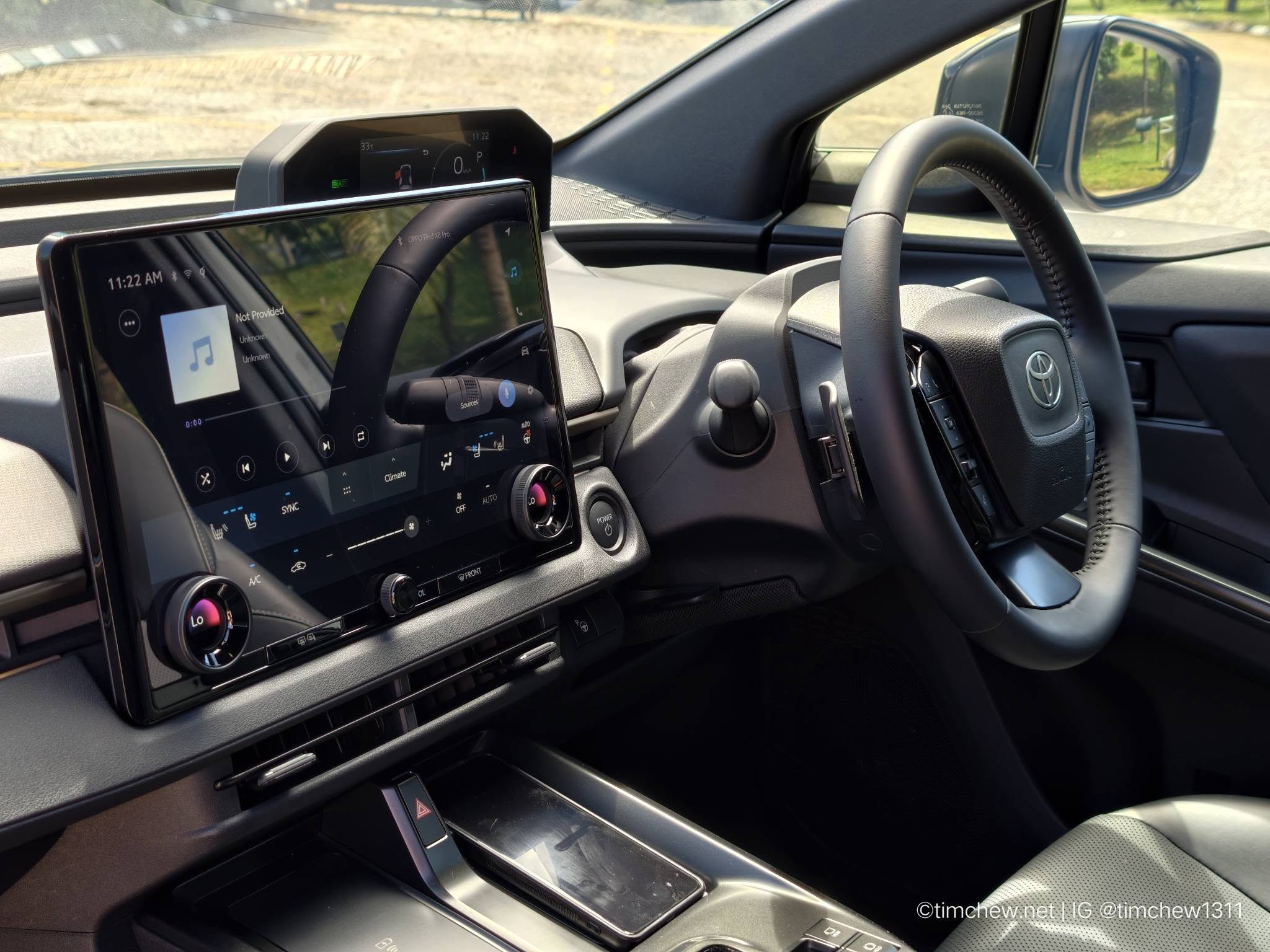
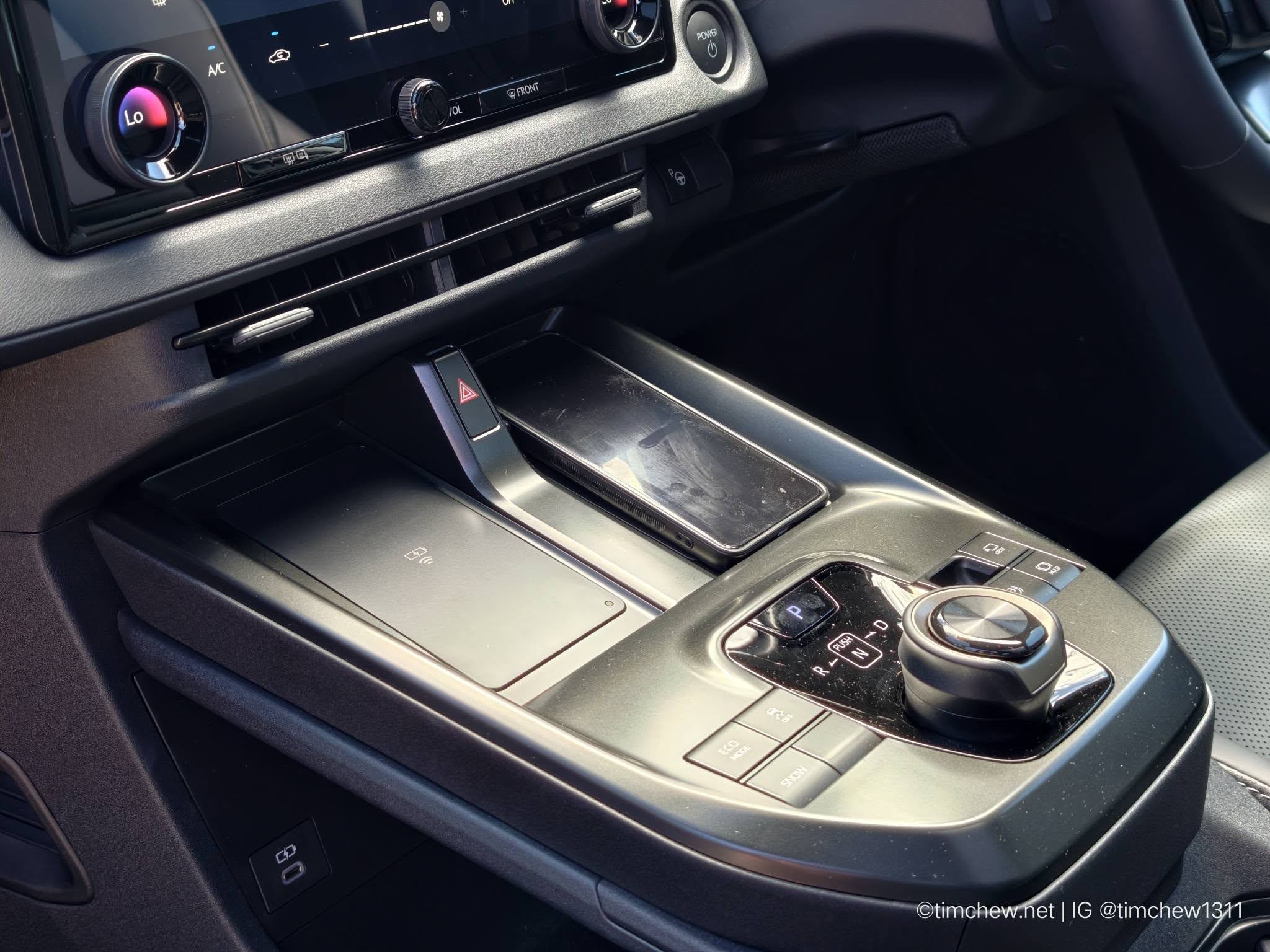
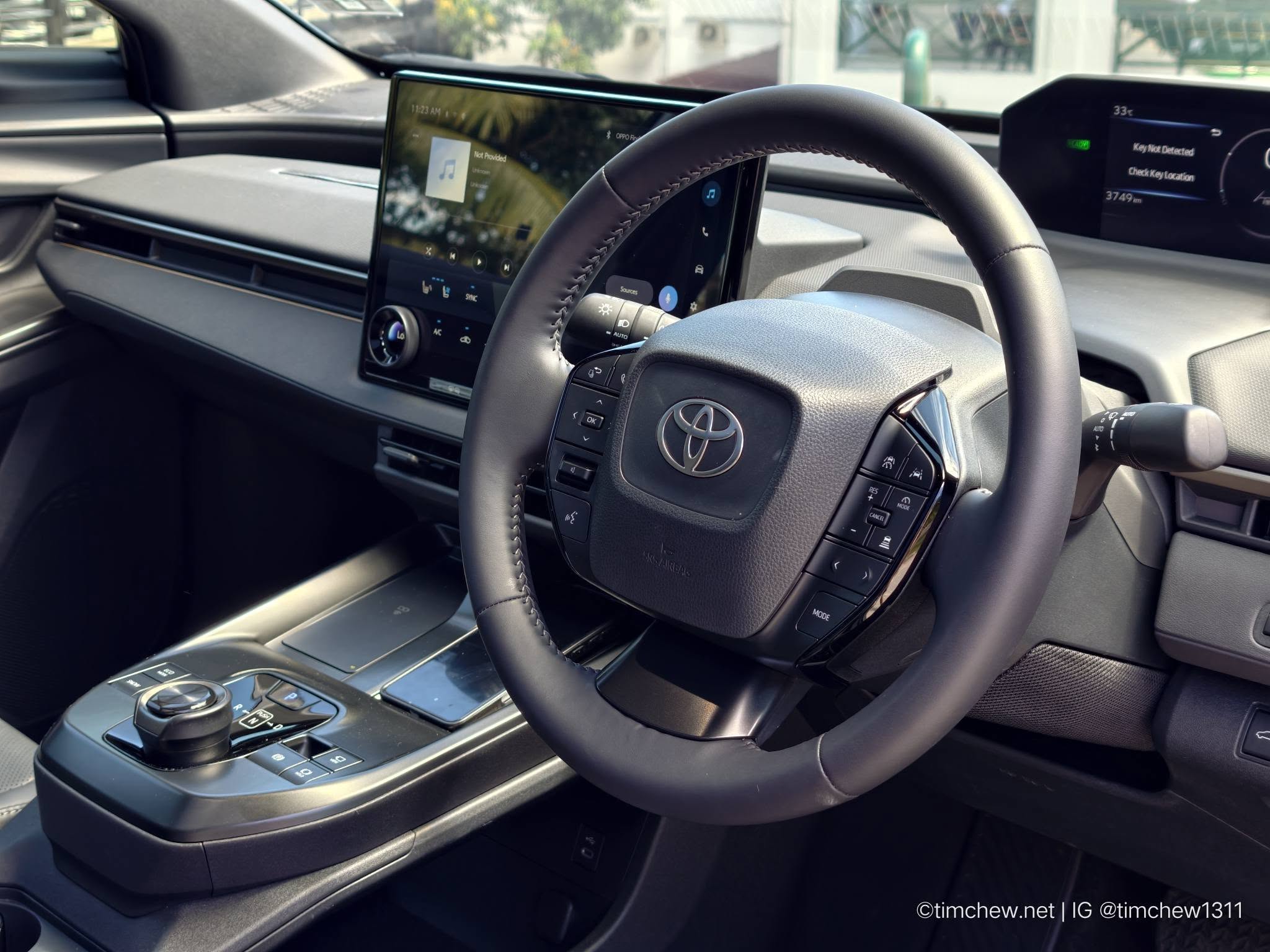
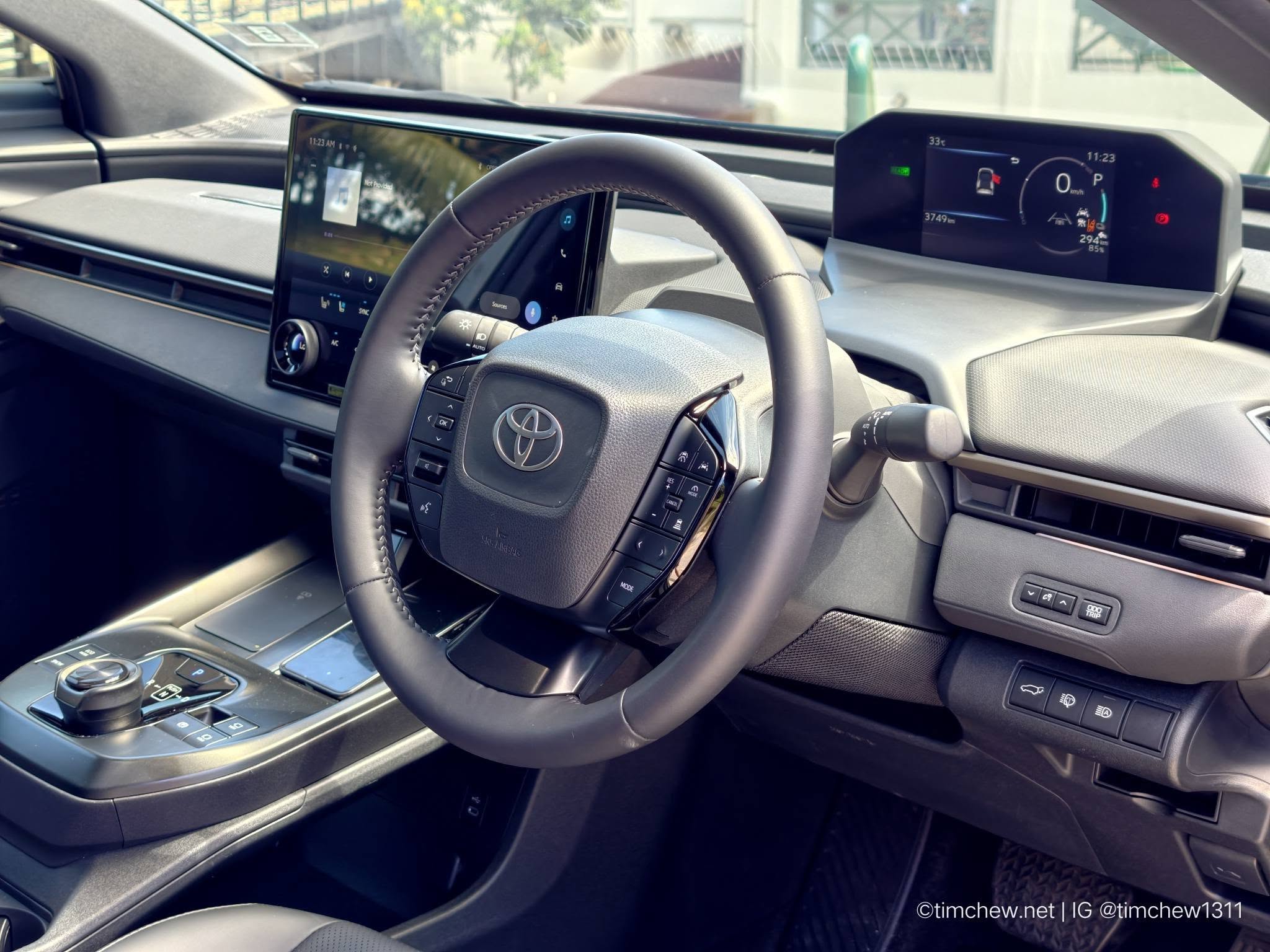
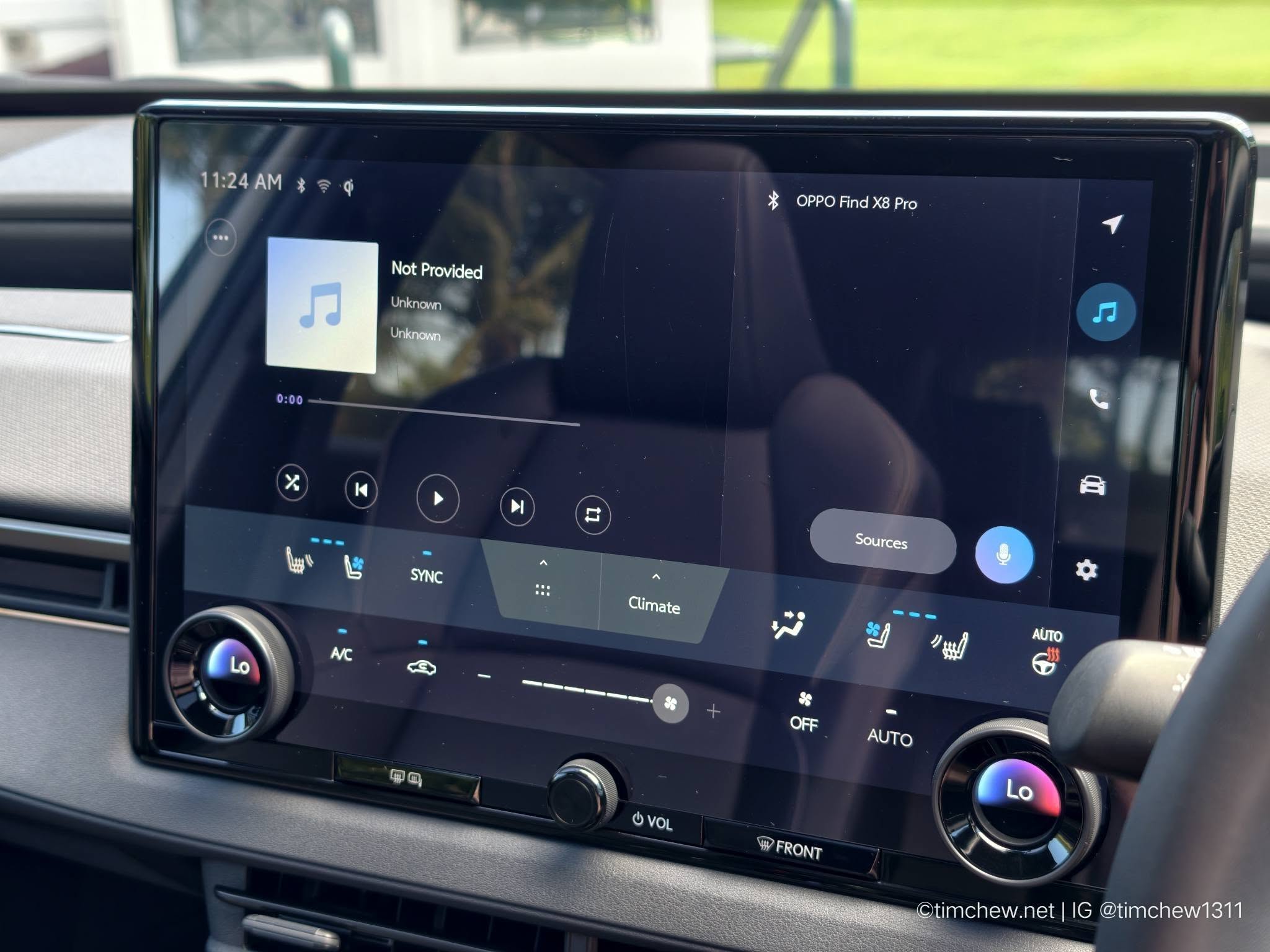
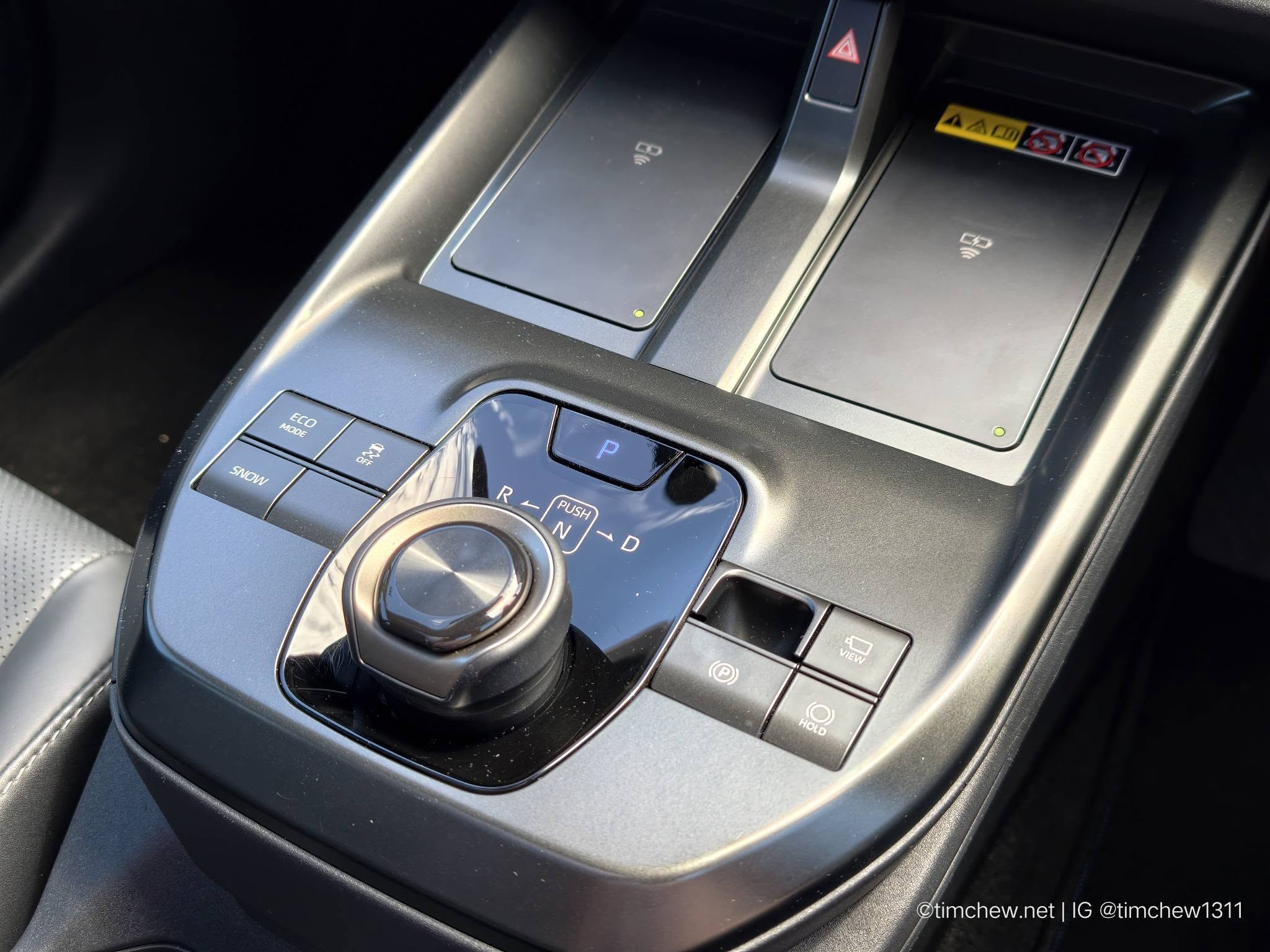
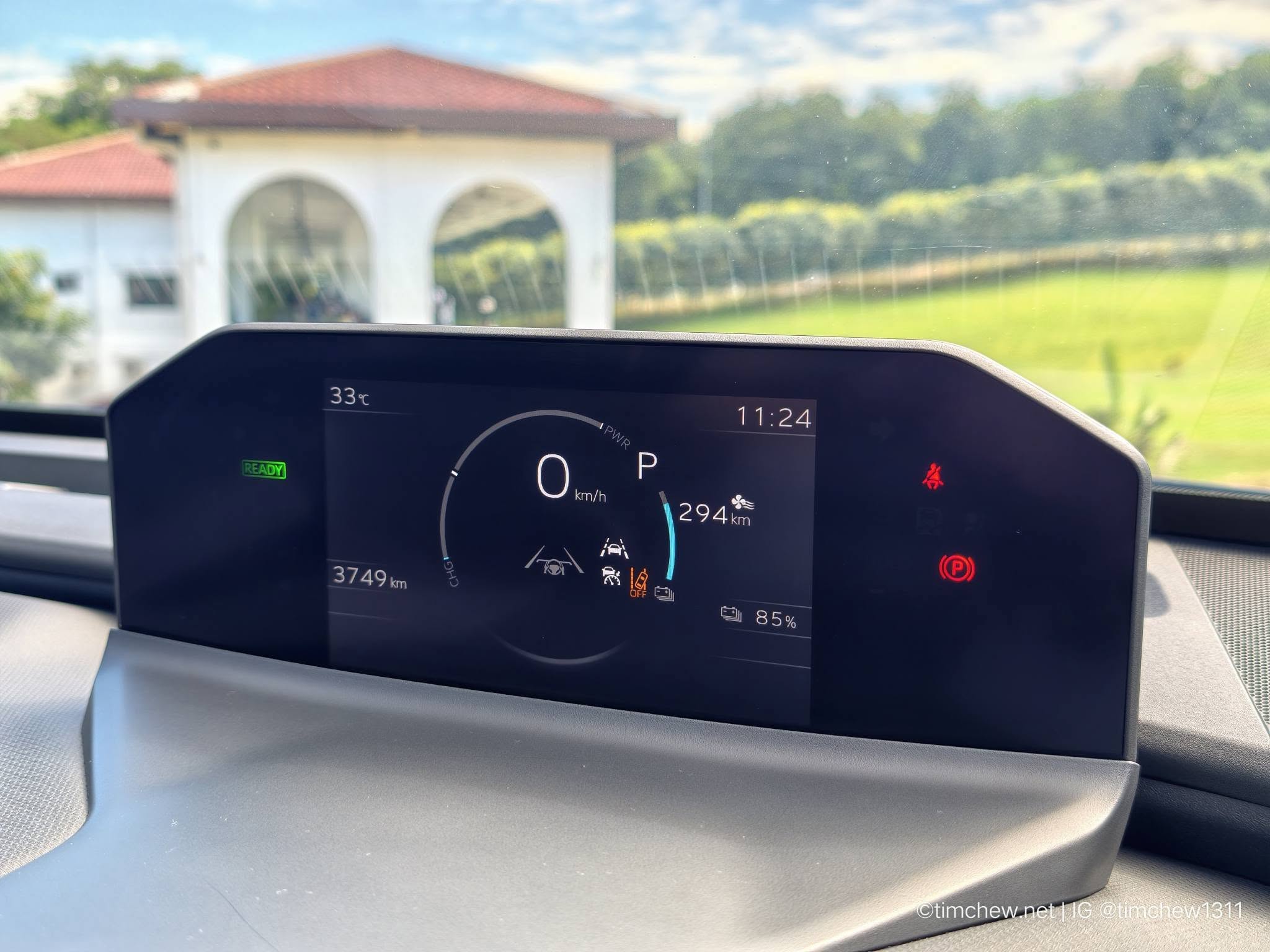
The cabin is built around a 14-inch touchscreen with Apple CarPlay and Android Auto, with climate controls kept within easy reach. A seven-inch digital meter sits high above the steering wheel, closer to the driver’s natural sightline so key information is visible without looking far from the road. Gear selection is by a dial on the centre console, alongside twin wireless charging pads, which saves fiddling with cables when two phones are on board. The steering wheel also has paddle shifters.
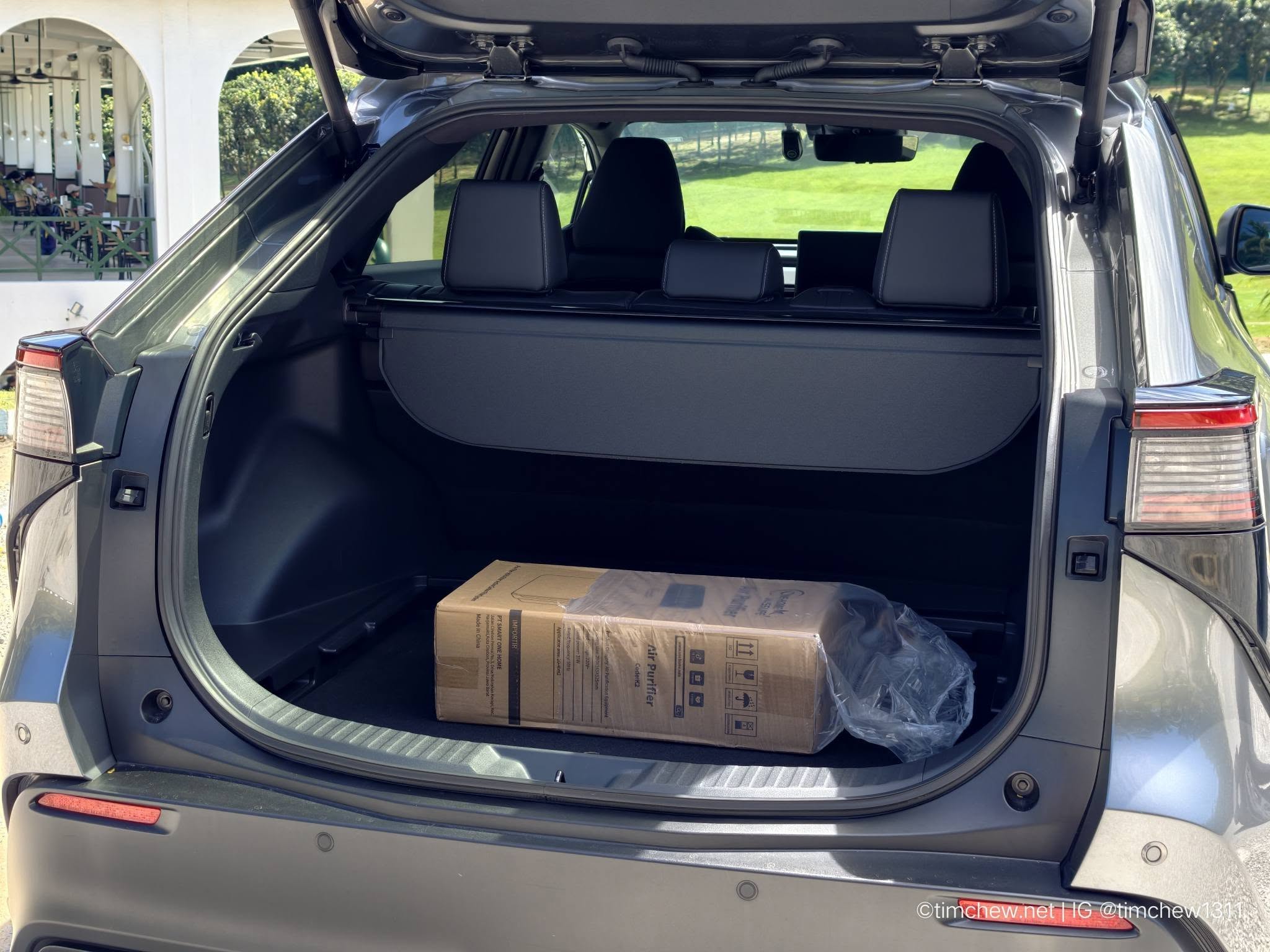
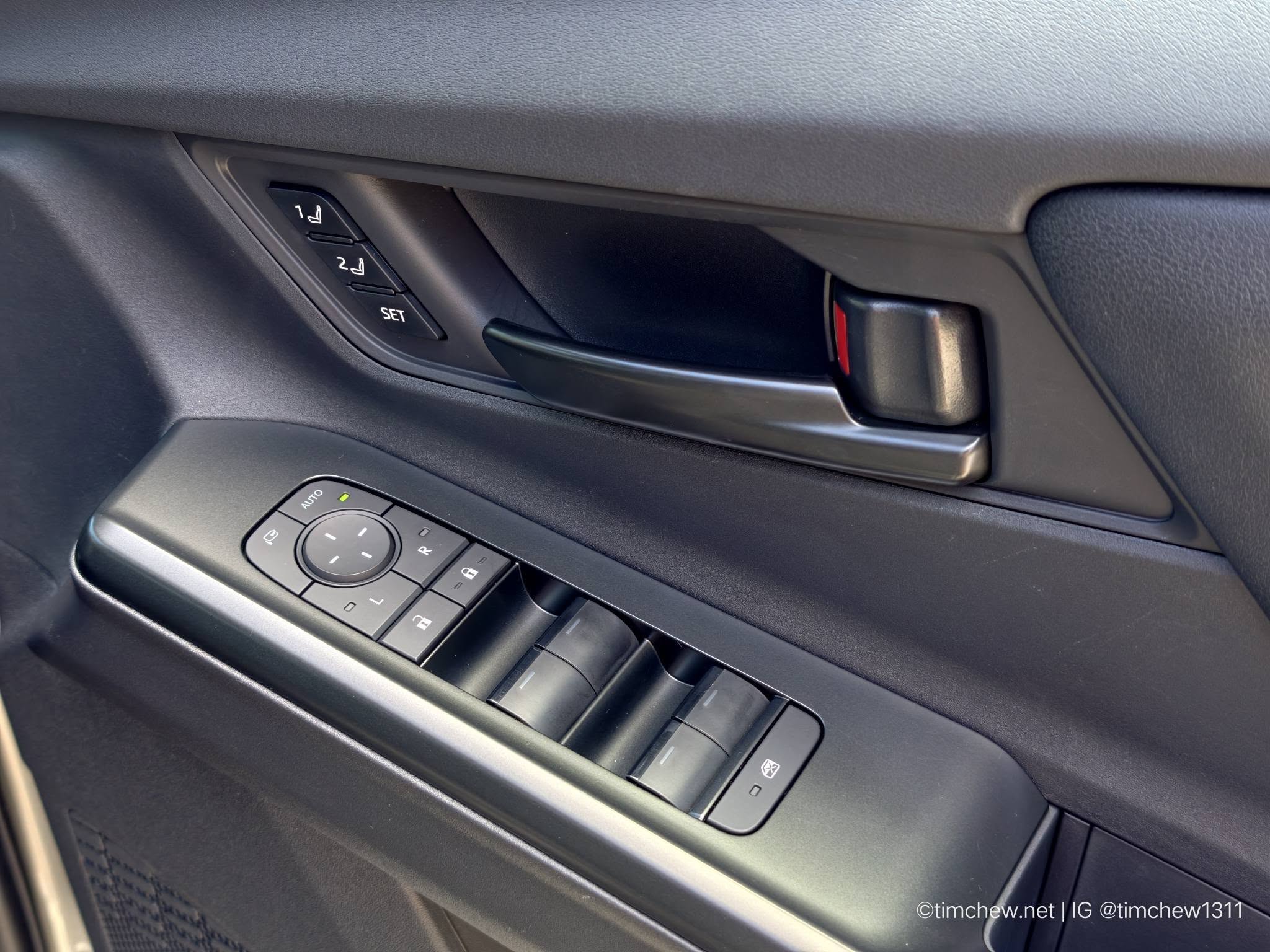
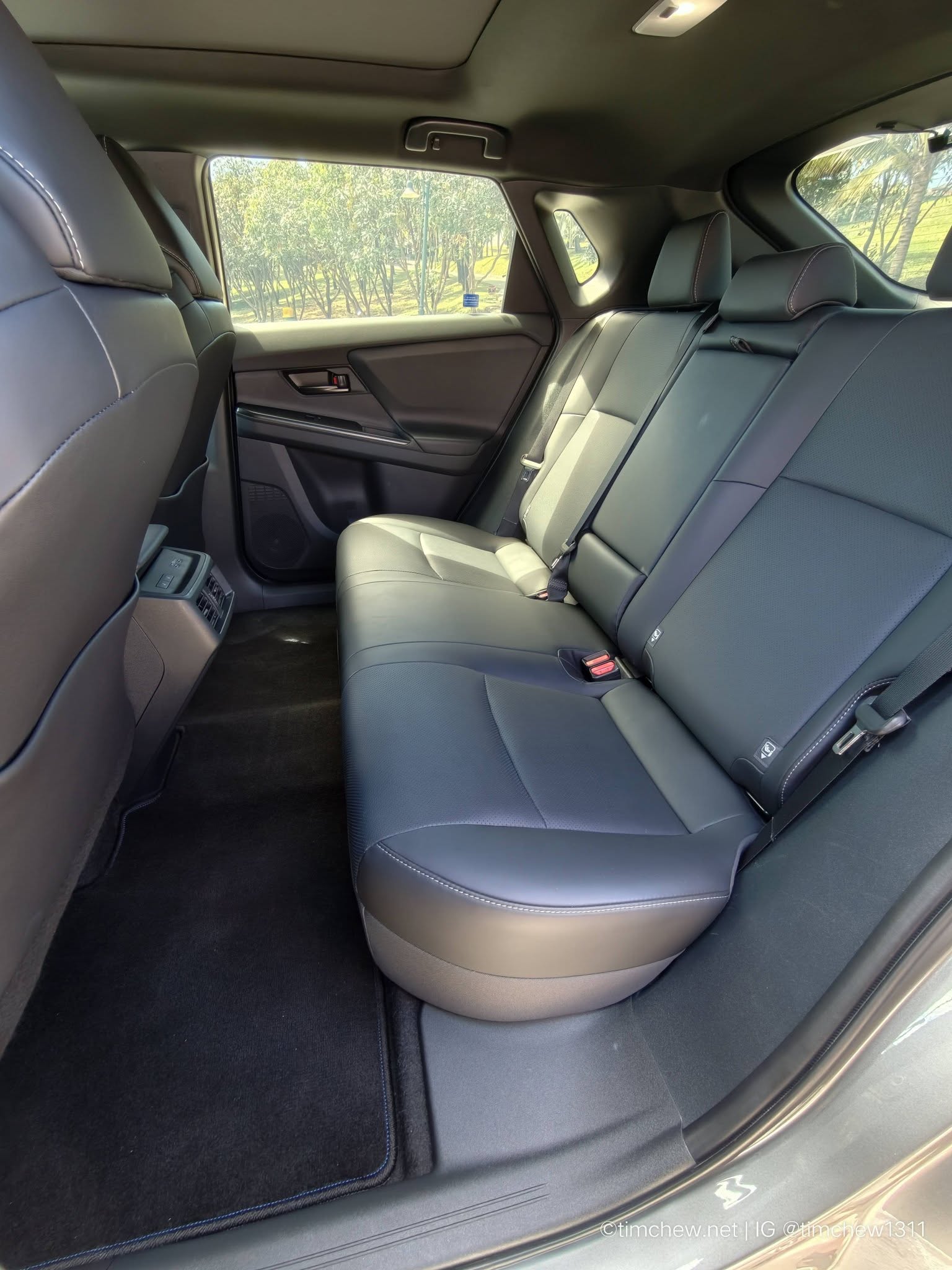
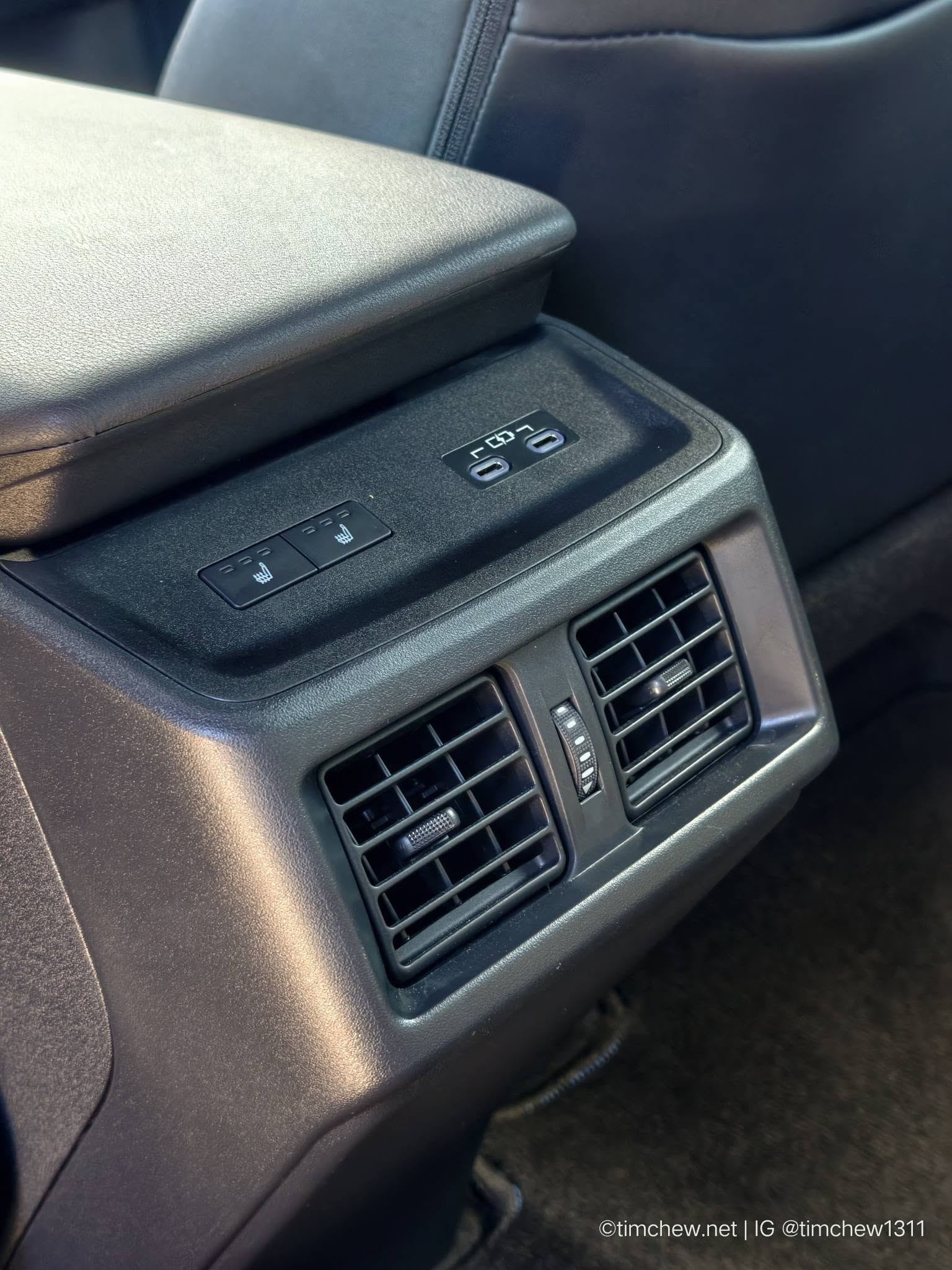
The front seats are trimmed in synthetic leather with eight-way power adjustment, with memory for the driver and two-way power lumbar support. Both front seats have air-conditioning built in, a welcome feature in Malaysian heat. Rear passengers get their own air-conditioning vents, and the rear seats fold 60:40 when you need more space beyond the 452-litre boot. The power tailgate has a kick sensor, handy when your hands are full of shopping.
Power outlets are well covered: one USB port in front, two in the rear and a 12V accessory socket up front, which suits families with passengers in the back seat. The electric parking brake comes with a brake hold function, so in stop-and-go traffic or at a red light you can take your foot off the pedal and the car stays put. It is a small convenience, but one most drivers will notice every day.
Other equipment includes a panoramic roof, push-button start, a digital rear-view mirror, a 360-degree camera system, front and rear dashcams, six speakers, a nanoe X air-purification system and customisable 64-colour ambient lighting.
The bZ4X comes with Toyota Safety Sense 3.0. In plain terms, that covers a pre-collision system that can brake automatically for vehicles, motorcyclists, cyclists and pedestrians, adaptive cruise control that works at all speeds, lane-tracing assist, road sign recognition, blind spot monitoring and adaptive high beams. There are also parking-focused aids: Safe Exit Assist, which warns occupants of approaching vehicles or cyclists before a door is opened, a parking support brake and an advanced parking assist that manoeuvres the car into parallel or perpendicular spaces.
Eight airbags are standard, including front, front side, front centre, driver’s knee and curtain airbags. The car also has two ISOFIX points and two top-tether anchors for child seats.
At RM220,000, the bZ4X is not a bargain, and Toyota does not pitch it as one. What it offers is a particular kind of peace of mind. There is a five-year, unlimited-mileage vehicle warranty, and an eight-year, unlimited-mileage warranty covering the battery, inverter and EV control unit, which can be extended by two years (to 10 years) for RM5,700. For buyers wary of long-term EV ownership costs, that is a long runway of coverage.
Toyota’s ownership package adds 24-hour roadside assistance with free minor on-the-spot repairs and towing, service packages of two, three or five years, and a loyalty programme that rewards service visits with vouchers and merchandise, all backed by Toyota’s nationwide sales and service network.
For buyers who value range, warranty backing and day-to-day usability over outright speed or the lowest possible price, the bZ4X is a straightforward way into Toyota’s electric line-up.
Photos shot with the vivo X300 Pro.


