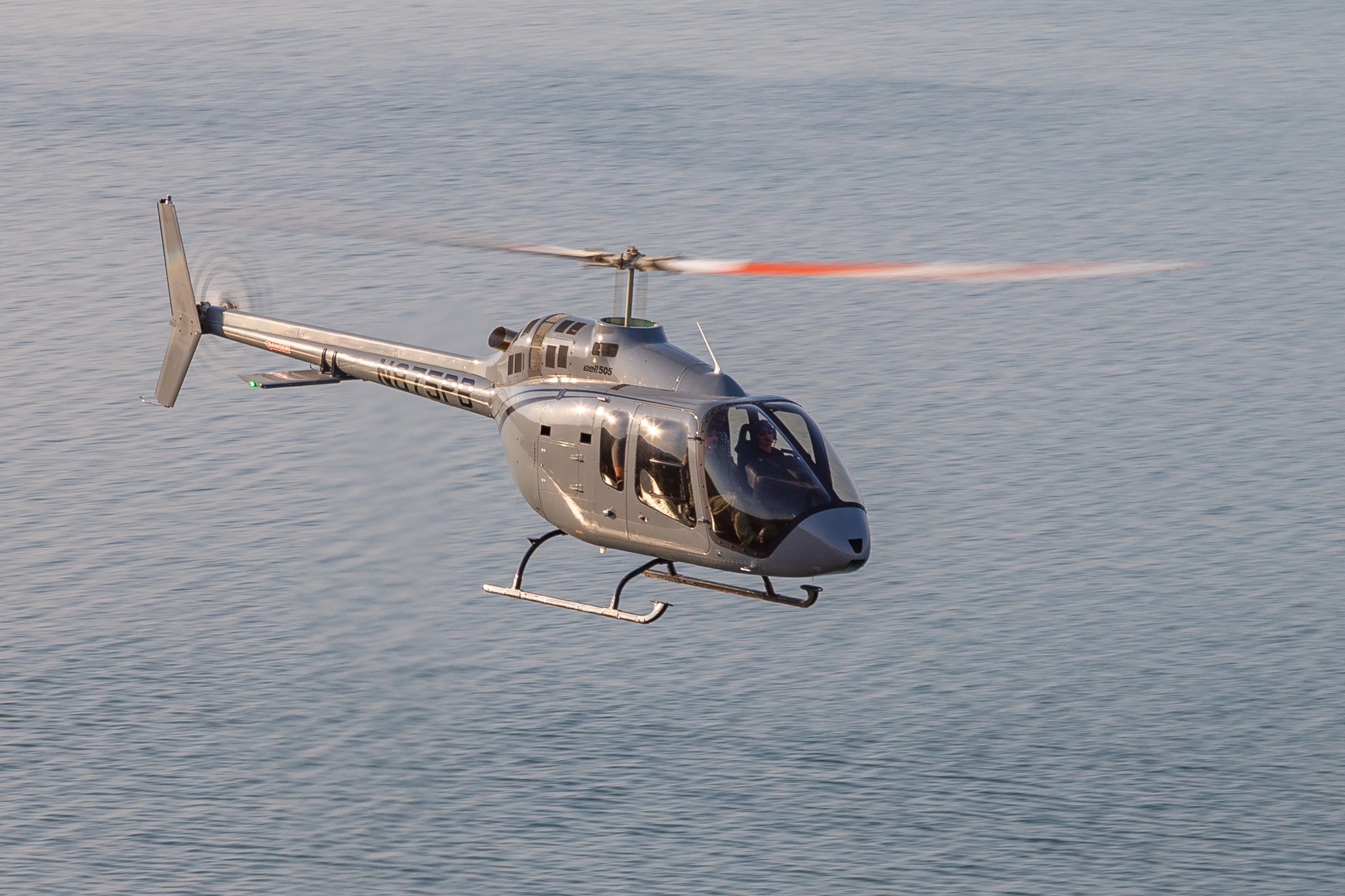
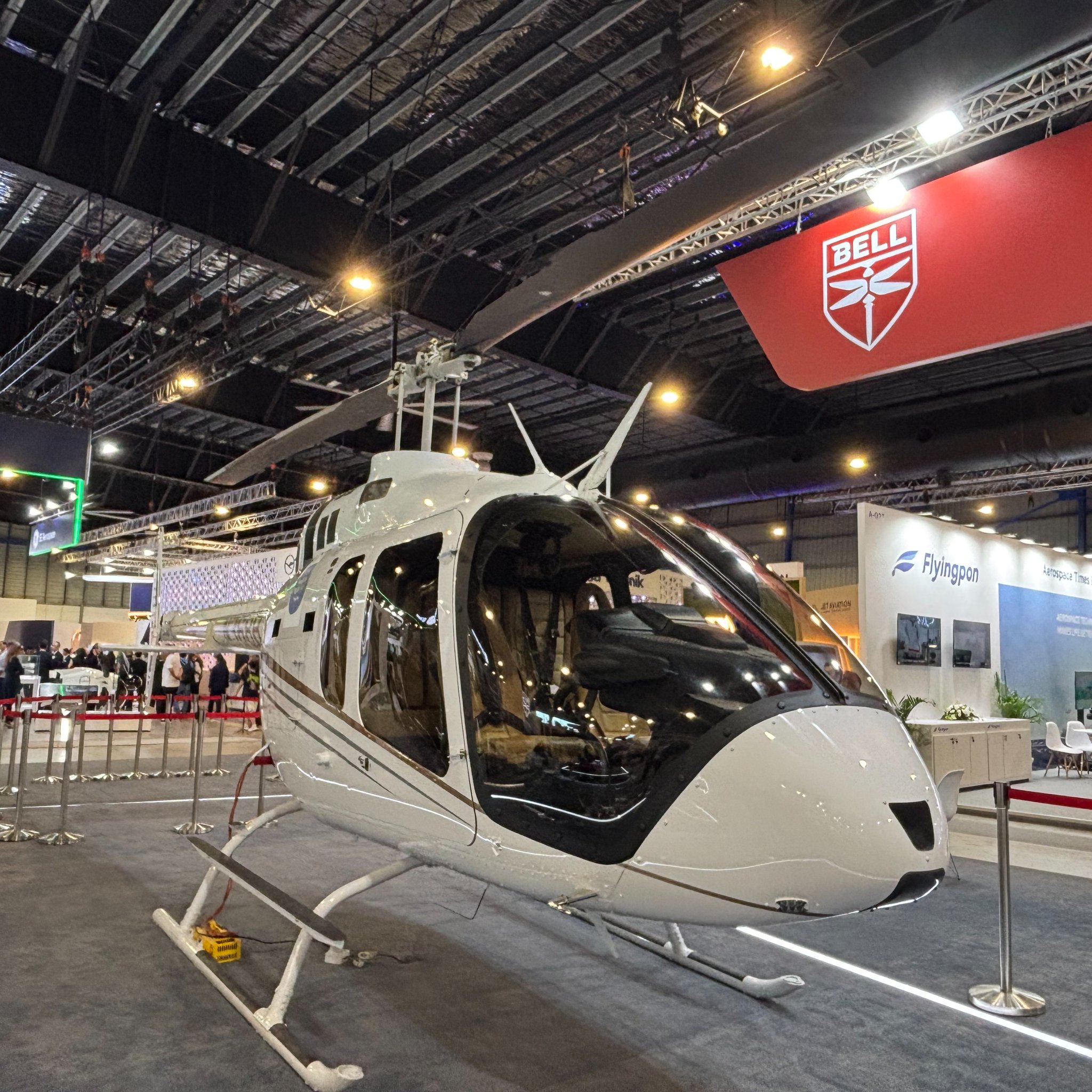
Bell Textron Inc. announced Monday that South Korean aviation operator EnB Air has ordered a Bell 505 helicopter for initial attack firefighting operations, marking the aircraft’s first deployment in Korea’s firefighting sector.
The purchase agreement, revealed at the Singapore Airshow 2026, expands the Bell 505’s presence in aerial firefighting as the aircraft gains traction in emergency response roles across the Asia Pacific region.
Initial attack firefighting involves deploying aircraft as first responders to quickly contain fires before they escalate, providing crucial time for ground crews to arrive and establish control. The Bell 505’s speed, manoeuvrability, and advanced avionics position it for these time-critical operations.
The helicopter features the Garmin G1000H NXi avionics suite and a dual-channel FADEC-controlled engine, which reduces pilot workload and ensures reliable performance in challenging firefighting conditions.
This order follows EnB Air’s 2024 acquisition of its first Bell 505, which represented the initial commercial sale of the model in South Korea. The Republic of Korea’s Defense Acquisition Program Administration had previously selected the Bell 505 as its military helicopter trainer in 2022.
“The Bell 505 has proven itself as a highly effective firefighting platform, and we’re pleased to see EnB Air bring this capability to South Korea. Helicopters provide what ground crews cannot—immediate access to remote terrain and aerial perspective for tactical fire assessment. The Bell 505’s versatility allows operators like EnB Air to maximise their investment across firefighting, aerial patrol, and other public safety missions.”
David Sale, managing director, Asia Pacific, Bell
“The Bell 505’s speed, agility, and advanced technology make it ideal for initial attack firefighting where every minute counts. We’re proud to introduce this proven capability to Korea’s firefighting operations.”
Kim Chang-Wong, CEO, EnB Air
Since receiving certification in 2017, the Bell 505 has established itself in public safety operations worldwide. The global fleet has logged over 100,000 flight hours across more than 500 aircraft delivered internationally. Currently, four Bell 505 helicopters are operating on active firefighting missions, with additional units scheduled to enter service in 2026 and beyond.
Bell 429 Strengthens Presence in Asia Pacific with New Orders and Delivery
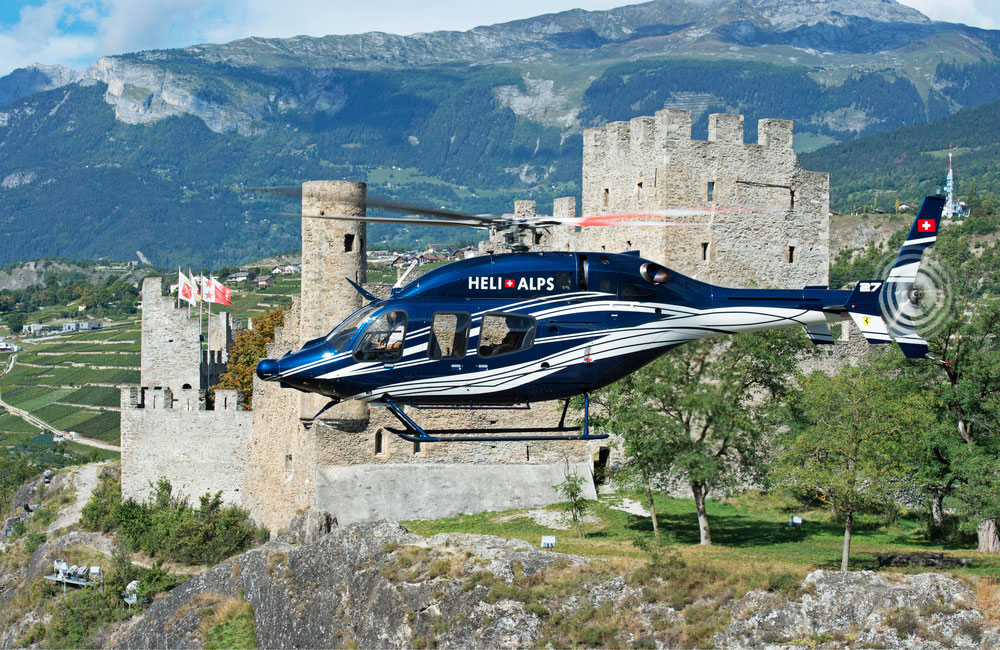
Bell Textron announced on 4 February 2026 at the Singapore Airshow new orders and a recent delivery for the Bell 429 helicopter in the Asia-Pacific region, comprising two aircraft for a Japanese operator and one delivery to an Indonesian corporate customer.
Nakanihon Air Co., Ltd. (NNK), a major Japanese helicopter operator, has signed a purchase agreement for two Bell 429 helicopters to support helicopter emergency medical services operations. This follows an earlier acquisition of two Bell 429 aircraft by NNK in 2017.
Additionally, Bell completed delivery of a Bell 429 to an Indonesian corporate customer in December 2025. The delivery adds to the growing Bell 429 presence in the Southeast Asian market, where the type serves various commercial and governmental roles.
“We are thrilled that Nakanihon has chosen to expand its Bell 429 fleet, bringing their total Bell helicopter fleet to approximately 80 over nearly six decades. Their continued trust in the Bell 429 for HEMS operations highlights the aircraft’s exceptional performance, speed, and low vibration. These milestones reflect the confidence our customers place in Bell and our commitment to providing tailored solutions and seamless support across Asia Pacific.”
David Sale, managing director, Asia Pacific, Bell
NNK operates one of Japan’s largest helicopter fleets, with current operations including more than 10 Bell helicopters across the Bell 430, Bell 412, and Bell 429 models. The company provides helicopter emergency medical services, utility operations, and other commercial helicopter services throughout Japan.
The operator has maintained a relationship with Bell spanning six decades, having acquired approximately 80 Bell aircraft over that period. NNK has held authorised Customer Service Facility status since 1994, enabling it to perform maintenance and support services on Bell helicopters within its operational area.
The addition of two Bell 429 helicopters will expand NNK’s HEMS capability, which requires aircraft with specific performance characteristics including speed, range, and medical equipment integration. HEMS operations in Japan involve transportation of patients from accident scenes or remote areas to medical facilities, often requiring operations in challenging weather and terrain conditions.
Bell 429 Operations in Asia-Pacific
The Bell 429 serves various operational roles across the Asia-Pacific region. Law enforcement agencies operating the type include New South Wales Police and Queensland Police in Australia, along with the Royal Thai Police. These organisations utilise the aircraft for aerial patrol, surveillance, search and rescue, and tactical support operations.
In addition to government operators, the Bell 429 serves corporate transportation, offshore operations, and utility roles throughout the region. The aircraft’s twin-engine configuration and performance characteristics make it suitable for operations in areas with challenging weather conditions and terrain.
The December 2025 delivery to an Indonesian corporate customer, whose identity was not disclosed, reflects continued demand for medium twin-engine helicopters in the Southeast Asian corporate aviation market. Indonesia’s geography, comprising thousands of islands with varying infrastructure development, creates demand for helicopter transportation between major business centres and remote facilities.
Global Fleet Performance and Operational Record
According to Bell, the global Bell 429 fleet has accumulated over 811,900 flight hours, with more than 500 aircraft in operation worldwide. The flight hour total reflects the type’s operational maturity since certification and entry into service in 2009.
The fleet includes aircraft operated across diverse mission profiles, from single-pilot VFR utility operations to dual-pilot IFR emergency medical services. The accumulated flight hours provide operational data that supports maintenance programme development and component reliability analysis.
Fleet statistics indicate the aircraft’s utilisation across various climatic and operational environments, including high-altitude operations, offshore missions, and operations in hot-and-high conditions. This operational diversity demonstrates the aircraft’s versatility across different market segments and geographic regions.
Bell 429 Technical Specifications and Capabilities
The Bell 429 is a medium twin-engine helicopter with a maximum gross weight of 7,000 pounds. The aircraft is powered by two Pratt & Whitney Canada PW207D1 turboshaft engines, each producing 714 shaft horsepower. The twin-engine configuration provides Category A performance capability, enabling single-engine operations in the event of an engine failure.
Maximum cruise speed is approximately 150 knots, with a range of 373 nautical miles with standard fuel. The aircraft can accommodate up to seven passengers in standard configuration, with seating layouts configurable for specific mission requirements including medical stretchers for HEMS operations.
The flight deck features a fully integrated glass cockpit based on the Garmin G1000H avionics suite. The system includes dual 10.4-inch primary flight displays, a 15-inch multi-function display, and integrated autopilot. The avionics package provides single-pilot or dual-pilot instrument flight rules capability, with navigation and communication systems meeting current airspace requirements.
Flight control systems include a four-axis digital automatic flight control system (DAFCS) providing stability augmentation and autopilot functions. The system reduces pilot workload during instrument meteorological conditions and enables operations in challenging weather environments encountered in HEMS and law enforcement missions.
Design Characteristics and Mission Equipment
The Bell 429’s airframe incorporates a fully articulated four-blade main rotor system and a two-blade tail rotor. The main rotor diameter is 39 feet, with the tail rotor designed to reduce noise signature during operations near populated areas. The landing gear consists of fixed skids with high skid gear optional for utility operations.
The cabin configuration provides a flat floor with sliding doors on both sides, facilitating passenger entry and medical equipment loading. Internal volume accommodates medical stretchers, life support equipment, and medical personnel for HEMS missions. Soundproofing materials reduce cabin noise levels to support patient care and crew communication.
Mission equipment options include searchlights, forward-looking infrared (FLIR) systems, rescue hoists, and external cargo hooks for utility operations. The electrical system supports mission-specific equipment installation without requiring major airframe modifications. Power generation capacity accommodates avionics, mission systems, and cabin equipment simultaneously.
Market Segment and Competitive Context
The Bell 429 competes in the medium twin-engine helicopter segment alongside aircraft including the Airbus H135, Leonardo AW139, and Airbus H145. Each type offers different trade-offs in cabin size, performance, and operating costs, with selection driven by specific mission requirements and operational preferences.
The type’s market position emphasises versatility across multiple mission types, supported by avionics integration enabling IFR operations and mission equipment compatibility. This multi-role capability appeals to operators requiring a single aircraft type for diverse missions, reducing training and maintenance complexity compared to operating multiple specialised aircraft.
In the Asia-Pacific market, factors influencing helicopter selection include parts availability, maintenance support infrastructure, pilot training facilities, and manufacturer support presence. Bell maintains regional support facilities and authorised service centres throughout Asia-Pacific to support operators of the Bell 429 and other Bell helicopter types.
Regional Support and Service Network
Bell supports Asia-Pacific operators through a network of company-owned facilities and authorised service centres. Regional support infrastructure includes parts distribution centres, technical representatives, and training facilities for pilot and maintenance personnel.
NNK’s status as an authorised Customer Service Facility enables the company to perform maintenance services not only for its own fleet but also for other Bell helicopter operators in Japan. This arrangement provides regional maintenance capability while supporting Bell’s service network in the Japanese market.
Bell operates a Customer Advantage Plan providing parts support, technical publications access, and fleet management tools for Bell 429 operators. The programme aims to reduce operational costs and improve aircraft availability through predictive maintenance and parts inventory optimisation.
.
Photo credits: Bell

 timchew.net