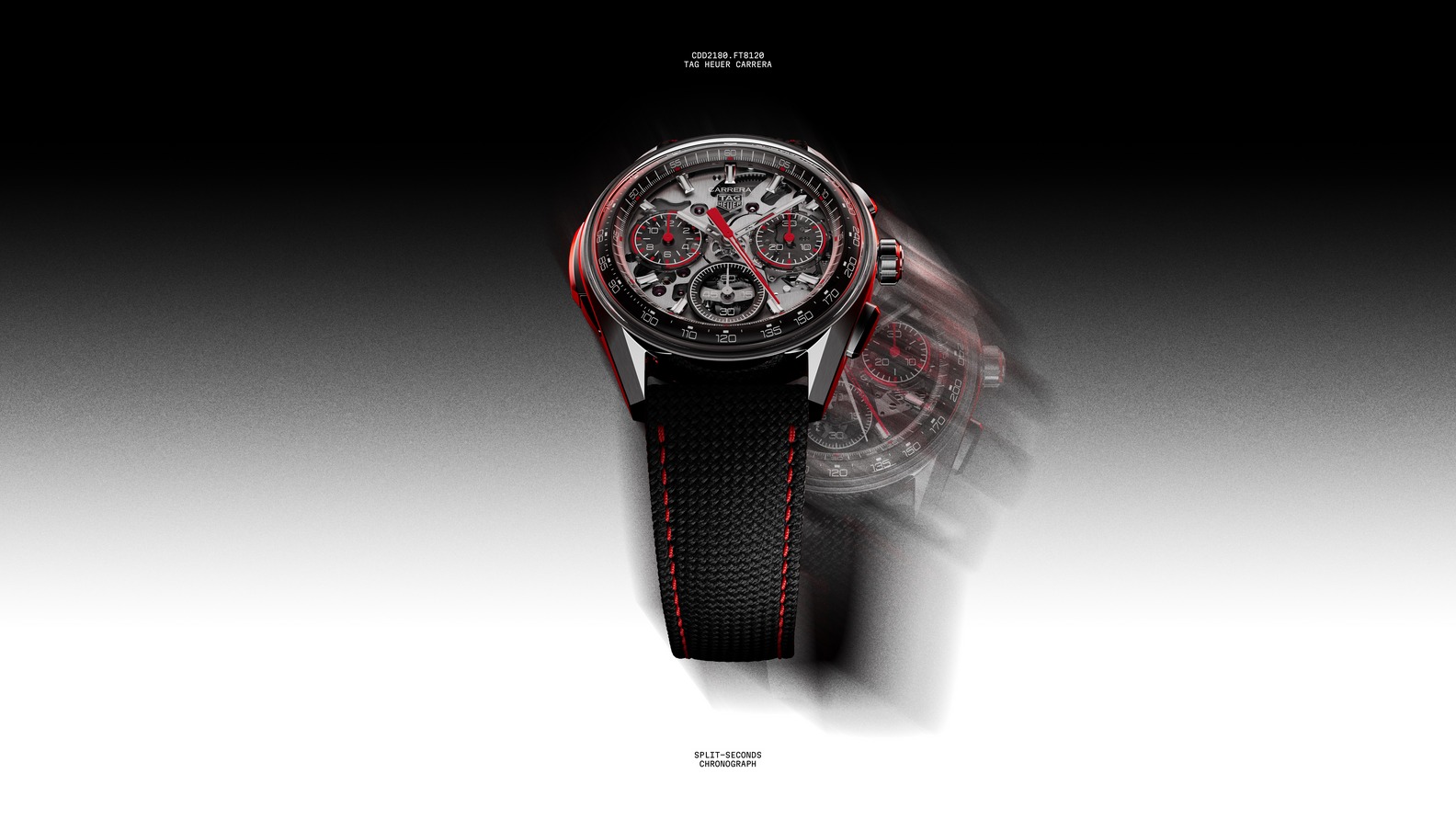
At LVMH Watch Week in Milan, TAG Heuer unveiled the Carrera Split-Seconds Chronograph — a watch that marks the first time the rattrapante complication has appeared in the Carrera collection, and one of the most technically ambitious pieces the brand has produced under its Avant-Garde Horlogerie banner.
The split-seconds chronograph, or rattrapante, is among the most demanding complications in watchmaking. Where a standard chronograph measures elapsed time from a single start point, the rattrapante adds a second, independently controlled seconds hand that can be stopped and reset to “catch up” with the running hand — allowing the measurement of two simultaneous intervals, or the recording of intermediate lap times without interrupting the primary timing function. The mechanism required to achieve this — engaging and releasing a second hand that must snap precisely back to match its running counterpart — demands a level of engineering refinement that relatively few calibres have achieved. The Carrera, for all its 63-year history as TAG Heuer’s definitive chronograph expression, has never carried one. Until now.
To understand why this watch matters, it helps to understand what the Carrera is and where it came from. In 1963, Jack Heuer — fourth generation of the founding family — looked at the Swiss watch industry and decided it needed to think differently. The watch he created took its name from the Carrera Panamericana, a legendary and brutally demanding Mexican road race that Jack had heard described through the parents of racing drivers Pedro and Ricardo Rodriguez. The race required, as Jack understood it, a particular kind of fearlessness.
The original Carrera expressed that spirit through restraint: a clean, legible dial, peaked lugs that would become a signature, an innovative tension ring beneath the crystal that improved water resistance while allowing a scale to be applied to it. Design codes laid down in 1963 that have echoed, with varying degrees of fidelity, through every iteration since. The new Split-Seconds Chronograph is the latest and most technically complex of those iterations — a watch that honours the original’s commitment to precise, purposeful timekeeping while elevating the movement architecture to a level the 1963 original could not have contemplated.
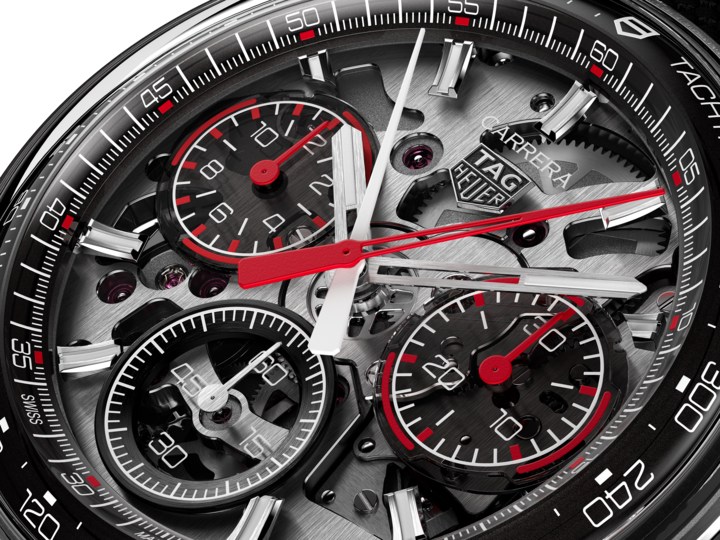
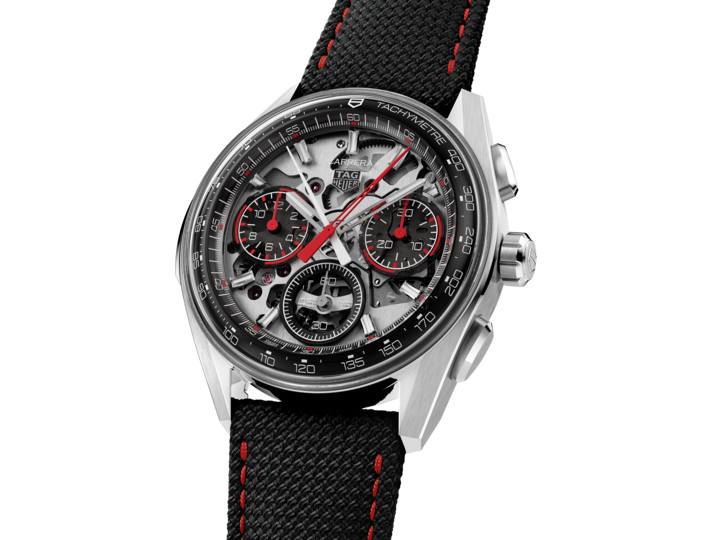
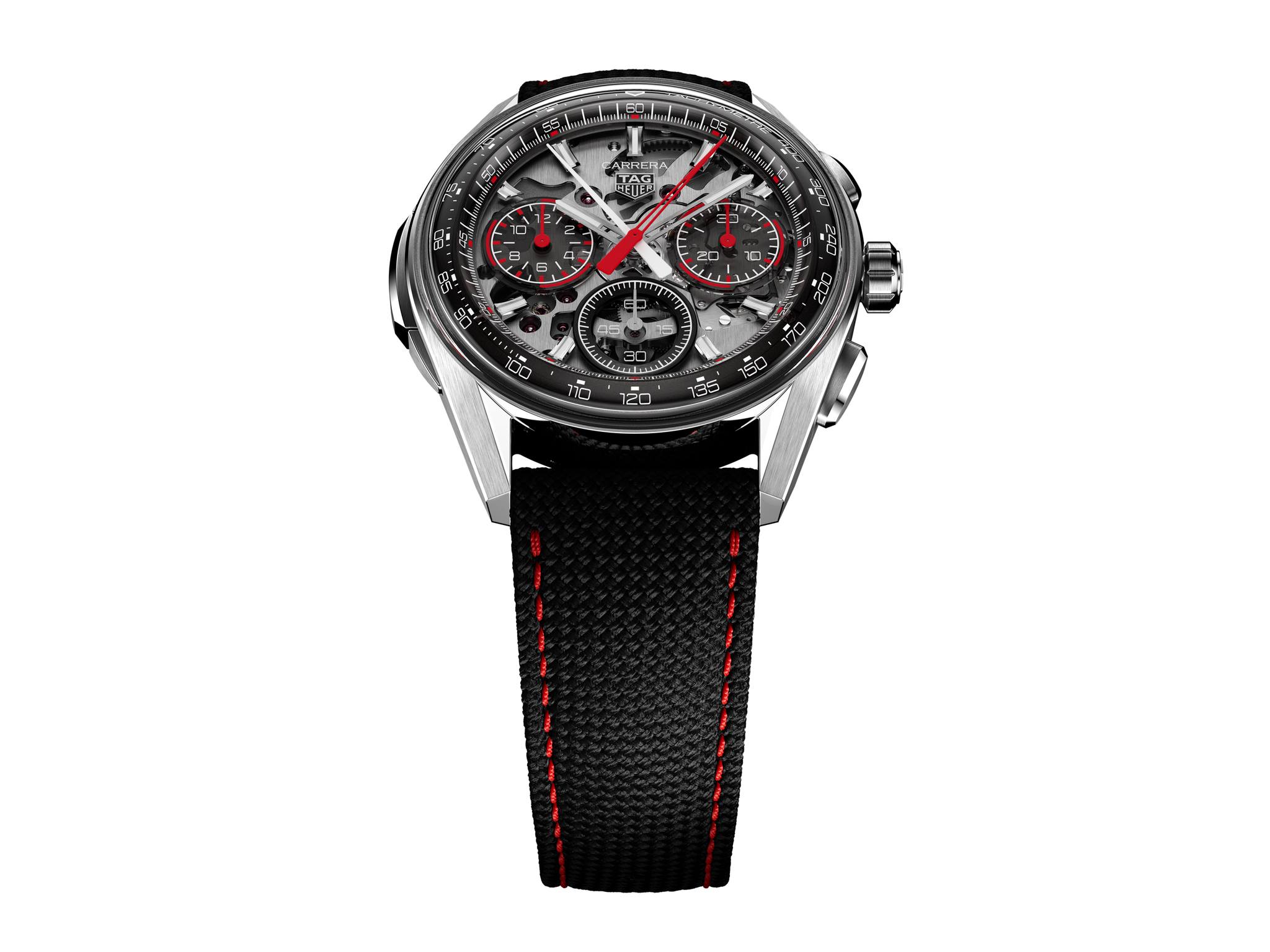
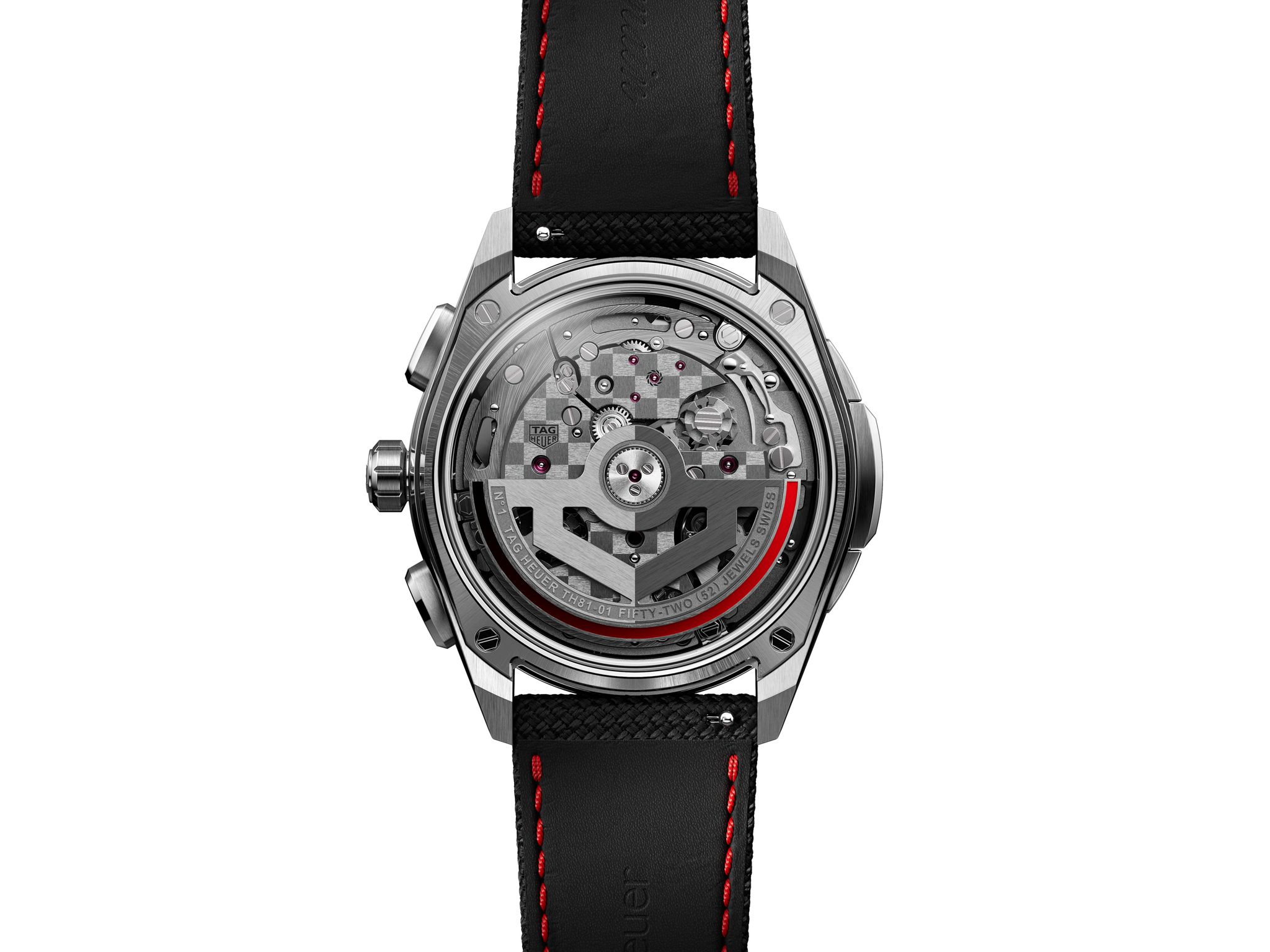
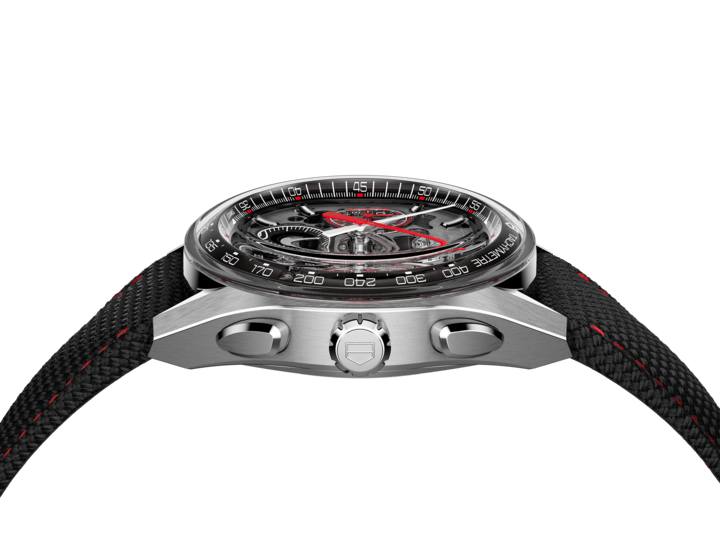
The Split-Seconds Chronograph is housed in a new 42 mm case machined from grade-5 titanium — an in-house design that maintains the peaked lugs and the glassbox crystal treatment introduced in the 2023 Carrera redesign, while introducing new proportions and details specific to this complication. The glassbox has been further refined here, sitting with a tighter visual integration into the case and creating the optical effect of magnifying the dial and rehaut beneath it.
The pushers are elongated and refined, positioned either side of the crown for the chronograph functions, with the split-seconds activation handled by a separate pusher elegantly integrated into the case band at 9 o’clock — a positioning that keeps the case profile clean and distributes the control surfaces logically around the wrist.
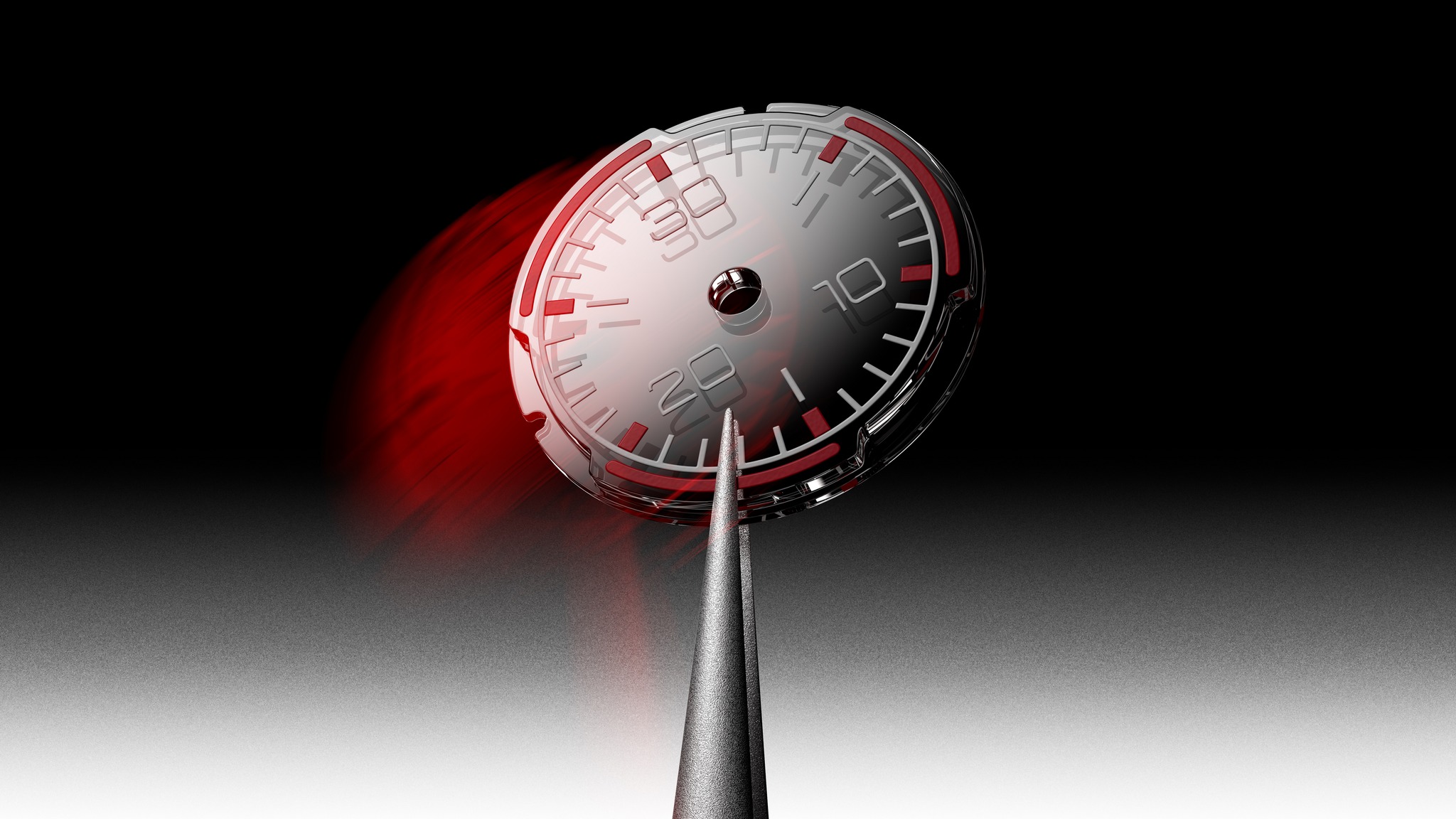
The dial is constructed from translucent sapphire glass, a deliberate choice that makes visible the finishing on the movement beneath and extends the sense of depth through the watch from crystal to caseback. The subsidiary dials are individually constructed from the same sapphire material, creating a layered, three-dimensional effect that reads as unusually rich in person. The tachymeter scale sits on a curved flange that follows the profile of the crystal, a detail that minimises parallax error when reading speed measurements — a small but technically considered refinement.
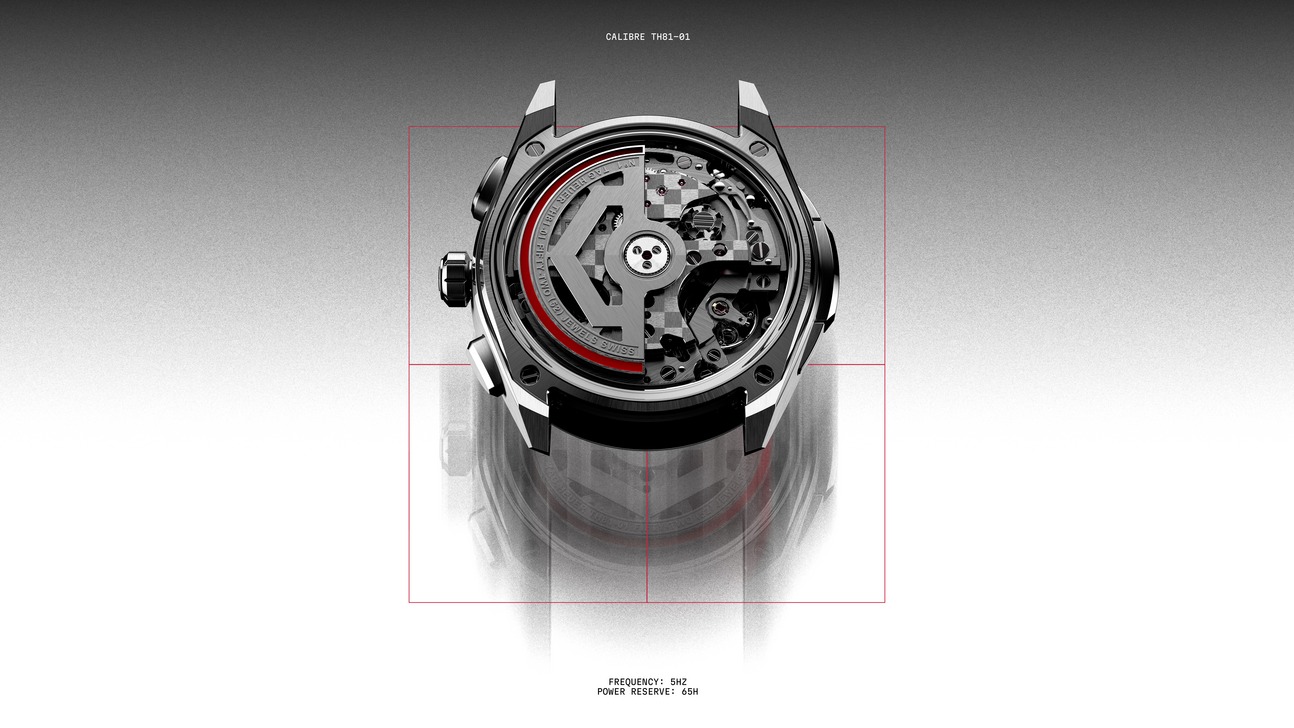
The sapphire caseback is designed to allow the movement to be observed from multiple angles, giving the impression that the calibre is suspended within the case rather than resting on a conventional caseback. It is an effect that works particularly well with a movement of this quality.
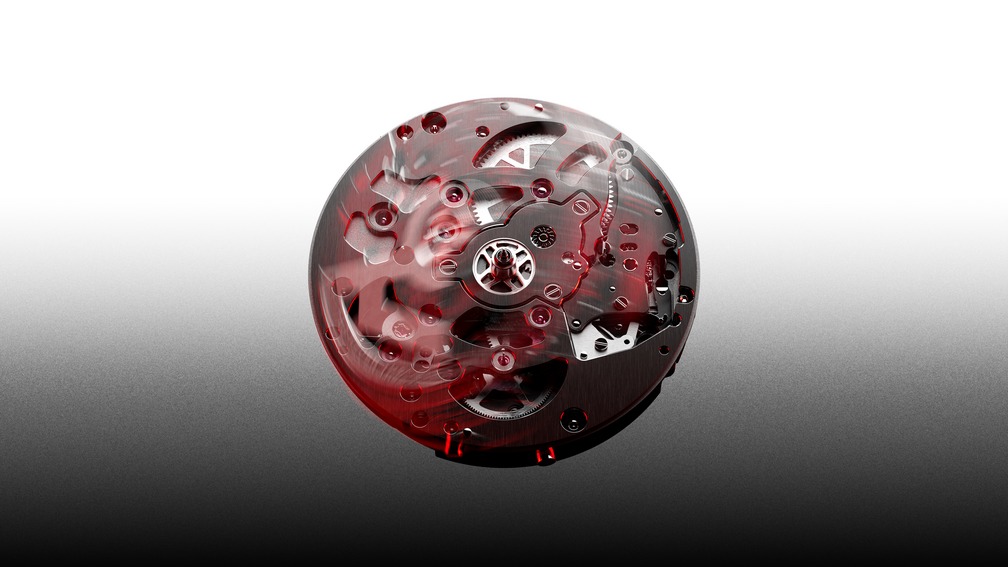
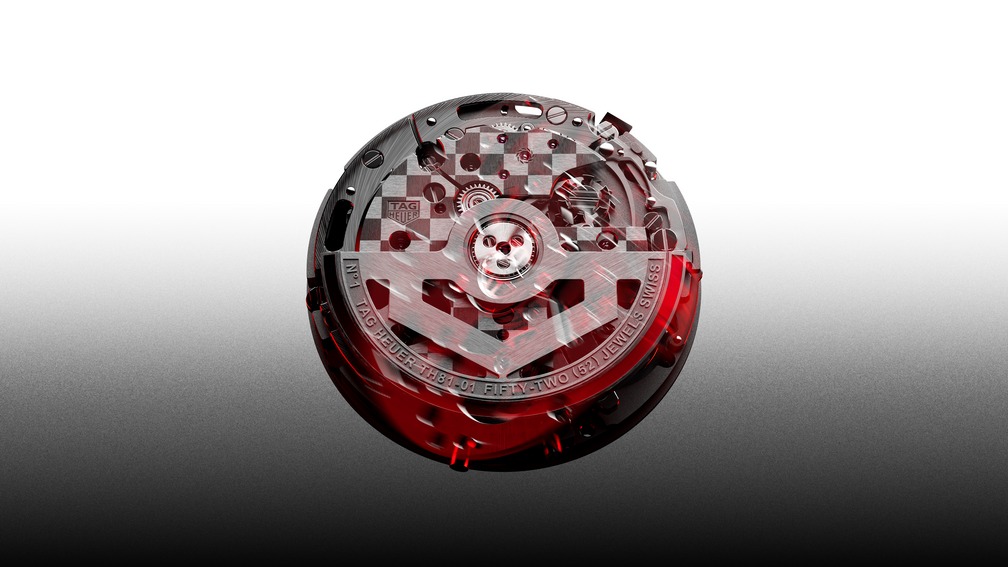
The movement is developed in continued collaboration with Vaucher Manufacture Fleurier and designated the TH81-01, building directly on the TH81-00 that powers the TAG Heuer Monaco Split-Seconds Chronograph. It beats at 5 Hz — 36,000 vibrations per hour — a frequency that contributes meaningfully to the precision of the chronograph’s start, stop, and split functions, and carries a power reserve of 65 hours.
The calibre comprises more than 350 components, every one of which is finished by hand using more than ten distinct techniques. Black polish is applied to the screws; bridges are hand-bevelled; surfaces are finished in alternating textures that catch light differently depending on the angle of view. All of this is crowned by what TAG Heuer calls the checkered flag pattern — an engraved finish applied square by square, entirely by hand, that has become the signature mark of the Maison’s highest-grade movements. It is not a technique that can be mechanised without losing what makes it distinctive.
The oscillating weight takes the shape of the TAG Heuer shield and is itself a finished object: fine-brushed surfaces, and a miniature gradient painting applied to its periphery — a level of decorative attention paid to a component that most wearers will only glimpse through the caseback. That it exists at all says something about the standard the calibre is held to throughout.
TAG Heuer describes the Carrera Split-Seconds Chronograph as part of its Avant-Garde Horlogerie direction — a positioning that sits alongside the Monaco Split-Seconds Chronograph as evidence of the brand’s intent to compete seriously at the upper end of the complications market, not merely at the level of heritage and brand equity.
For a brand that began timing races in 1860 and that produced the watch Jack Heuer named after one of the most dangerous road races ever run, there is an argument that the rattrapante — a complication designed precisely to measure intervals within intervals, time within time — is the natural destination for the Carrera. It has taken 63 years to arrive. The result suggests it was worth the wait.
.
Visual credits: TAG Heuer

 timchew.net