Gulfstream G500 and G600 Secure EASA Steep-Approach Certification
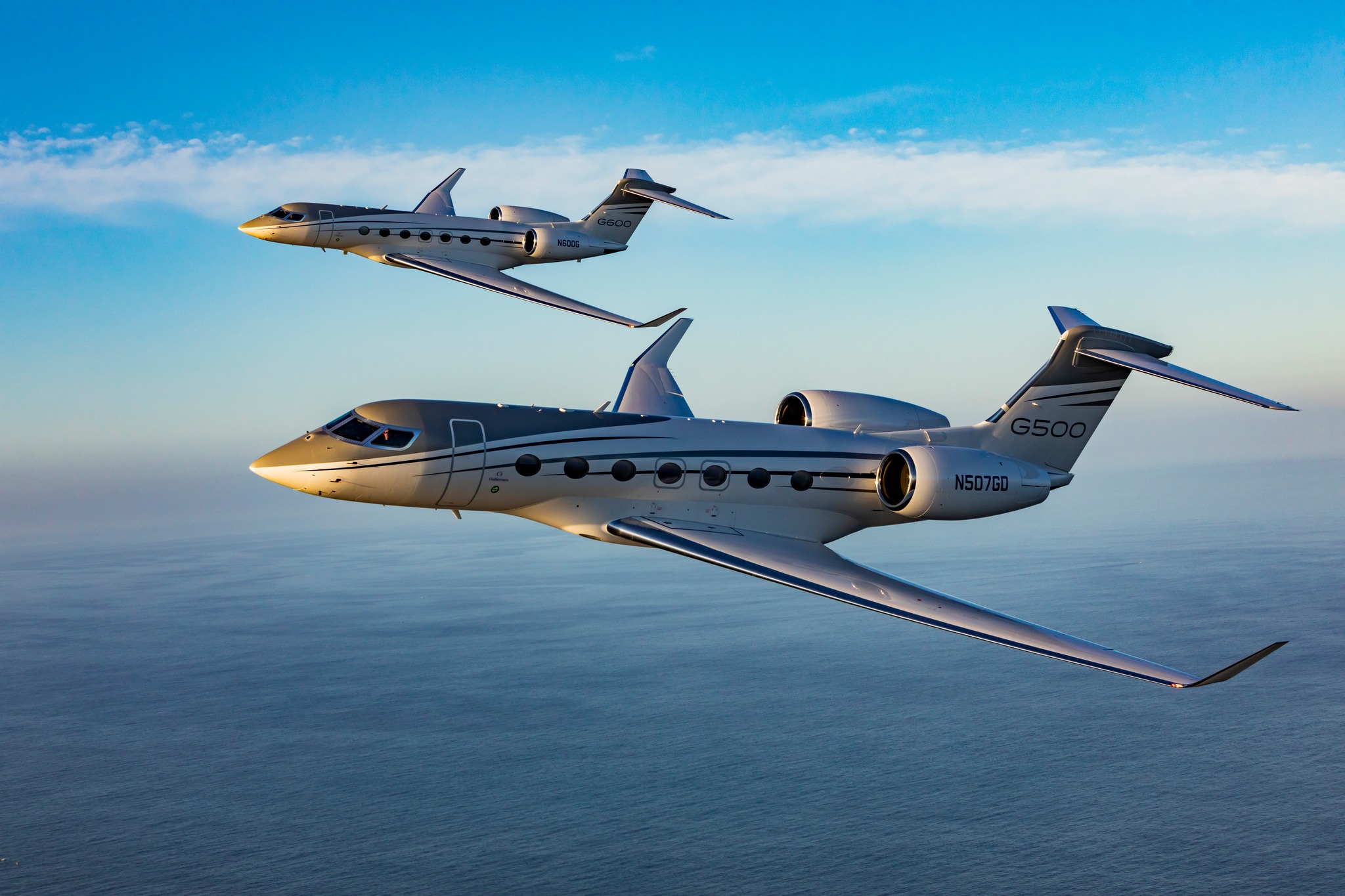
Gulfstream Aerospace has announced that the G500 and G600 business jets have received steep-approach certification from the European Union Aviation Safety Agency (EASA). The certification expands operational capabilities for both aircraft types, enabling access to airports with challenging approach requirements.
Steep-approach certification permits aircraft to conduct approaches at angles steeper than the standard 3-degree glideslope, typically at 5.5 degrees. This capability is required at certain airports with geographical constraints or noise abatement requirements, including London City Airport and Lugano Airport in Switzerland, where both aircraft conducted their certification demonstration flights.
“Our customers already benefit from the groundbreaking performance and efficiency of the G500 and G600. With EASA steep-approach certification now achieved, we’re proud to offer European operators even greater fleet flexibility by giving them access to more remote airports and destinations around the world.”
Mark Burns, President of Gulfstream
The G500 and G600 received Federal Aviation Administration steep-approach certification in 2023 and 2024, respectively. The recent EASA certification follows the completion of demonstration flights and validation procedures at designated steep-approach airports in Europe.
To earn both FAA and EASA certifications, the aircraft successfully demonstrated steep-approach capabilities including low-speed handling characteristics and short-field landing performance. Testing was conducted at London City Airport in England and Lugano Airport in Switzerland, both of which require steep-approach certification due to their operational environments.
London City Airport, located in the Docklands area of London, has a steep approach requirement due to its proximity to urban development and restricted airspace. Lugano Airport in southern Switzerland requires steep approaches due to mountainous terrain surrounding the facility. Both airports serve as benchmark testing locations for steep-approach certification programmes.
The steep-approach certification expands the number of airports accessible to G500 and G600 operators, particularly in Europe where several key business aviation destinations require this capability. Airports with steep-approach requirements are often located in constrained environments, including city centres and mountainous regions, making them strategically important for business aviation operations.
For European operators, the certification enables direct access to London City Airport, which serves as a primary business aviation gateway to central London and reduces ground transportation time compared to airports located farther from the city centre. Access to such airports provides operational flexibility and can reduce total journey time for passengers.
The certification also facilitates operations to other European airports with steep-approach requirements, as well as similar facilities in other regions that accept EASA certification standards. This broadens the operational envelope for G500 and G600 operators conducting international missions.
According to Gulfstream, more than 350 G500 and G600 aircraft are currently in service worldwide. The combined fleet has accumulated over 350,000 flight hours and completed more than 173,000 landings since the types entered service.
The G500 and G600 fleet has established over 120 city-pair speed records, demonstrating the aircraft types’ performance capabilities on various route profiles. These records reflect the aircraft’s combination of speed, range, and operational efficiency across different mission requirements.
The Gulfstream G500 has a maximum range of 5,300 nautical miles at Mach 0.85 and can accommodate up to 19 passengers in various cabin configurations. The aircraft features a cabin altitude of 4,850 feet when cruising at 51,000 feet, with 100% fresh air replenishment every two minutes.
The larger G600 offers a maximum range of 6,600 nautical miles at Mach 0.85 and can carry up to 19 passengers. The aircraft maintains a cabin altitude of 3,800 feet when cruising at 51,000 feet. Both aircraft are powered by Pratt & Whitney Canada PW800 series engines.
Both aircraft types feature the Gulfstream Symmetry Flight Deck, which includes active control sidesticks, touchscreen avionics displays, and advanced systems integration. The flight deck design incorporates features intended to reduce pilot workload during all phases of flight, including steep-approach operations.
The G500 and G600 occupy the large-cabin, long-range segment of the business jet market. The steep-approach certification differentiates these aircraft from some competing types in their class, as not all large-cabin business jets hold steep-approach certification from both FAA and EASA.
Steep-approach capability is particularly valued by European operators and international flight departments that require access to airports with geographical or regulatory constraints. The certification addresses a specific operational requirement that influences aircraft selection decisions for certain customers and mission profiles.
Gulfstream supports the G500 and G600 through its global service network, which includes company-owned service centres and authorised service facilities in strategic locations worldwide. The network provides maintenance, warranty support, and technical assistance for operators of both aircraft types.
European support infrastructure includes service centres in the United Kingdom, Germany, and other key locations, enabling regional operators to access maintenance and technical services. The service network supports Gulfstream’s fleet of more than 3,000 aircraft currently in operation globally. The G500 and G600 steep-approach certification is now effective for operations under EASA jurisdiction.
Bombardier Global 8000, World’s Fastest Business Jet, Receives Certification from European Union Aviation Safety Agency (EASA)
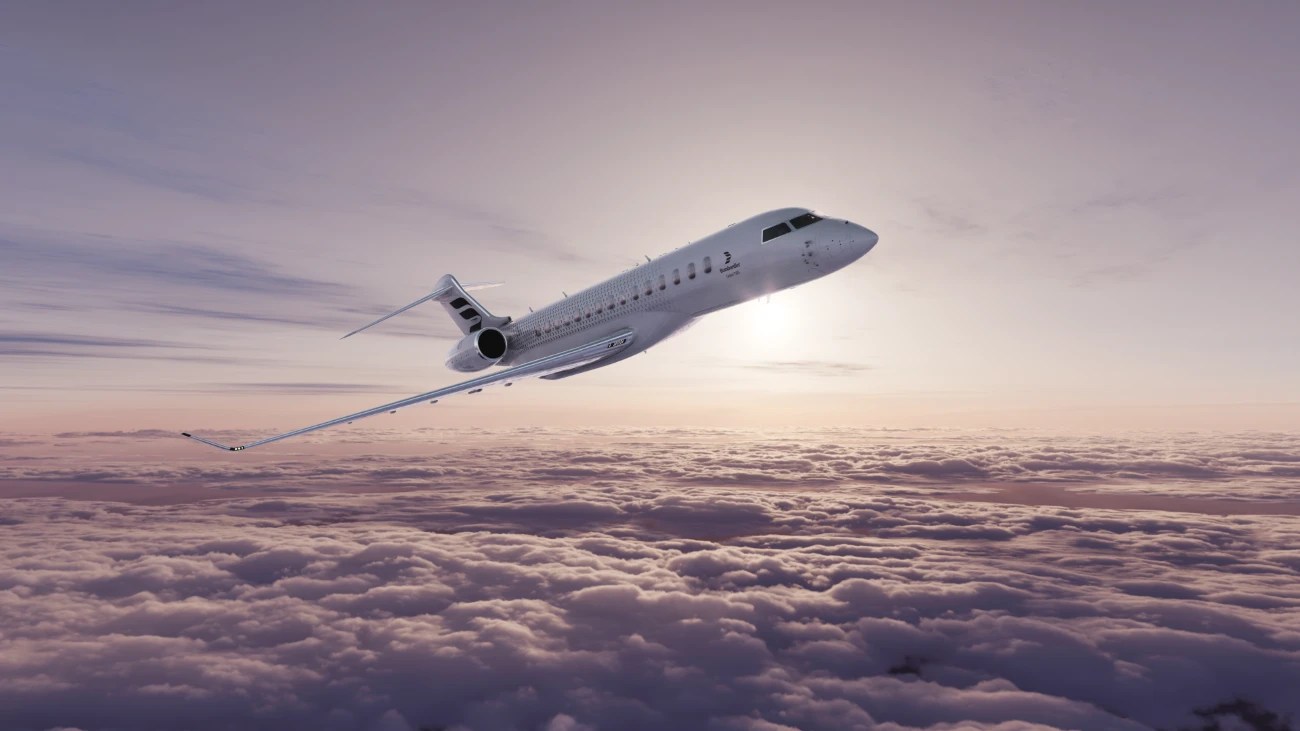
Bombardier has announced that the Global 8000 business jet has received certification from the European Union Aviation Safety Agency (EASA), completing the regulatory approval process across major aviation markets. The certification follows earlier approvals from Transport Canada on 5 November 2025 and the U.S. Federal Aviation Administration on 19 December 2025.
The Global 8000, which entered service in December 2025, is Bombardier’s flagship ultra-long-range business jet. With a top speed of Mach 0.95 and a range of 8,000 nautical miles, the aircraft is positioned as the fastest civilian aircraft currently in production. The completion of EASA certification enables unrestricted operations across European airspace and EASA-aligned jurisdictions.
“Attaining EASA certification illustrates the hard work and dedication of Bombardier’s highly skilled employees and suppliers in collaboration with Transport Canada and EASA teams. This accomplishment further strengthens the momentum behind this groundbreaking business jet. Following its entry into service in 2025, the entire Bombardier team is eager for this aircraft to be handed over to more customers this coming year so they can experience the new levels of comfort, wellness, and efficiency the Global 8000 unlocks.”
Stephen McCullough, Executive Vice President, Engineering, Product Development and Bombardier Defense
The Global 8000’s performance characteristics centre on speed and range capability. The aircraft achieves a top speed of Mach 0.95, making it the fastest civilian aircraft since the retirement of the Concorde. This speed capability is delivered by twin GE Passport engines, each producing 18,920 pounds of thrust.
With a maximum range of 8,000 nautical miles, the aircraft enables nonstop travel between a wider array of city pairs than competing aircraft in its class. The Global 8000 is described as the only true four-zone business jet capable of this range, providing flexibility for ultra-long-range mission profiles.
The aircraft’s wing design incorporates leading-edge slats, which contribute to takeoff and landing performance comparable to lighter jet categories. According to Bombardier, this design feature enables access to approximately 30% more airports than the closest competing aircraft, enhancing operational flexibility for operators.
A key differentiator of the Global 8000 is its cabin altitude specification. The aircraft maintains a cabin altitude of 2,691 feet while cruising at 41,000 feet, representing the lowest cabin altitude in production business aviation. The reduced cabin altitude is designed to minimise physiological stress associated with high-altitude travel.
The lower cabin pressure differential is intended to help passengers arrive at their destinations with reduced fatigue and improved alertness, which may be particularly relevant for business travellers requiring productivity upon arrival. For comparison, the industry standard cabin altitude is typically 8,000 feet.
The cabin configuration accommodates up to 19 passengers and crew across four distinct living zones, offering the longest seated length in its class. Additional cabin features include a separate crew rest area and customisable interior layouts to accommodate various operational requirements.
Environmental systems include Bombardier’s Pũr Air fresh air delivery system and the Soleil circadian lighting system. The latter is designed to help mitigate the effects of jet lag during long-range flights by adjusting cabin lighting to align with natural circadian rhythms.
The Global 8000 programme achieved several milestones throughout 2025. Transport Canada issued Type Certification on 5 November 2025, followed by FAA certification on 19 December 2025. The aircraft entered service in December 2025, with the first delivery taking place at Bombardier’s Aircraft Assembly Centre in Mississauga, Ontario.
The EASA certification on 23 January 2026 completes the primary regulatory approval sequence, enabling the aircraft to operate across North American and European markets without restrictions. The certification process involved collaboration between Bombardier’s engineering teams, supply chain partners, and regulatory authorities across multiple jurisdictions.
Throughout the development programme, the aircraft completed its flight test programme and validation of performance specifications, including speed, range, and cabin environment parameters. The programme met its stated timeline commitments to customers and stakeholders.
The Global 8000 is positioned at the top of Bombardier’s product line, succeeding the Global 7500 as the company’s flagship offering. The aircraft addresses demand in the ultra-long-range business jet segment, serving customers including multinational corporations, charter operators, governments, and private individuals.
With EASA certification now secured, Bombardier can proceed with deliveries to European customers and operators in EASA-aligned regulatory jurisdictions. The certification also facilitates charter operations and fleet integration for operators with European bases of operation.
The aircraft’s combination of speed, range, and cabin altitude specifications differentiates it within the ultra-long-range segment. Industry estimates place the base price for the Global 8000 at approximately $80 million, with final pricing varying based on customisation and interior completion specifications.
Bombardier supports the Global 8000 through its global service network, which includes facilities in strategic locations across North America, Europe, the Middle East, and Asia-Pacific. The company operates service centres in the United States, Canada, the United Kingdom, Germany, France, Switzerland, Austria, United Arab Emirates, Singapore, China, and Australia.
The service network supports Bombardier’s fleet of more than 5,200 aircraft currently in operation worldwide. Service capabilities include scheduled maintenance, warranty support, and parts provisioning for the Learjet, Challenger, and Global aircraft families.
Bombardier manufactures the Global 8000 at its aerostructure, assembly, and completion facilities located in Canada, the United States, and Mexico. Final assembly and delivery operations are conducted at the company’s Aircraft Assembly Centre in Mississauga, Ontario.
The Global 8000 represents Bombardier’s continued focus on the business jet segment following its exit from commercial aviation. The company’s current product line includes the Challenger 350, Challenger 3500, Challenger 650, Global 5500, Global 6500, and Global 7500, in addition to the Global 8000.
.
Image/ Photo credits: Respective brands
Cover photo: Gulfstream

 timchew.net