Bombardier and The Helicopter Company (THC) Sign Fleet Purchase Agreements for Up to 60 Bombardier Aircraft
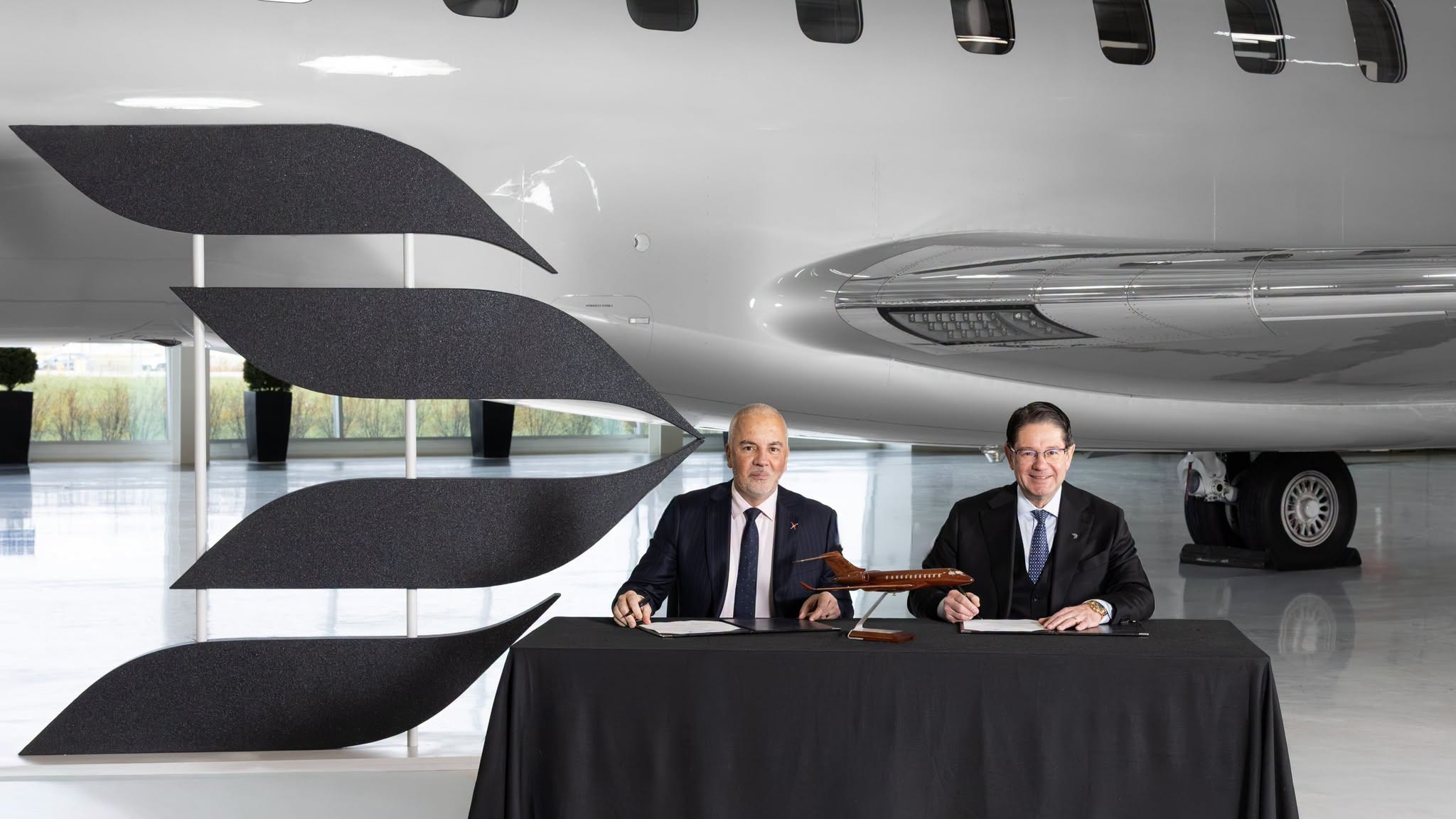
Bombardier and The Helicopter Company (THC) have signed fleet purchase agreements for up to 60 Bombardier jets. The package includes a firm order for 12 aircraft and options for an additional 48, the two companies announced on 13 November 2026.
The firm order comprises five Challenger 3500, five Global 5500 and two Global 8000 aircraft. It is valued at approximately US$568 million based on 2026 list prices. The agreements turn the Letter of Intent announced at Farnborough in July 2026 into a binding order, and mark the launch of THC’s business aviation fleet.
According to the companies, it is the largest business aviation fleet order to date in Saudi Arabia. It supports the development of the Kingdom’s aviation sector under Vision 2030.
“This transaction marks THC’s entry into business aviation and the next step in building an integrated aviation operator for the Kingdom. Demand for business aviation services in Saudi Arabia and the wider region continues to grow, and this fleet allows us to serve it with the right aircraft from day one. We value this strong partnership with Bombardier and look forward to bringing these aircraft into service as THC continues to support the development of the Kingdom’s aviation sector under Vision 2030.”
Captain Arnaud Martinez, Chief Executive Officer, THC
“The Helicopter Company’s decision to move forward with these fleet purchase agreements is a meaningful vote of confidence in what our teams deliver every day. As THC is preparing to launch their business aircraft fleet, we look forward to supporting their ambitions with industry-leading aircraft, a world-class support network and a partnership built on long-term success.”
Éric Martel, President and Chief Executive Officer, Bombardier
For readers unfamiliar with the name, THC is a helicopter operator, not an airline or a jet charter company. It was established as part of the Public Investment Fund (PIF)’s strategy to activate new sectors in Saudi Arabia that support Vision 2030. The aim was to create a new ecosystem for general aviation services and to introduce safe and efficient transport services across the Kingdom.
THC has been operating since mid-2019 and is described in the announcement as the Kingdom’s leading commercial helicopter operator. It currently has more than 60 aircraft serving emergency medical services (EMS), aerial work, private charters and tourism.
The company has grown quickly. It began with just two aircraft at the end of 2019. Its helicopter fleet is a mix of Leonardo and Airbus types. The Bombardier agreement is therefore a new chapter: its first move into fixed-wing business aircraft.
The Challenger 3500 accommodates up to nine passengers and has a range of 3,400 NM (6,297 km). Bombardier says this makes it well suited to missions within the Gulf Cooperation Council (GCC) region. The type entered service in September 2022 and succeeds the Challenger 350, with range extended from 3,200 NM to 3,400 NM.
The Global 5500 has a range of 5,900 NM (10,927 km) and accommodates up to 16 passengers across three living zones. The cabin features 4K entertainment, along with lighting and sound technology. Bombardier unveiled the aircraft alongside the Global 6500 at the EBACE conference in Geneva in May 2018, and it entered service in 2020.
The Global 8000, Bombardier’s flagship, has a range of 8,000 NM (14,816 km) and a four-zone cabin. According to the company, it can fly nonstop between city pairs including Riyadh and Los Angeles. The first aircraft entered service on Dec. 8, 2025, and Bombardier lists its top speed as Mach 0.95.
As part of the partnership, Bombardier has committed to a long-term strategic investment, including a local footprint in the Kingdom of Saudi Arabia. The announcement does not give further detail on its form or timing.
The significance of this order lies as much in who is buying as in what is being bought. THC has spent the years since 2019 building a rotary-wing operation. This order signals a deliberate step into fixed-wing business aviation, with the stated aim of serving growing demand for premium business travel in the Kingdom and across the region. Trade reports describe the move as an expansion into charter and aircraft management. For a PIF-backed operator, that points to a broader ambition of becoming an integrated aviation provider, as Martinez’s own description of the company suggests.
The three-type mix is also worth noting. Challenger 3500s for regional GCC missions, Global 5500s for intercontinental sectors and Global 8000s for ultra-long-range routes would let an operator match aircraft to mission length. That is a practical building block for a new charter and management business.
The headline figure needs careful reading. Of the “up to 60” aircraft, 12 are firm, which is one-fifth of the total. The remaining 48 are options, and THC would have discretion over whether to exercise them. Neither company has disclosed how those options split across the three types. The announcement also does not state a delivery schedule. The firm 12 is the confirmed commitment, and the larger number is best seen as a ceiling that depends on how quickly THC builds its customer base.
For Bombardier, the agreement adds a significant new customer in the Gulf. Its commitment to a local footprint could matter for aircraft support in the Kingdom, though the details remain to be announced.
More broadly, the order reflects the pace of aviation investment under Vision 2030. A state-backed operator committing to a sizeable business jet fleet may shape how charter and aircraft management services develop in Saudi Arabia, and it will be watched by other regional operators. How that plays out will depend on the delivery timeline and on whether THC exercises its options.
Photos by the respective brands.
Cover photo by Bombardier.


