Asia-Pacific Driving Global Aviation with Requirement for 19,120 New Aircraft
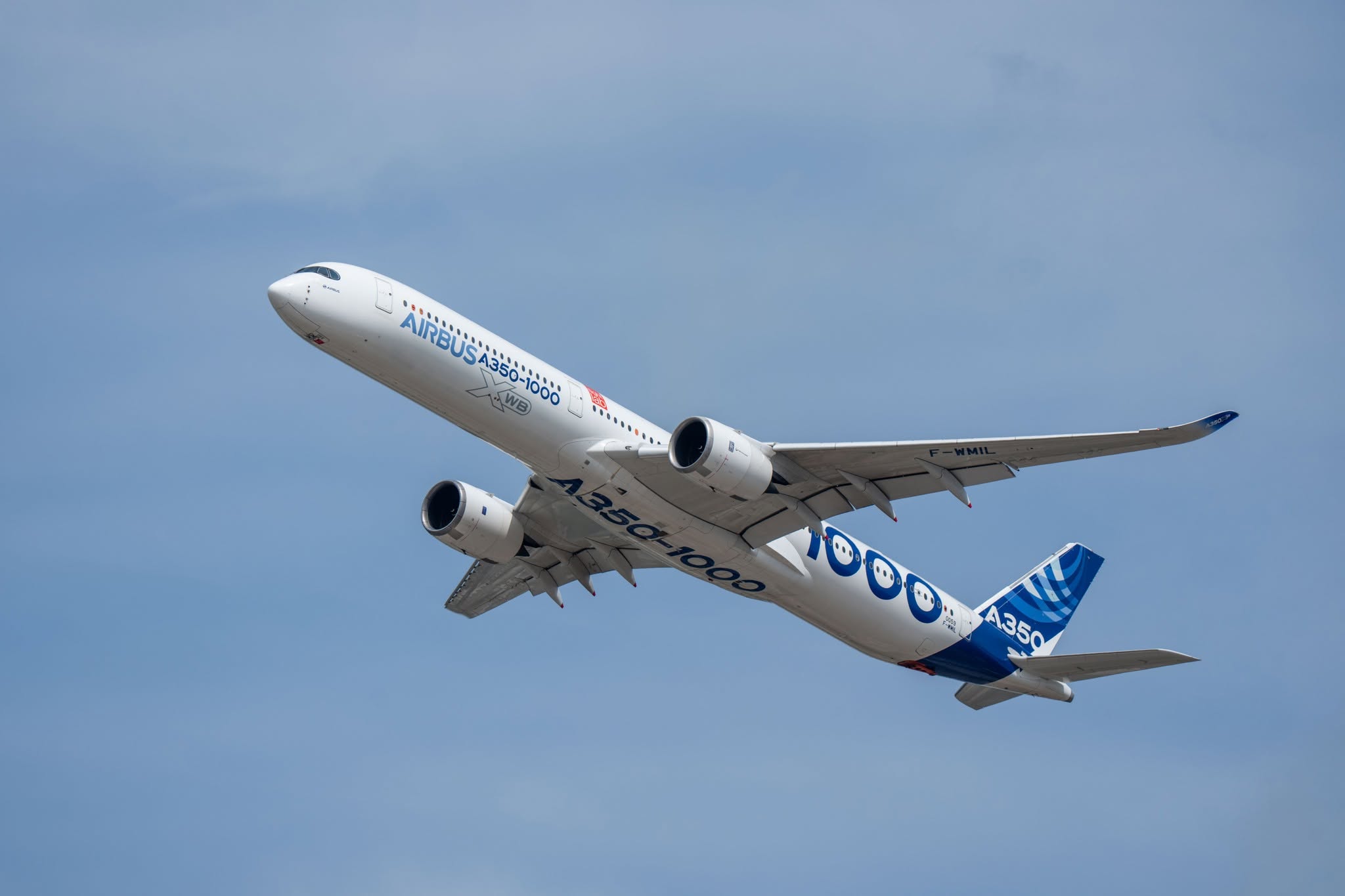
Airlines in the Asia-Pacific will require 19,120 new passenger aircraft over the next 20 years, or 45% of projected global demand, according to the latest Global Market Forecast published by Airbus. The manufacturer, presenting its 2026-2045 forecast in Hong Kong on Tuesday, said passenger traffic in the region is expected to grow at a compound annual rate of 5.1%, ahead of the global average of 3.9%. On that trajectory, regional traffic volumes would more than double over the forecast period.
Airbus puts total global demand at 42,060 new aircraft between 2026 and 2045, making the Asia-Pacific the single largest source of requirement worldwide. Of the 19,120 aircraft the region is forecast to need, about one third is attributed to fleet replacement and the balance to growth. That is a materially different split from the global picture, where Airbus expects replacement to account for close to half of all deliveries.
Airbus links the growth component to demographic and economic fundamentals rather than to cyclical recovery. By 2045, the manufacturer projects the region’s middle-income population will reach three billion people. Combined with rapid urbanisation, Airbus argues, air travel is increasingly functioning as basic infrastructure for social and economic activity rather than as a discretionary purchase.
By size category, the Asia-Pacific accounts for the largest share of widebody deliveries, with demand forecast at 3,420 aircraft — almost half of all new widebody aircraft, according to Airbus.
The manufacturer attributes its own position in the segment to the A330neo and A350 families, saying the two programmes have lifted its share of the regional widebody backlog to 50% over the past three years. Airbus describes the A350 as the aircraft of choice among regional carriers for long-range intercontinental operations, and positions the A350-1000 as a successor to the Boeing 777-300ER in the largest category it offers.
Single-aisle aircraft nevertheless remain the bulk of the requirement. Airbus forecasts demand for 15,700 aircraft in the 100- to 244-seat category across the region by 2045, reflecting continued domestic and intra-regional network expansion alongside replacement of ageing narrowbody fleets.
The forecast ties much of that narrowbody demand to a structural change in how regional networks are organised. Airbus points to new airport infrastructure across the region and to the availability of longer-range single-aisle types such as the A321XLR and the A220, which it says allow carriers to open city pairs that would not previously have supported a widebody and to route traffic around established mega-hubs.
Airbus says the A220 has opened more than 400 new routes globally to date and identifies potential for more than 800 additional unserved city pairs in the Asia-Pacific.
“We are seeing an evolution in the Asia-Pacific networks and how they connect. Alongside sustained expansion in long-haul networks, airlines are decentralising beyond traditional hub-and-spoke models to connect secondary cities directly to the global economy. By leveraging latest generation aircraft technology, carriers in the region are rewriting connectivity maps and driving the region’s long-term economic prosperity.”
Anand Stanley, President Airbus in Asia-Pacific
Speaking at the same briefing, Stanley said Airbus was not seeing demand soften in the region despite geopolitical friction and continuing supply chain constraints, according to FlightGlobal.
As of the end of August 2026, 119 Asia-Pacific airlines operated 5,000 Airbus commercial aircraft, giving the manufacturer a 58% share of the in-service fleet, with close to 3,500 aircraft on order. Airbus puts that at 61% of the combined backlog of all manufacturers in the above-100-seat jet market.
The A350 entered commercial service in January 2015 with Qatar Airways, with the stretched A350-1000 following in February 2018. The 777-300ER, the aircraft Airbus is positioning it against, entered service with Air France in 2004 and has been a mainstay of long-haul fleets at several large Asian carriers. Boeing’s 777X, the intended replacement in that seat band, has been subject to repeated schedule revisions. The A330neo, a re-engined development of the A330, entered service with TAP Air Portugal in late 2018.
The A220 began life as the Bombardier CSeries, entering service with Swiss in 2016. Airbus acquired a majority stake in the programme in 2018 and renamed the aircraft. It seats roughly 100 to 150 passengers, positioning it below the A320 family and making it suited to routes that cannot fill a larger narrowbody year-round.
The A321XLR was launched at the 2019 Paris Air Show and entered service with Iberia in late 2024, operating its first transatlantic sector from Madrid to Boston in November that year. Airbus quotes a range of up to 4,700 nautical miles — around 15% more than the A321LR — achieved through an additional rear centre fuel tank.
The headline number is large, but the more telling detail for regional carriers sits in the replacement-to-growth ratio. A global market in which nearly half of deliveries replace existing aircraft is a renewal market, and one where fleet decisions turn largely on unit cost and emissions performance. A regional market in which two-thirds of deliveries add capacity is an expansion market, and it asks different questions of everyone involved: slots, airport capacity, engineering and maintenance capability, and crew. Airbus has previously forecast that the Asia-Pacific will need more than a million new aviation professionals by the mid-2040s, a requirement that scales with the growth component rather than the replacement one, and one the manufacturer has been addressing through training investment across the region.
For airlines, the narrowbody weighting is the operative figure. At 15,700 aircraft, the 100- to 244-seat category represents more than four-fifths of regional demand and will shape most fleet planning conversations over the next decade. The longer-range variants widen what a narrowbody order can be asked to do. A carrier ordering A321XLRs is buying a different network strategy from one ordering standard A321neos, with implications for cabin product, crew rostering and maintenance planning that sit well outside the usual capacity calculation. Secondary-city routes that previously required feed through a hub become directly viable — and for passengers in cities that have long connected through Singapore, Hong Kong or Dubai, that is the difference between a day of travel and an afternoon. The A220’s record of opening more than 400 routes worldwide is the clearest evidence so far that the economics genuinely work at the thin end of the market.
The year-on-year picture is one of stability rather than retreat. Last year’s forecast put regional demand at 19,560 aircraft, or 46% of the global total; this year’s stands at 19,120, or 45%. The absolute change is modest, and the regional share broadly holds, alongside a small trim to the global figure and, notably, a higher assumed traffic growth rate than the previous forecast. That combination — slightly fewer aircraft, rather more flying — is consistent with a market absorbing near-term supply chain pressure without any weakening in underlying demand, which is also what Airbus said in Hong Kong. The constraint over the next several years is the ability to build and deliver, not the appetite to buy. On that reading, the region’s position as the centre of gravity for commercial aviation demand looks well established, and the manufacturers best placed to serve it are those with production capacity and a regional footprint already in place.
Photos by respective brands.
Cover photo by Airbus.

 timchew.net