
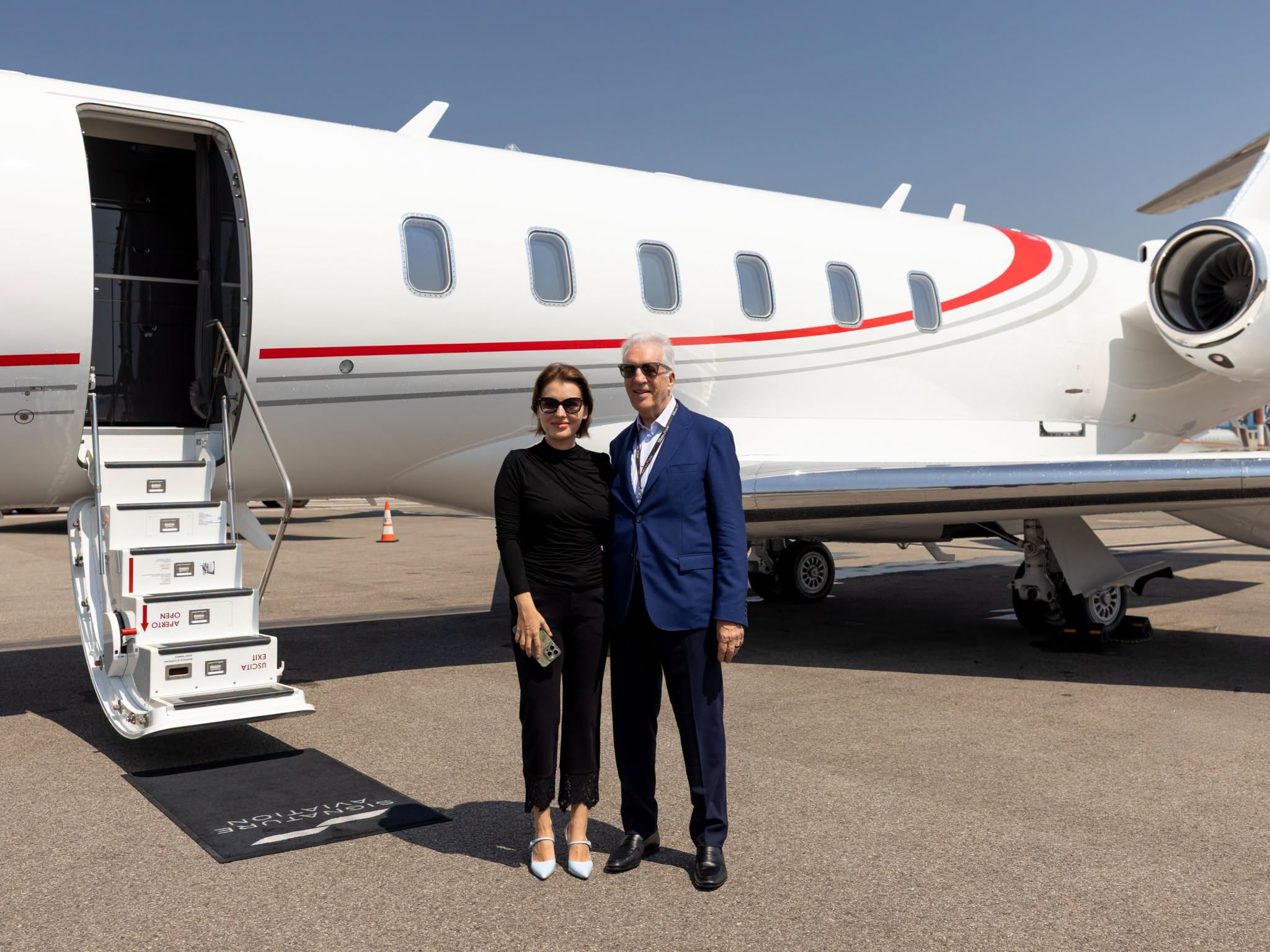
Bombardier Inc. delivered its 200th Challenger 3500 business jet on 27 July 2026, handing the aircraft to Piero Ferrari, vice chairman of the Italian automaker Ferrari, the Montreal-based manufacturer announced.
Piero Ferrari is vice chairman of Ferrari and the son of the automaker’s founder, Enzo Ferrari. He holds a stake in the company and has served in senior roles at Ferrari for decades, including responsibilities connected to the company’s motorsport activities, which include its Formula One racing team, Scuderia Ferrari.
Bombardier said the aircraft will support Piero Ferrari’s travel to Formula One races and other business engagements. The company said the milestone comes less than four years after the Challenger 3500 entered service, a pace it said reflects strong demand for the aircraft in the super-midsize jet category.
“Delivering the 200th Challenger 3500 jet is a defining milestone for Bombardier and a powerful testament to the aircraft’s remarkable success in the super-midsize segment. We are especially proud to mark this milestone with Mr. Piero Ferrari and thank him for the confidence he has placed in Bombardier. This achievement speaks to the exceptional dedication of our employees, the confidence our customers continue to place in Bombardier and the strength of an aircraft that delivers outstanding performance, impressive efficiency and an elevated cabin experience. The Challenger 3500 jet has quickly established itself as a category leader, and we look forward to building on that momentum.”
David Murray, executive vice president, Manufacturing, IT and Bombardier Operational Excellence System
Bombardier said the Challenger 3500 has outdelivered every other business jet in the medium and heavy categories since its first full year of deliveries in 2023. The company said the aircraft has also drawn recent firm orders from fleet operators including BOND, NetJets and VistaJet.

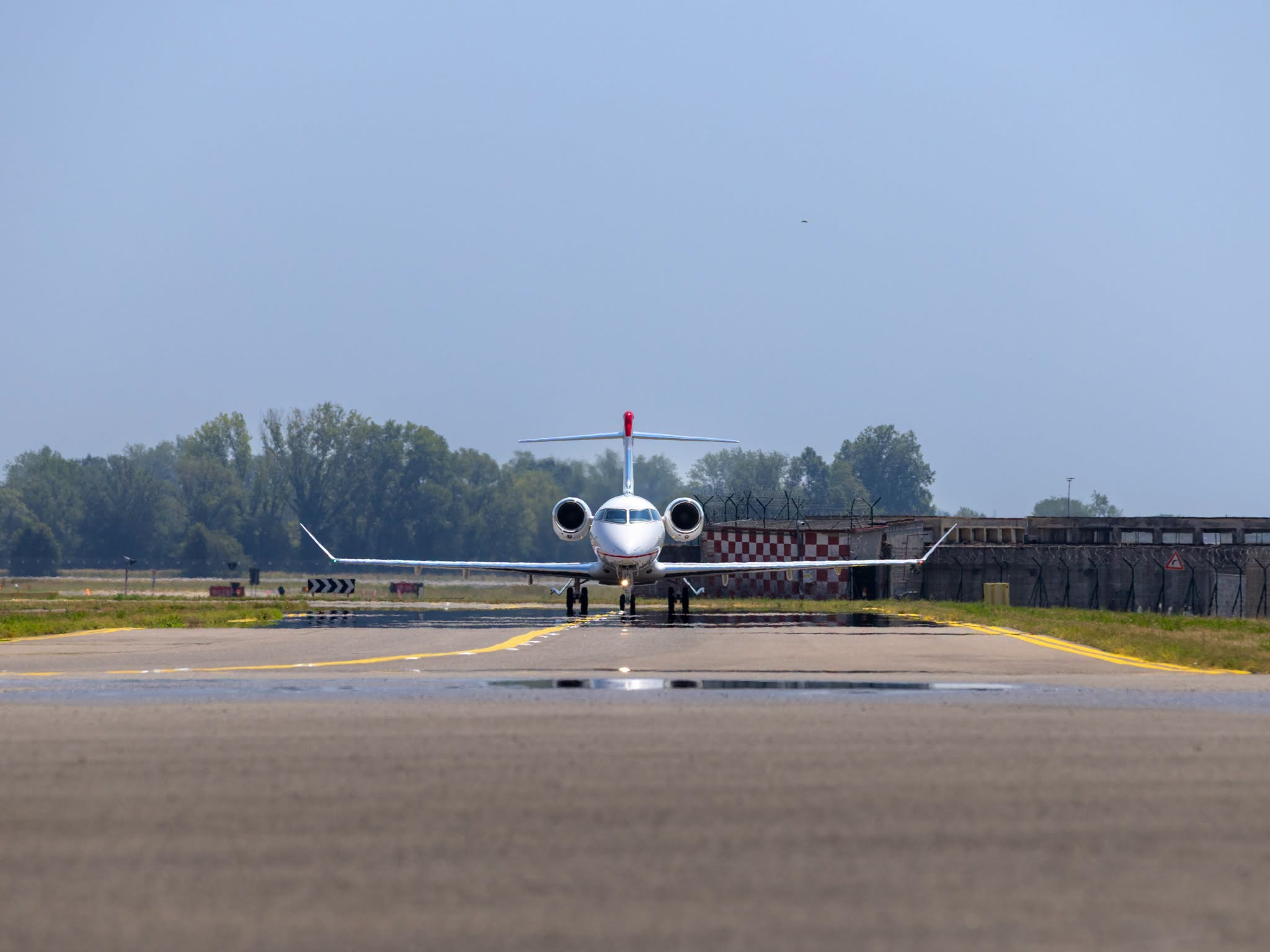

The Challenger 3500 is the successor to the Challenger 350, a widely used super-midsize business jet that Bombardier began delivering in 2014. Bombardier introduced the 3500 in 2022, retaining the 350’s airframe and its two Honeywell HTF7350 turbofan engines while redesigning the cabin and cockpit.
Bombardier lists the aircraft’s range at up to 3,400 nautical miles, a top speed of Mach 0.83 and a maximum operating altitude of 43,000 feet. The company says the aircraft has a dispatch reliability rate of 99.8%. List prices for the Challenger 3500 have been reported at roughly $27 million.
The aircraft typically seats eight to nine passengers with two crew members and includes what Bombardier calls the industry’s first voice-controlled cabin, allowing passengers to adjust lighting, temperature and entertainment systems by voice command. The cabin also uses Bombardier’s Nuage seat, a design the company first introduced on its larger Global 7500 jet and which allows for a reclined, “zero-gravity” seating position. Bombardier says the aircraft has the widest flat-floor cabin and the lowest cabin altitude in its class at cruising altitude.
Bombardier said the Challenger 3500 carries an Environmental Product Declaration, a third-party-verified accounting of an aircraft’s environmental impact over its lifecycle, developed according to international standards. Bombardier says it is the only business jet manufacturer to have published such declarations for its aircraft, based on the company’s review of publicly available information.
The Challenger 3500 competes in the super-midsize segment against aircraft including the Embraer Praetor 600, the Cessna Citation Longitude and the Gulfstream G280.
Reaching 200 deliveries in under four years is a fast pace for a business jet in the super-midsize category, an eight-to-ten-passenger segment that includes several established rivals from Embraer, Cessna and Gulfstream. For prospective buyers in that segment, delivery volume of this kind is one signal, among several, of how a model is faring against competitors: a larger and faster-growing fleet generally supports a bigger secondary market for used aircraft, a wider pool of pilots and maintenance technicians already trained on the type, and stronger long-term parts availability — all factors that can affect resale value and operating convenience well beyond the initial purchase decision. Bombardier’s disclosure of recent orders from large fleet operators such as NetJets and VistaJet is also notable to buyers, since those operators typically place high-volume orders only after extensive internal evaluation of an aircraft’s operating costs and reliability record.
The delivery to Piero Ferrari also illustrates a familiar pattern in business aviation, in which manufacturers highlight sales to prominent individuals to draw attention to a model’s broader commercial success. For Ferrari, a jet with a stated 3,400-nautical-mile range offers the ability to reach most Formula One race weekends — which are held on five continents over the course of a season — without the refueling stops that a smaller aircraft might require, a practical consideration for executives with a compressed and geographically dispersed travel schedule.
More broadly, the milestone points to continued strength in the super-midsize jet market, a category that has historically appealed to corporate flight departments and individual owners seeking an aircraft with intercontinental range in a smaller, less expensive package than the largest long-range jets. Bombardier’s publication of Environmental Product Declarations across its in-production aircraft lineup, including the Challenger 3500, also reflects a broader trend in business aviation toward greater disclosure of aircraft’s lifecycle environmental impact, an area of increasing interest to corporate buyers whose own organisations face growing scrutiny over travel-related emissions. Whether that data becomes a more significant factor in purchase decisions, alongside traditional considerations such as range, cabin comfort and operating cost, is likely to become clearer as more manufacturers follow suit or face pressure to do so.
Bombardier Defense Showcased at Farnborough Airshow, Global 8000 Made First Aerial Display
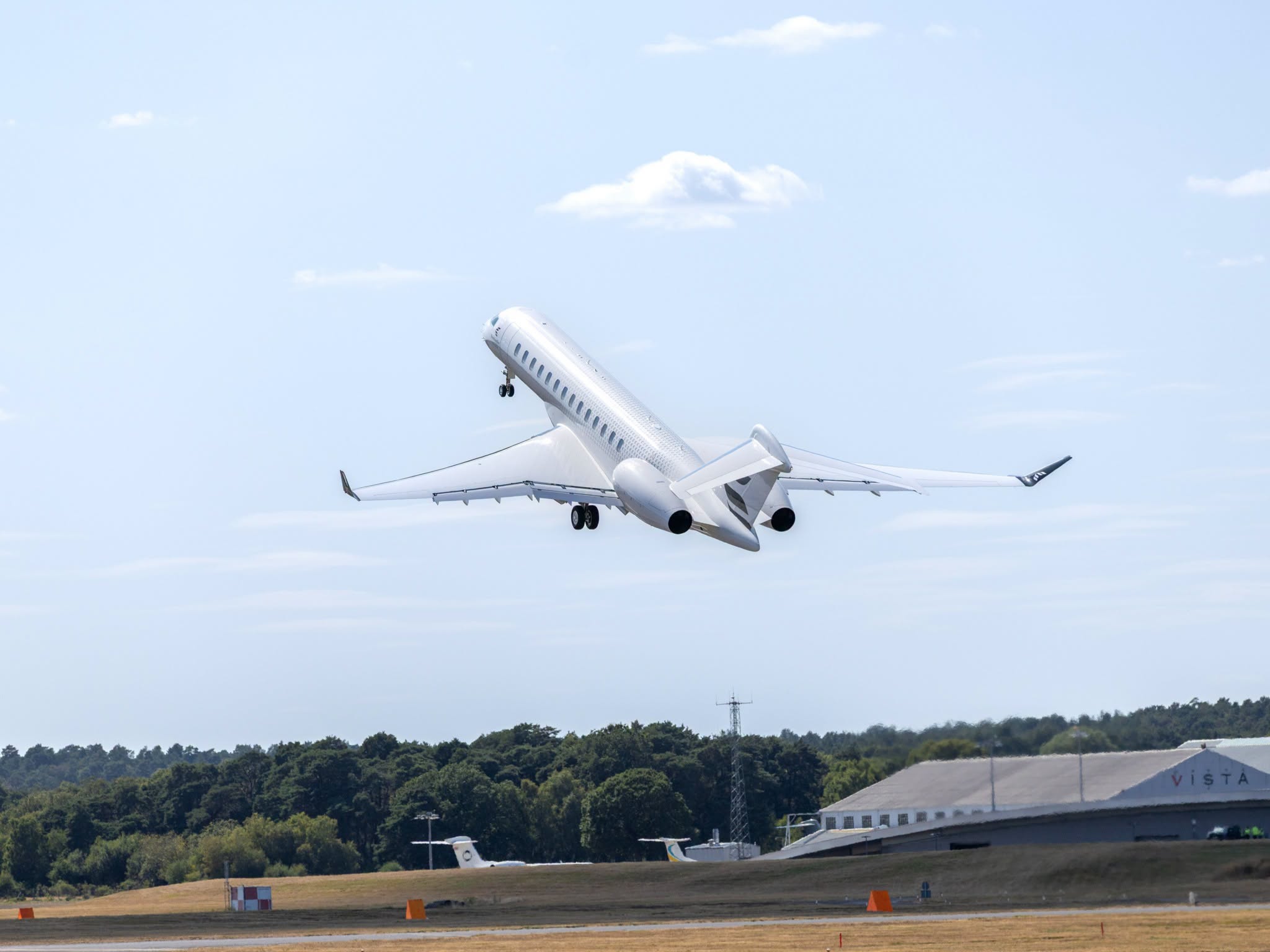

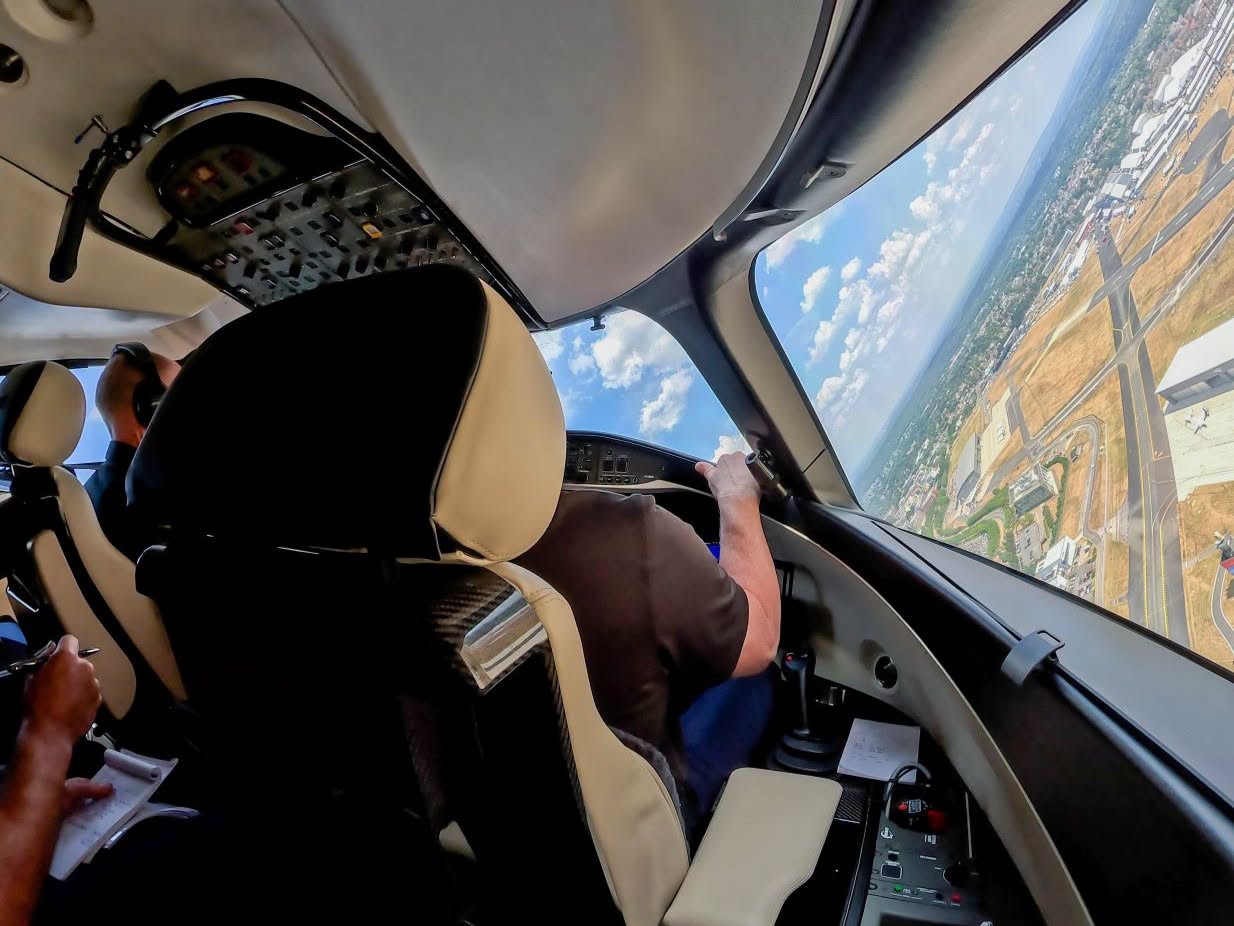
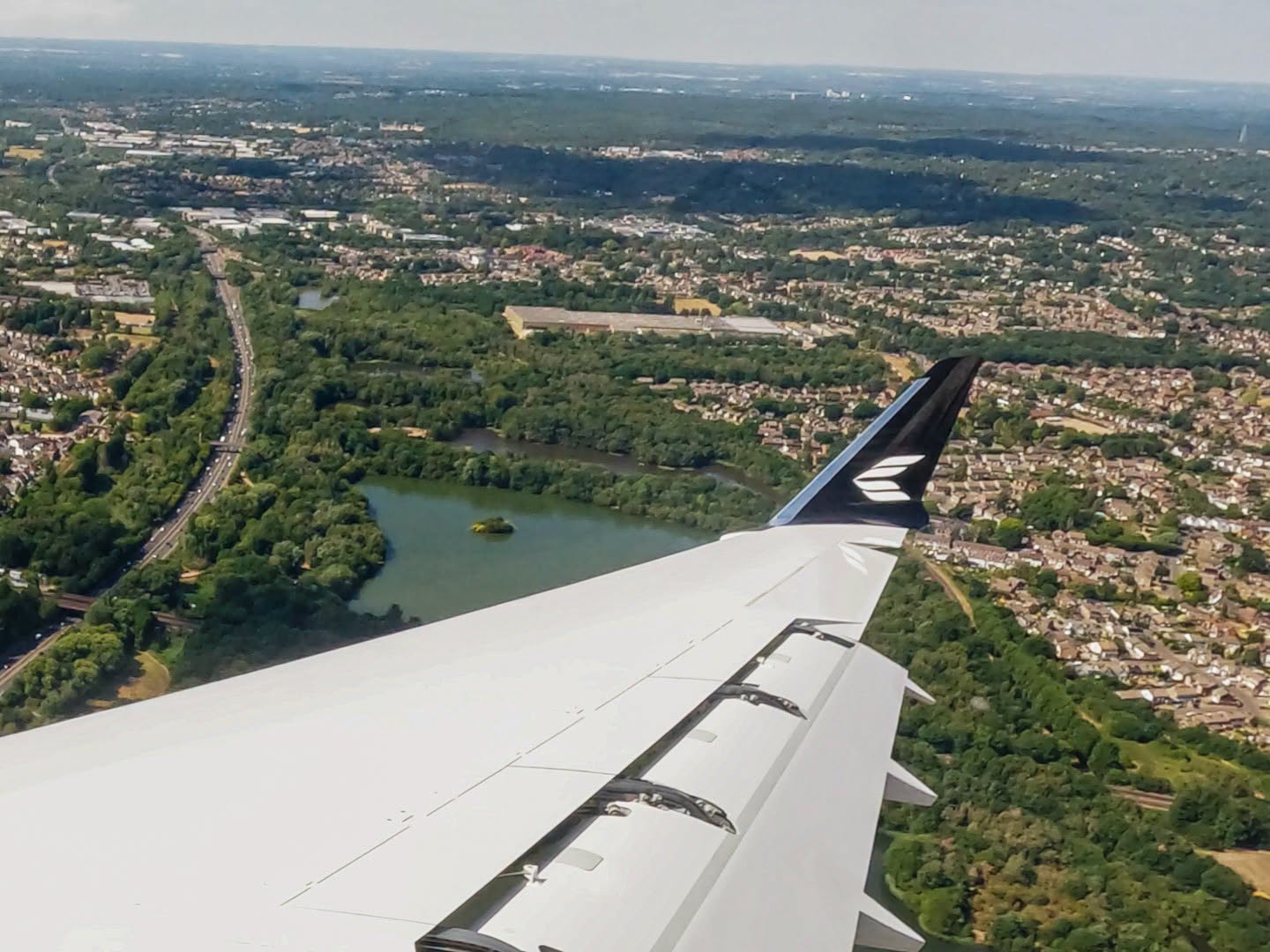
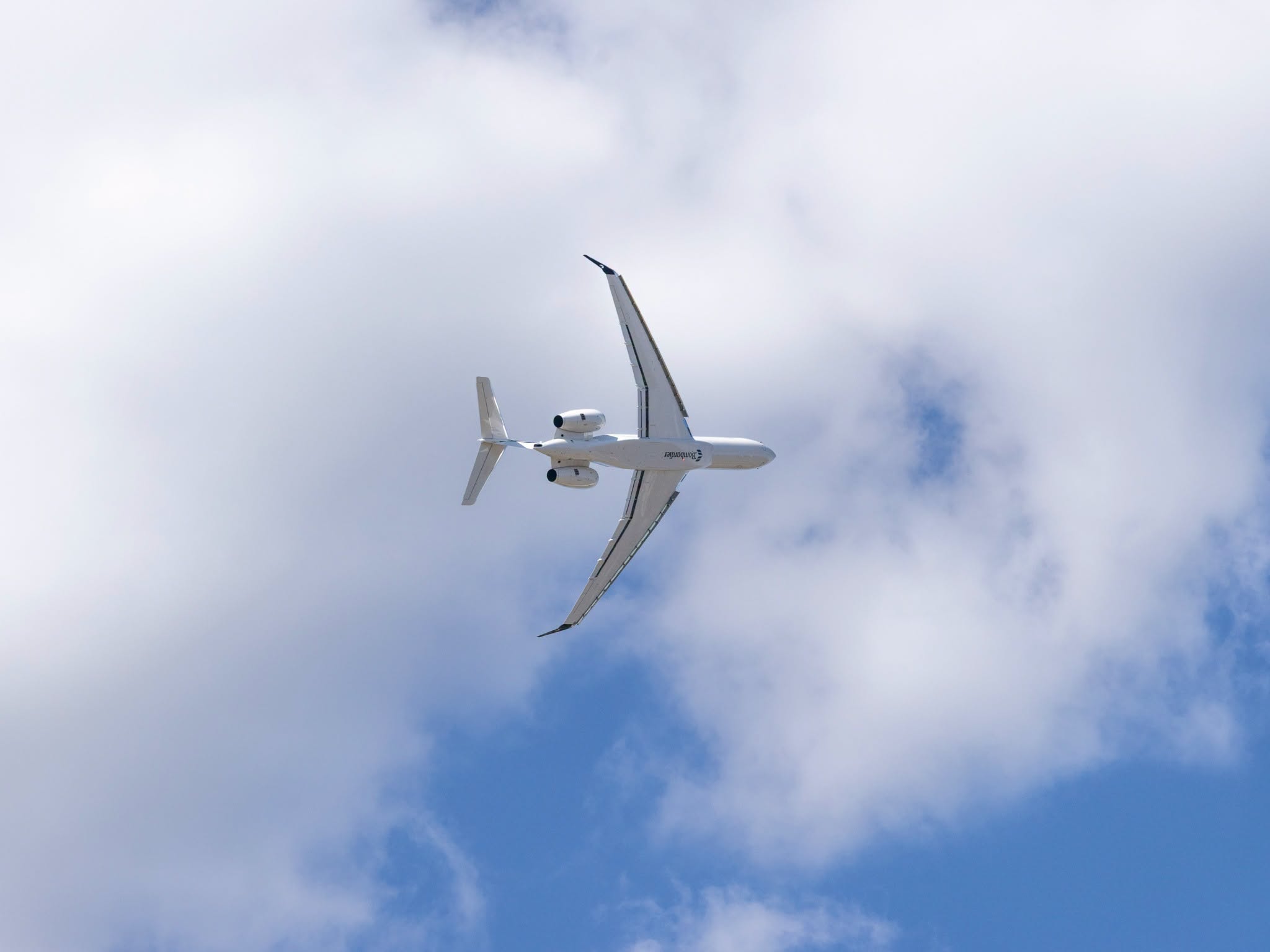
Bombardier Defense maintained a presence at this year’s Farnborough International Airshow, promoting its Challenger and Global aircraft platforms for government and military use, while Bombardier’s Global 8000 business jet performed its first-ever aerial display at an airshow.
Bombardier said the appearance was aimed at building and deepening relationships in Europe, where the company said countries were looking to enhance and modernise their airborne defense capabilities. Bombardier Defense had a longstanding presence in the region heading into the show.
“Bombardier Defense has built a strong reputation across Europe and we are delighted to be showcasing our outstanding expertise at the show, which aligns with Europe’s focus on readiness and capability modernisation,” McCullough said. “As European nations face evolving defense needs, Bombardier Defense is ready to provide mission-ready solutions built around trusted aircraft like the Global 6500 and the Global 8000, where agility, endurance and reliability are required to rapidly address capability gaps.”
Stephen McCullough, executive vice president, Engineering, Product Development and Bombardier Defense
Bombardier said its Global aircraft family was already in demand from governments and militaries around the world heading into the show. The company said its Global 6500 platform had been selected for special missions by Canada, the United States, Germany, Sweden, South Korea and Australia, among other nations.
The Global 8000, which entered service in 2025, performed its first airshow aerial display at Farnborough, an appearance Bombardier said demonstrated the aircraft’s short-field takeoff capabilities, climb performance and agility for customers and aviation enthusiasts in attendance.
Bombardier described the aircraft, its longest-range and fastest business jet, as having potential as a special mission vehicle, citing a large payload volume, a manufacturer-stated range of 8,000 nautical miles and a cabin altitude of 820 metres (2,691 feet) at cruising altitude. The company said that range translated into extended endurance while on station, and that the aircraft’s design allowed it to access 30% more airfields than what Bombardier considers its closest competitor. Bombardier said the aircraft was suited to a number of missions, including head-of-state transport, and that — like other Bombardier aircraft — it could be fitted with secure communications, navigation and self-protection systems.
Bombardier said it backed its defense aircraft with a product support network across Europe, including service facilities in London Biggin Hill and Berlin, and line maintenance stations in Farnborough, Paris, Geneva, Luton, Nice and Linz, Austria. The company said a new 51,000-square-foot paint facility was set to open at its London Biggin Hill Service Centre.
The Global 6500, in production since 2019, has a manufacturer-stated top speed of Mach 0.90 and a maximum range of 6,600 nautical miles, according to Bombardier. The company has said the aircraft’s speed, altitude capability and steep-approach certification give it an advantage over older airborne sensor platforms for missions such as intelligence, surveillance and reconnaissance. Bombardier Defense, which leads the company’s specialized and military work from Wichita, Kansas, has said it draws on experience from a fleet of more than 500 special mission aircraft and more than 3 million fleet flight hours.
In the run-up to the airshow, Bombardier Defense announced a series of Global 6500 orders and programs, including a Canadian government order for six Global 6500 aircraft for utility flights such as aeromedical evacuation, disaster relief and humanitarian aid; a firm order from Swedish defense company Saab for two Global 6500 aircraft; and a Korean Air-formalized purchase of two Global 6500 aircraft for South Korea’s electronic warfare program, in addition to four Global 6500 aircraft previously announced for the country’s airborne early warning and control program.
The Global 8000 is a larger-cabin, extended-range variant of the Global 7500, Bombardier’s earlier flagship jet. Bombardier has said the Global 8000 has a top speed of Mach 0.95, which it has described as faster than any civil aircraft since the Concorde.
Bombardier’s Farnborough presence, and the Global 8000’s debut in an airshow flying display, reflected an aircraft manufacturer positioning itself for a period of higher defense spending among European governments. Many NATO members have moved to increase military budgets in recent years, and the modernisation of airborne fleets used for surveillance, transport and head-of-state travel has been one area where governments have looked to convert defense aircraft business jets rather than building bespoke military airframes, since it is typically faster and less costly to modify an existing, certified civil aircraft than to develop a purpose-built military type from scratch.
For the militaries and government agencies that are Bombardier Defense’s customers, the practical relevance of the Global 8000 and Global 6500 lies largely in range, speed and airfield access — attributes that translate into aircraft able to reach more locations without refueling, spend longer on station for surveillance or transport missions, and operate from a wider range of airports, including shorter runways that larger military transport aircraft cannot use. Those capabilities matter for missions like electronic warfare and airborne early warning, where an aircraft’s ability to remain airborne longer and cover more ground can directly affect the amount of surveillance coverage a country can provide with a limited number of aircraft.
The broader defense contracts Bombardier cited — including Canada’s purchase of six Global 6500s and South Korea’s use of the type for both airborne early warning and electronic warfare — also illustrate how a single commercial airframe can be adapted to multiple military roles once it has been certified and put into service, spreading development costs across a wider base of government customers. For taxpayers in the countries involved, that shared-platform approach can lower the cost of acquiring specialised military capabilities compared with commissioning a fully custom aircraft, though the ultimate value depends on how well a converted business jet performs against military-specific requirements once it enters operational service — a track record that, for aircraft like the Global 6500’s newer special mission variants, is still being established.
Photos by Bombardier.


